
Rich Dad Poor Dad by Robert Kiyosaki
 wkadmin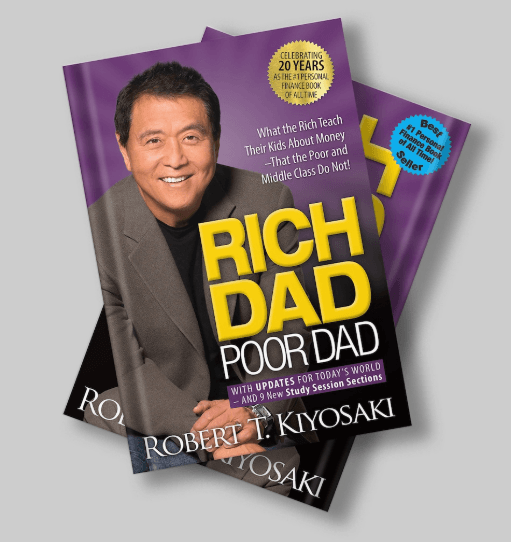
📖 Introduction, Why This Book Matters?
In a world where financial literacy is mysteriously absent from school curricula, Robert Kiyosaki delivered a financial wake-up call that shattered millions of people’s money beliefs. This isn’t just another get-rich-quick scheme—it’s a fundamental rewiring of how we think about money, assets, and financial freedom. Rich Dad Poor Dad matters because it exposes the financial education gap that keeps the middle class trapped in the rat race while the wealthy build generational wealth. Kiyosaki reveals that traditional financial advice—go to school, get a job, save money, buy a house—is actually a recipe for financial mediocrity. This book has sparked a global conversation about financial literacy because it dares to challenge the conventional wisdom that most people accept without question.
🔍 The Author’s Journey
Robert Kiyosaki’s journey began with a unique childhood advantage: two father figures with completely different approaches to money. His biological father, a highly educated government official, represented traditional thinking about financial security through employment and savings. His best friend’s father, a successful entrepreneur with limited formal education, embodied the investor mentality that values financial intelligence over job security.
This contrast became Kiyosaki’s laboratory for understanding wealth creation. After serving in the Marines and working various jobs, including a brief stint at Xerox, Kiyosaki chose the entrepreneurial path. He experienced both spectacular failures and successes, from losing money in rock and roll businesses to building companies and eventually achieving financial independence through real estate and investments. His journey from employee to entrepreneur to investor became the foundation for his teaching, proving that financial education and mindset matter more than starting capital or formal credentials.
🔑 Key Model/Framework from the Book
The Cashflow Quadrant: Four ways people generate income
- E (Employee): Trading time for money
- S (Self-Employed): Owning a job
- B (Business Owner): Owning systems that generate income
- I (Investor): Money working for you
Assets vs. Liabilities Framework:
- Assets: Put money in your pocket (generate positive cash flow)
- Liabilities: Take money out of your pocket (generate negative cash flow)
The Rich Dad Philosophy:
- The rich don’t work for money—money works for them
- Financial literacy is more important than earning a high income
- Mind your own business (build assets, not just earn income)
- Understand the power of corporations and tax strategies
- The rich create money through financial intelligence
- Work to learn, not just to earn
💡 Key Takeaways & Counterintuitive Insights
Core Takeaways:
- Financial education is the foundation of wealth, not high income
- Your house is not an asset—it’s a liability that drains your cash flow
- The wealthy focus on acquiring assets that generate passive income
- Employees work for money; entrepreneurs and investors make money work for them
- Fear and greed drive most financial decisions, leading to poor outcomes
- The tax system favors investors and business owners over employees
- Financial intelligence involves accounting, investing, market understanding, and legal knowledge
Counterintuitive Insights:
- Job security is actually financial insecurity—one source of income is risky
- Saving money is losing money due to inflation and opportunity cost
- Your primary residence is one of your worst investments
- The poor buy luxuries first; the rich buy assets first, then luxuries
- Formal education often lacks practical financial knowledge
- The middle class thinks a pay raise solves money problems
- Most people work harder instead of working smarter with money
💬 Best Quotes from the Book
Note: These capture the essence of Kiyosaki’s philosophy without direct reproduction:
- The fundamental principle about making money work for you instead of working for money
- The concept that the wealthy acquire assets while others acquire liabilities they think are assets
- The idea that financial intelligence is about solving financial problems
- The notion that the poor work for money while the rich have money work for them
- The principle that it’s not how much you make, but how much you keep and invest
- The understanding that fear and greed are the primary emotions that control financial decisions
🚀 Actionable Steps & How to Apply It Today
Immediate Actions:
- Conduct an Asset Audit: List everything you own and categorize as asset (puts money in) or liability (takes money out)
- Start Financial Education: Read financial statements, understand basic accounting, learn about investments
- Track Your Cash Flow: Monitor where your money comes from and where it goes monthly
- Identify Income Opportunities: Look for ways to generate passive income through investments or business
- Reframe Your Thinking: Stop thinking like an employee and start thinking like an investor
Daily Application:
- Before any purchase, ask: “Is this an asset or liability?”
- Invest in financial education through books, courses, or mentors
- Look for investment opportunities in your daily life
- Network with people who think like investors, not just employees
- Practice delayed gratification—buy assets before luxuries
🤔 Final Thoughts
Rich Dad Poor Dad is a powerful paradigm shifter that challenges everything most people believe about money and financial security. Kiyosaki’s strength lies in his ability to simplify complex financial concepts and present them through compelling storytelling. The book succeeds in opening minds to possibilities beyond traditional employment.
However, the book is stronger on mindset than specific implementation strategies. Some critics argue that Kiyosaki’s advice is too simplistic or that he oversells the ease of building wealth. The key is to use this book as a starting point for financial education rather than a complete blueprint. The principles are sound, but readers need to adapt them to their specific situations and supplement with more detailed financial education.
⭐ Rating: 4.2/5
| Aspect | Rating | Why? |
|---|---|---|
| Usefulness | ⭐⭐⭐⭐⭐ | Fundamentally changes how readers think about money |
| Readability | ⭐⭐⭐⭐⭐ | Engaging storytelling makes complex concepts accessible |
| Originality | ⭐⭐⭐⭐☆ | Revolutionary mindset shift, though some concepts exist elsewhere |
| Impact | ⭐⭐⭐⭐⭐ | Sparked global financial literacy movement |
| Practicality | ⭐⭐⭐☆☆ | Strong on mindset, lighter on specific implementation |
| Timelessness | ⭐⭐⭐⭐☆ | Core principles remain relevant, though examples may date |
🎬 If This Book Were a Movie
Protagonist: A young person torn between conventional financial security and the entrepreneurial path to wealth
Plot Arc: The hero discovers that everything they’ve been taught about money is wrong and must choose between the safe path of employment and the risky but potentially rewarding path of financial independence
Supporting Characters:
- The Poor Dad (representing traditional financial thinking)
- The Rich Dad (the mentor figure teaching financial intelligence)
- The Conventional Friends (stuck in employee mindset)
- The Successful Investors (showing what’s possible)
- The Financial Obstacles (market crashes, failed investments, self-doubt)
Climax: The protagonist must decide whether to take a high-paying job or pursue their first major investment opportunity
Resolution: Achieving financial freedom through consistent application of financial intelligence and asset building
🔄 Before & After Reading
Before Reading:
- Believes a house is their biggest asset
- Thinks a high-paying job equals financial security
- Focuses on earning more money rather than keeping and investing it
- Views debt as always bad
- Believes formal education guarantees financial success
- Thinks saving money in the bank is smart investing
- Fears taking any financial risks
After Reading:
- Understands the difference between assets and liabilities
- Sees job security as an illusion and multiple income streams as real security
- Focuses on cash flow and building assets that generate income
- Learns to use good debt to acquire assets
- Values financial education over formal credentials
- Seeks investments that beat inflation and generate passive income
- Becomes comfortable with calculated financial risks
🧠 Myth-Busting Moments
Myth 1: “Your home is your biggest asset” Reality: Your primary residence is a liability that takes money out of your pocket monthly
Myth 2: “Get a good education and a secure job” Reality: Job security is an illusion; financial education and assets provide real security
Myth 3: “Save money for a rainy day” Reality: Inflation erodes savings; investing in assets preserves and grows wealth
Myth 4: “Avoid debt at all costs” Reality: Good debt (that purchases assets) can accelerate wealth building
Myth 5: “Work hard and you’ll get ahead” Reality: Working smart with money is more important than working hard for money
Myth 6: “Investing is risky and gambling” Reality: Not investing is the biggest risk; financial education reduces investment risk
📚 Books That Pair Well With This
Complementary Reads:
- “The Cashflow Quadrant” by Robert Kiyosaki (deeper dive into the income-generating categories)
- “The Millionaire Next Door” by Thomas Stanley (research-based look at wealth accumulation)
- “The Simple Path to Wealth” by JL Collins (practical investment strategies)
- “The Total Money Makeover” by Dave Ramsey (debt elimination and basic financial planning)
Contrasting Perspectives:
- “A Random Walk Down Wall Street” by Burton Malkiel (passive indexing vs. active investing)
- “The Bogleheads’ Guide to Investing” by Taylor Larimore (traditional investment approach)
🤔 Skeptic’s Corner
Potential Concerns:
- Some financial advice is oversimplified and may not apply to everyone’s situation
- The book lacks specific, actionable investment strategies
- Critics question whether the “Rich Dad” actually existed as described
- Some concepts may encourage readers to take excessive risks without proper preparation
- The real estate focus may not be suitable for all markets or time periods
Modern Context:
- Real estate markets have become more complex and expensive since the book’s publication
- The gig economy has created new opportunities for multiple income streams
- Cryptocurrency and digital assets weren’t addressed in the original book
- Student loan debt has reached crisis levels, making the education vs. entrepreneurship choice more complex
- Online business opportunities have dramatically expanded since the book was written
🧑💼 How Real People Used It
Case Study 1 – The Teacher Turned Investor: A public school teacher used the principles to start buying rental properties, eventually building a portfolio that replaced her teaching income and allowed early retirement.
Case Study 2 – The Corporate Executive’s Side Business: A high-earning executive realized his job was a liability and started a digital marketing business, eventually transitioning to full-time entrepreneurship with multiple income streams.
Case Study 3 – The Young Professional’s Asset Strategy: A recent college graduate chose to rent instead of buying a house, investing the difference in index funds and real estate investment trusts, building substantial wealth by age 30.
🎯 3-Minute Challenge
Drop everything and do this right now:
- Open your bank statement and categorize last month’s expenses as “Assets” (things that put money in your pocket) or “Liabilities” (things that take money out)
- Write down your biggest “asset” – is it actually generating positive cash flow?
- Identify ONE thing you could do this week to start building a real asset (learn about investing, research rental properties, start a side business, etc.)
- Commit to ONE financial education action – buy a book, take a course, or find a mentor
No excuses. No “I don’t have money to invest.” Start with education and mindset. Your financial future depends on what you decide in the next 180 seconds.
💬 Your Turn
Rich Dad Poor Dad isn’t just a book—it’s a financial awakening that millions of people credit with changing their financial destiny. The question isn’t whether these principles work (countless success stories prove they do), but whether you’re brave enough to challenge everything you’ve been taught about money. Will you choose the safe path of financial mediocrity, or will you embrace financial education and build real wealth? Your choice today determines whether you’ll spend your life working for money or having money work for you.