
The 7 Habits of Highly Effective People by Stephen Covey
 wkadmin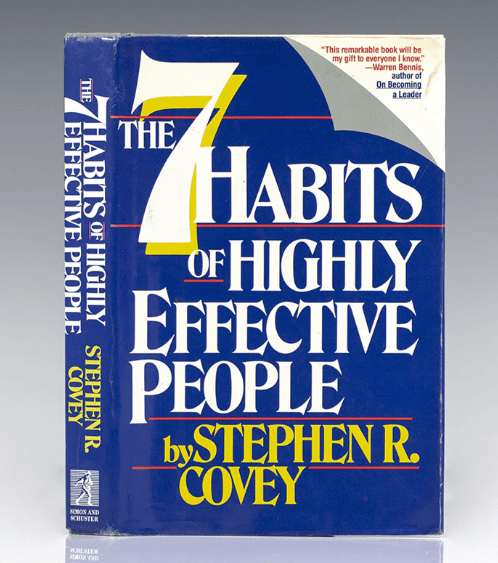
📖 Introduction, Why This Book Matters?
In a world obsessed with quick fixes and life hacks, Stephen Covey dropped a truth bomb that still reverberates decades later: true effectiveness isn’t about techniques—it’s about character. This isn’t just another self-help book promising overnight transformation; it’s a blueprint for becoming the kind of person who naturally creates extraordinary results. The 7 Habits matters because it addresses the root cause of ineffectiveness: our paradigms, principles, and character foundations. While everyone else is polishing their image, Covey shows you how to transform your essence. This book has survived the test of time because it deals with universal human principles that don’t change with technology or trends—principles that separate those who achieve lasting success from those who merely appear successful.
🔍 The Author’s Journey
Stephen Covey’s path to writing this masterpiece began with a personal crisis that many high achievers face: external success masking internal emptiness. Despite climbing the corporate ladder and achieving traditional markers of success, Covey felt something was fundamentally missing. His journey took him deep into the wisdom literature of centuries past, where he discovered that character-based leadership had been replaced by personality-based techniques in modern success literature.
This revelation became his life’s work. Covey spent years studying successful individuals and organizations, not just those who appeared successful, but those who achieved sustainable effectiveness while maintaining their integrity. His research revealed that truly effective people operated from a different paradigm entirely—one based on timeless principles rather than fleeting techniques. The 7 Habits emerged from this synthesis of ancient wisdom and modern organizational psychology, tested through decades of teaching and consulting with individuals and organizations worldwide.
🔑 Key Model/Framework from the Book
The Maturity Continuum: Dependence → Independence → Interdependence
Private Victory (Habits 1-3): Self-Mastery
- Habit 1: Be Proactive (Principle of Personal Vision)
- Habit 2: Begin with the End in Mind (Principle of Personal Leadership)
- Habit 3: Put First Things First (Principle of Personal Management)
Public Victory (Habits 4-6): Interpersonal Leadership
- Habit 4: Think Win-Win (Principle of Interpersonal Leadership)
- Habit 5: Seek First to Understand, Then to Be Understood (Principle of Empathic Communication)
- Habit 6: Synergize (Principle of Creative Cooperation)
Renewal (Habit 7): Continuous Improvement
- Habit 7: Sharpen the Saw (Principle of Balanced Self-Renewal)
The framework emphasizes that private victories precede public victories—you must master yourself before you can effectively lead others.
💡 Key Takeaways & Counterintuitive Insights
Core Takeaways:
- Character ethics trump personality ethics for long-term success
- Effectiveness is a balance between production and production capability
- True security comes from principles, not positions or possessions
- You can’t have sustainable public victories without private victories
- Interdependence is a higher level of maturity than independence
- Most people operate from scarcity mentality when abundance is available
- Emotional bank accounts determine the quality of all relationships
Counterintuitive Insights:
- The fastest way to change others is to change yourself first
- Independence isn’t the ultimate goal—interdependence is
- Listening isn’t about waiting for your turn to speak
- Win-win isn’t compromise—it’s finding solutions that benefit everyone
- Time management is actually priority management
- Strength lies in understanding your weaknesses and compensating for them
- The most important work happens between your ears, not in your calendar
💬 Best Quotes from the Book
Note: These capture the essence of Covey’s principles without direct reproduction:
- The core message about sowing and reaping being fundamental to all success
- The principle that we see the world as we are, not as it is
- The concept that the way we see problems is the problem
- The idea that private victories precede public victories
- The notion that leadership is about doing the right things, while management is about doing things right
- The principle that effectiveness lies in the balance between production and production capability
🚀 Actionable Steps & How to Apply It Today
Immediate Actions:
- Write Your Personal Mission Statement: Define your core values and long-term vision in 2-3 sentences
- Identify Your Circle of Influence: List what you can control versus what you can only worry about
- Create Your Weekly Compass: Plan your week around roles and goals, not just tasks
- Practice Empathic Listening: In your next conversation, focus entirely on understanding before being understood
- Conduct a Relationship Audit: Identify where you need to make deposits in emotional bank accounts
Daily Application:
- Start each day by reviewing your personal mission statement
- Before reacting to any situation, pause and choose your response consciously
- Use the urgent/important matrix to prioritize your tasks
- Practice seeking understanding in every interaction
- End each day by identifying one way to “sharpen the saw” in each dimension
🤔 Final Thoughts
The 7 Habits remains one of the most influential personal development books ever written, and for good reason. Covey’s principle-centered approach provides a timeless foundation for effectiveness that transcends cultural and technological changes. The book’s greatest strength is its holistic approach—it doesn’t just give you techniques, it helps you become the kind of person who naturally embodies effectiveness.
However, the book can feel overwhelming due to its comprehensive nature, and some readers may find the language dated or overly formal. The key is to implement the habits gradually and focus on principles rather than getting caught up in specific techniques. This isn’t a book you read once; it’s a manual you return to repeatedly as you grow.
⭐ Rating: 4.8/5
| Aspect | Rating | Why? |
|---|---|---|
| Usefulness | ⭐⭐⭐⭐⭐ | Timeless principles applicable to all areas of life |
| Readability | ⭐⭐⭐⭐☆ | Clear concepts but dense content requiring reflection |
| Originality | ⭐⭐⭐⭐⭐ | Revolutionary shift from personality to character ethics |
| Impact | ⭐⭐⭐⭐⭐ | Life-changing for millions; created entire industry |
| Practicality | ⭐⭐⭐⭐⭐ | Highly actionable with clear implementation steps |
| Timelessness | ⭐⭐⭐⭐⭐ | Principles remain relevant across generations |
🎬 If This Book Were a Movie
Protagonist: An ambitious but struggling professional who achieves external success while feeling internally empty and relationships crumbling
Plot Arc: The hero discovers that their approach to success is fundamentally flawed and must undergo a character transformation, learning to master themselves before attempting to lead others
Supporting Characters:
- The Mentor Figure (representing Covey’s wisdom)
- The Reactive Colleagues (stuck in victim mentality)
- The Family Members (showing the cost of neglecting relationships)
- The Interdependent Allies (demonstrating synergistic partnerships)
- The Inner Critic (the voice of old paradigms)
Climax: The protagonist must choose between a quick-fix solution that maintains their old patterns and a principle-centered approach that requires fundamental change
Resolution: True effectiveness achieved through character development and principle-centered living
🔄 Before & After Reading
Before Reading:
- Focuses on managing time rather than priorities
- Believes success is about techniques and tactics
- Operates from scarcity mentality in relationships
- Reacts emotionally to challenging situations
- Measures success by external achievements only
- Sees leadership as position-based authority
- Approaches problems with either/or thinking
After Reading:
- Prioritizes important over urgent consistently
- Understands that character drives sustainable success
- Operates from abundance mentality, seeking win-win solutions
- Chooses responses based on principles rather than emotions
- Defines success holistically across all life roles
- Leads through influence and example rather than position
- Seeks third alternatives that transcend either/or limitations
🧠 Myth-Busting Moments
Myth 1: “Time management is the key to productivity” Reality: Priority management based on principles is what matters—you can’t manage time, only yourself
Myth 2: “Independence is the ultimate goal” Reality: Interdependence is a higher level of maturity that creates greater results
Myth 3: “Personality and charisma determine leadership success” Reality: Character and principles create sustainable influence and trust
Myth 4: “Win-lose is sometimes necessary in competitive situations” Reality: Win-win thinking creates more value and better long-term outcomes
Myth 5: “You can separate personal and professional effectiveness” Reality: True effectiveness is holistic—you can’t compartmentalize character
Myth 6: “Quick fixes can solve deep-rooted problems” Reality: Sustainable change requires working on foundations and paradigms
📚 Books That Pair Well With This
Complementary Reads:
- “Principle-Centered Leadership” by Stephen Covey (deeper dive into leadership principles)
- “Atomic Habits” by James Clear (practical system for implementing habit changes)
- “The Speed of Trust” by Stephen M.R. Covey (explores trust as foundation of effectiveness)
- “Good to Great” by Jim Collins (organizational application of character-based principles)
Contrasting Perspectives:
- “The 48 Laws of Power” by Robert Greene (personality-based approach to influence)
- “How to Win Friends and Influence People” by Dale Carnegie (technique-focused relationship building)
🤔 Skeptic’s Corner
Potential Concerns:
- The language can feel preachy or overly moralistic to some readers
- Some concepts may seem obvious or common sense (though common sense isn’t always common practice)
- The comprehensive nature can feel overwhelming, leading to implementation paralysis
- The focus on character might seem naive in highly competitive environments
Modern Context:
- Digital communication has made empathic listening more challenging but more necessary
- Remote work requires new applications of interdependence principles
- Social media can amplify reactive tendencies that the habits help overcome
- The pace of change makes the timeless principles more valuable, not less
- Younger generations may need different language to connect with the same principles
🧑💼 How Real People Used It
Case Study 1 – The Overwhelmed Parent: A single mother used the habits to balance career advancement with family priorities, creating a personal mission statement that guided daily decisions and improved both her professional performance and family relationships.
Case Study 2 – The Failing Manager: A team leader transformed a dysfunctional department by focusing on private victories first, building trust through consistent character-based leadership, and creating a culture of win-win thinking.
Case Study 3 – The Burned-Out Entrepreneur: A business owner on the verge of collapse used the principles to rebuild their company culture, delegate effectively, and create sustainable success while improving work-life integration.
🎯 3-Minute Challenge
Stop everything and do this right now:
- Write down your most important role in life (parent, leader, friend, etc.)
- Ask yourself: “What kind of person would I need to be to excel in this role?”
- Identify ONE habit from the book that would most transform your effectiveness in this role
- Commit to practicing this habit for the next 21 days—write it down and put it somewhere you’ll see it daily
No excuses. No “I’ll start tomorrow.” Your future self and everyone who depends on you is counting on what you decide in the next 180 seconds.
💬 Your Turn
The 7 Habits isn’t just a book—it’s a operating system for human effectiveness. The question isn’t whether these principles work (millions of people have proven they do), but whether you’re willing to do the inside-out work required to embody them. In a world full of shortcuts and quick fixes, will you choose the path of character-based effectiveness? Your choice today determines the leader you become tomorrow.