
Mindset: The New Psychology of Success by Carol Dweck
 wkadmin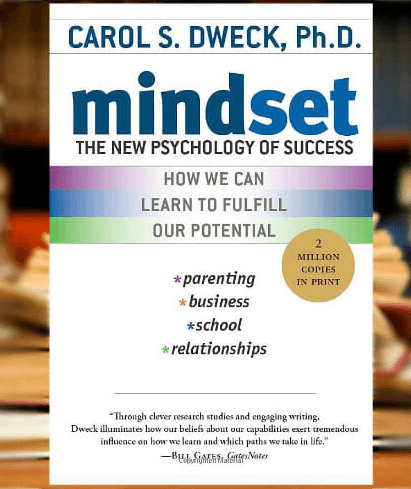
📖 Introduction, Why This Book Matters?
What if everything you believed about talent, intelligence, and success was fundamentally wrong? Carol Dweck’s groundbreaking research reveals that the secret to achievement isn’t raw talent or innate ability—it’s how you think about your abilities. This book matters because it exposes the invisible force that determines whether you’ll reach your potential or remain stuck in mediocrity: your mindset. In a world obsessed with natural talent and instant results, Dweck shows us that the belief in the power of “yet” can transform lives, relationships, and entire organizations. This isn’t just another self-help book—it’s a scientific revolution that redefines what it means to be successful, smart, and capable of growth.
👥 Who Should Read This
- Parents and educators who want to raise resilient, growth-oriented children
- Leaders and managers seeking to build cultures of learning and innovation
- Students and professionals feeling stuck or afraid of challenges
- Anyone struggling with perfectionism or fear of failure
- Coaches and mentors who want to unlock others’ potential
- Individuals seeking personal transformation and continuous improvement
🔍 The Author’s Journey
Carol Dweck’s journey to discovering mindset theory began with a simple question that haunted her early research: Why do some people thrive in the face of failure while others crumble? As a young researcher at Harvard, Yale, Columbia, and eventually Stanford, Dweck noticed that students with similar abilities responded completely differently to challenges. Some saw setbacks as learning opportunities, while others saw them as proof of their limitations.
Her decades of research into motivation and personality led to a revolutionary insight: it wasn’t ability that determined success, but beliefs about ability. Through thousands of studies with children, students, athletes, and business leaders, Dweck discovered that people fall into two distinct mindsets that shape their entire approach to life. This discovery became her life’s work, transforming how we understand learning, parenting, leadership, and human potential.
🔑 Key Model/Framework from the Book
The Two Mindsets:
Fixed Mindset: Believes abilities, intelligence, and talents are static traits
- “I am smart” or “I am not good at math”
- Avoids challenges to protect self-image
- Sees effort as a sign of weakness
- Gives up easily when faced with obstacles
- Ignores useful negative feedback
- Feels threatened by others’ success
Growth Mindset: Believes abilities can be developed through effort and learning
- “I can learn to be smarter” or “I can improve at math”
- Embraces challenges as opportunities
- Sees effort as the path to mastery
- Persists through setbacks
- Learns from criticism
- Finds inspiration in others’ success
The Mindset Continuum: Most people exist somewhere between pure fixed and pure growth mindsets, and mindsets can vary by domain (work, relationships, sports, etc.)
📊 By the Numbers
- Research span: Over 30 years of studies across multiple institutions
- Study participants: Thousands of students, athletes, and professionals
- Academic improvement: Students taught growth mindset showed significant grade improvements
- Corporate impact: Companies with growth mindset cultures show 47% higher employee engagement
- Praise effectiveness: Process praise (effort/strategy) vs. person praise (intelligence) led to 90% of children choosing harder challenges
- Failure response: Growth mindset individuals show 40% better resilience after setbacks
💡 Key Takeaways & Counterintuitive Insights
Core Takeaways:
- Your beliefs about your abilities are more important than your actual abilities
- Praising intelligence creates fixed mindset; praising effort creates growth mindset
- The word “yet” is one of the most powerful tools for transformation
- Failure is information, not a verdict on your worth
- Organizations have mindsets too, which dramatically impact culture and performance
- You can change your mindset at any age through awareness and practice
- Growth mindset leads to higher achievement, better relationships, and greater resilience
Counterintuitive Insights:
- Telling someone they’re “naturally talented” actually harms their performance
- Students who struggle initially often outperform “naturally gifted” students long-term
- The most successful people often have the most failures
- Effort isn’t a sign of low ability—it’s the key to developing high ability
- Setbacks are not roadblocks but stepping stones to mastery
- The “gifted” label can be a curse that limits potential
- Teaching children about brain plasticity literally changes their academic performance
🧠 Myth-Busting Moments
Myth 1: “Smart people don’t need to try hard” Reality: Effort is what transforms ability into achievement; even geniuses must work to excel
Myth 2: “You’re either good at something or you’re not” Reality: Skills and intelligence can be developed through deliberate practice and learning
Myth 3: “Praising children’s intelligence builds confidence” Reality: Intelligence praise creates fear of failure and reduces willingness to take on challenges
Myth 4: “Failure means you’re not cut out for it” Reality: Failure is the fastest path to learning and improvement when approached with growth mindset
Myth 5: “Natural talent is the key to success” Reality: Mindset about talent matters more than the talent itself
Myth 6: “You can’t teach old dogs new tricks” Reality: The brain remains plastic throughout life; adults can develop new abilities at any age
💬 Best Quotes from the Book
Note: These capture the essence of Dweck’s insights without direct reproduction:
- The fundamental principle that believing you can improve is the first step to actual improvement
- The concept that the word “yet” transforms everything about how we approach challenges
- The idea that genius is not about being perfect but about being passionate about learning
- The notion that your mindset is a choice that determines your path
- The understanding that failure is not falling down but refusing to get back up
- The principle that effort is what ignites ability and turns it into accomplishment
🚀 Actionable Steps & How to Apply It Today
Immediate Actions:
- Add “Yet” to Your Vocabulary: Replace “I can’t do this” with “I can’t do this yet”
- Change Your Praise Language: Focus on effort, strategy, and process rather than intelligence or talent
- Reframe Failures: Ask “What did I learn?” instead of “Why did I fail?”
- Embrace Challenges: Actively seek opportunities that stretch your abilities
- Learn from Criticism: View feedback as a gift for improvement, not a personal attack
Daily Application:
- Start each day by identifying one thing you want to improve
- Replace self-criticism with self-compassion and learning focus
- Celebrate the learning process, not just the outcomes
- Seek feedback actively and respond with curiosity
- Share your struggles and learning journey with others
⚡ First 24 Hours Section
Hour 1: Write down three areas where you’ve been operating from a fixed mindset Hours 2-8: Notice your internal dialogue—catch yourself using fixed mindset language Hours 9-16: Practice growth mindset responses to any challenges or setbacks you encounter Hours 17-24: Share one thing you learned or improved with someone else
Week 1 Goals:
- Replace “I’m not good at…” with “I’m learning to…”
- Take on one challenge you’ve been avoiding
- Ask for feedback on something important to you
- Read about someone who overcame significant obstacles through persistence
🤔 Final Thoughts
Mindset is a paradigm-shifting book that fundamentally changes how we think about human potential. Dweck’s research is compelling and her insights are immediately applicable across all areas of life. The book’s greatest strength is its simplicity—the concept is easy to understand but profound in its implications. However, some readers might find the examples repetitive, and the book sometimes oversimplifies complex psychological phenomena.
The real power of this book lies not in reading it once, but in applying its principles consistently. It’s a manual for unlocking human potential that should be required reading for anyone involved in education, parenting, or leadership. The mindset shift from “proving yourself” to “improving yourself” is genuinely transformative.
⭐ Rating: 4.7/5
| Aspect | Rating | Why? |
|---|---|---|
| Usefulness | ⭐⭐⭐⭐⭐ | Immediately applicable to all areas of life |
| Readability | ⭐⭐⭐⭐⭐ | Clear, engaging writing with compelling examples |
| Originality | ⭐⭐⭐⭐⭐ | Revolutionary insight backed by decades of research |
| Impact | ⭐⭐⭐⭐⭐ | Life-changing for millions; influenced education and business |
| Practicality | ⭐⭐⭐⭐⭐ | Simple concept with clear implementation strategies |
| Timelessness | ⭐⭐⭐⭐⭐ | Fundamental human psychology principles that endure |
🎬 If This Book Were a Movie
Protagonist: A struggling student who believes they’re “just not smart enough” to succeed
Plot Arc: The hero discovers that their beliefs about their abilities are holding them back more than their actual abilities, and must learn to embrace challenges and failure as paths to growth
Supporting Characters:
- The Growth Mindset Mentor (representing Dweck’s research)
- The Fixed Mindset Voice (internal critic)
- The Transformation Witnesses (teachers, parents, friends who see the change)
- The Challenge Opportunities (difficult tasks that become growth catalysts)
- The Success Stories (other characters who’ve made the mindset shift)
Climax: The protagonist faces their biggest challenge yet and must choose between playing it safe (fixed mindset) or embracing the struggle (growth mindset)
Resolution: Success through persistence and learning, with the hero becoming a mentor to others
🔄 Before & After Reading
Before Reading:
- Believes abilities are fixed traits you’re born with
- Avoids challenges to protect self-image
- Sees effort as a sign of weakness or lack of talent
- Takes criticism personally and defensively
- Gives up quickly when things get difficult
- Feels threatened by others’ success
- Measures worth by outcomes rather than learning
After Reading:
- Understands abilities can be developed through effort and learning
- Seeks challenges as opportunities for growth
- Views effort as the path to mastery and improvement
- Welcomes feedback as valuable information for improvement
- Persists through setbacks with curiosity about what to learn
- Finds inspiration in others’ success and achievements
- Measures progress by learning and development, not just results
📚 Books That Pair Well With This
Complementary Reads:
- “Grit” by Angela Duckworth (explores passion and perseverance for long-term goals)
- “Peak” by Anders Ericsson (the science of deliberate practice and skill development)
- “The Power of Now” by Eckhart Tolle (mindfulness and present-moment awareness)
- “Atomic Habits” by James Clear (building systems for continuous improvement)
Contrasting Perspectives:
- “Mindset Reconsidered” research (examines limitations of mindset interventions)
- “The Talent Code” by Daniel Coyle (focuses more on skill development mechanics)
📚 Resources
Online Resources:
- Mindset Works (official website with assessments and tools)
- Stanford’s Project for Education Research That Scales (PERTS)
- Growth mindset assessment tools and activities
- TED Talks by Carol Dweck on mindset research
Practical Tools:
- Growth mindset conversation starters for parents and educators
- Feedback frameworks that promote learning over judgment
- Challenge-reframing worksheets and exercises
- Mindset reflection journals and tracking tools
🤔 Skeptic’s Corner
Potential Concerns:
- Some studies have failed to replicate the mindset intervention effects
- The concept can be oversimplified—personality and environmental factors also matter
- Risk of “growth mindset” becoming another way to blame individuals for systemic problems
- The book sometimes presents examples that may feel cherry-picked
- Cultural differences in how mindset concepts are received and applied
Modern Context:
- Social media can amplify fixed mindset thinking through comparison culture
- The concept needs to be balanced with realistic assessment of individual differences
- Growth mindset shouldn’t be used to dismiss the importance of resources and support
- The principles remain valuable when applied thoughtfully rather than rigidly
- Integration with other psychological research provides a more complete picture
🧑💼 How Real People Used It
Case Study 1 – The Struggling Student: A high school student failing math shifted from “I’m not a math person” to “I’m not good at math yet,” leading to improved grades and confidence through extra practice and help-seeking.
Case Study 2 – The Corporate Leader: A manager transformed team performance by changing from talent-focused to development-focused language, creating a culture where employees took on stretch assignments and learned from failures.
Case Study 3 – The Parent’s Transformation: A mother stopped praising her child’s intelligence and started praising effort and strategy, resulting in her child becoming more resilient and willing to take on challenges.
🎯 3-Minute Challenge
Right now, grab a pen and paper:
- Write down one area where you’ve been thinking “I’m just not good at this”
- Rewrite it as “I’m not good at this YET”
- List three specific actions you could take this week to improve in this area
- Identify one person who could give you feedback or support in this growth area
- Schedule 30 minutes this week to work on this challenge
No excuses. No “I’ll do it later.” Your growth mindset journey starts with the decision you make in the next 180 seconds.
💬 Your Turn
Mindset isn’t just a book—it’s a lens through which to view your entire life. The question isn’t whether you have the ability to grow (you do), but whether you believe you can grow. That belief will determine everything: how you handle challenges, how you respond to setbacks, and ultimately, how far you’ll go in life. Will you choose to see your abilities as fixed limitations or as starting points for development? The choice you make today shapes the person you become tomorrow.