
Steve Jobs by Walter Isaacson
 wkadmin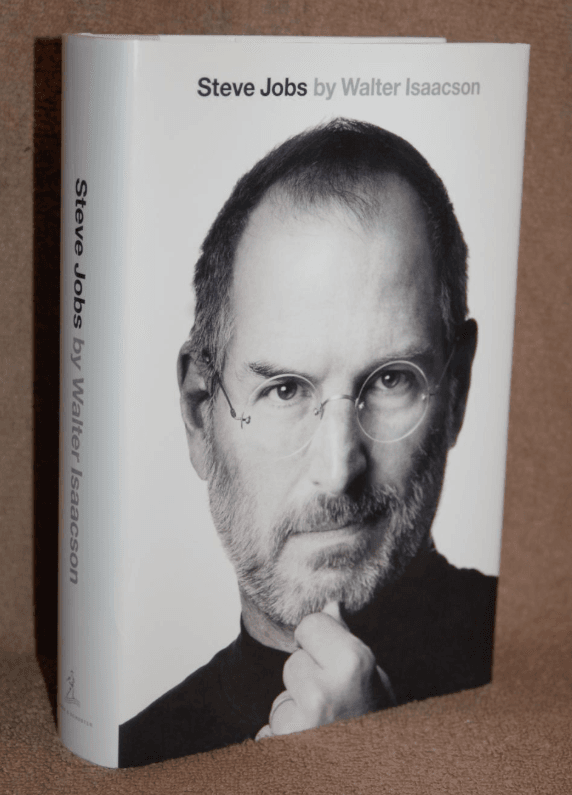
📖 Introduction: Why His Life Matters
Steve Jobs wasn’t just the co-founder of Apple—he was a cultural earthquake. Walter Isaacson’s biography reveals how a rebellious hippie kid became the visionary behind the iPhone, Pixar, and the modern tech aesthetic, all while wrestling with personal demons.
This book matters because it shows:
- How obsession with beauty and simplicity can redefine industries.
- Why flawed leaders often drive the greatest innovations.
- The human cost of relentless perfectionism.
Jobs’ life is a blueprint for creatives, a cautionary tale for leaders, and a drama about brilliance clashing with humanity.
🌟 The Journey
Early Life (1955–1974)
- Adopted at birth, raised in Silicon Valley amid apricot orchards.
- Teenage pranks (like building “blue boxes” to hack phone lines) hinted at his mix of mischief and tech prowess.
- Dropped out of Reed College but audited calligraphy classes—later inspiring Mac’s fonts.
Turning Points
- 1976: Founded Apple in a garage with Wozniak; launched Apple I (a circuit board for hobbyists).
- 1985: Forced out of Apple after boardroom clashes.
- 1997: Returned to rescue Apple from near-bankruptcy.
Peak Influence (1997–2011)
- Revolutionized six industries: PCs (Mac), animation (Pixar), music (iPod), phones (iPhone), tablets (iPad), retail (Apple Stores).
- Demanded insane perfection (e.g., hidden circuit boards had to be “beautiful”).
Later Years/Legacy
- Battled pancreatic cancer but delayed treatment, relying on alternative therapies first.
- Died in 2011; Apple became the world’s most valuable company under his ethos: “Stay hungry, stay foolish.”
🔍 Key Themes
Driving Forces
- Artistic Zeal: Tech wasn’t just functional—it had to feel magical.
- Reality Distortion Field: Convinced teams impossible tasks were possible.
Contradictions
- Spiritual seeker who meditated in India → ruthless CEO who reduced employees to tears.
- Minimalist designer → billionaire obsessed with control.
Cultural Impact
- Made tech aspirational (not just utilitarian).
- Turned product launches into rock concerts.
💡 Lessons for Readers
- “Innovation thrives at the intersection of art and science.” (Jobs’ mantra)
- “Great work requires saying ‘no’ to 1,000 things.” (His design philosophy)
- “Don’t let others’ opinions drown your inner voice.” (From his Stanford speech)
For Entrepreneurs: Vision without execution is hallucination.
For Creatives: Details matter—even ones no one sees.
For Leaders: Inspiration and terror are a dangerous mix.
🎭 Memorable Anecdotes
- The Pirate Flag: Jobs’ early Apple team flew a pirate flag—symbolizing their rebel spirit against corporate IBM.
- The First iPhone Prototype: He rejected it for being “3 millimeters too thick.” Engineers rebuilt it in 3 weeks.
- His Final Words: Reportedly, he stared at his family, whispered “Oh wow,” and died—echoing his mystical side.
🤔 Critical Perspective
Strengths
- Unprecedented access: Jobs gave Isaacson 40+ interviews and didn’t censor the dark parts.
- Balanced portrayal: Shows his genius and cruelty (like denying paternity to his first child).
Gaps
- Glosses over worker burnout: Apple’s “996 culture” (9 AM–9 PM, 6 days/week) isn’t scrutinized.
- Pixar’s story feels rushed: Compared to Apple’s deep dive.
🏆 Final Verdict
Who Should Read?
- Tech enthusiasts, designers, and founders.
- Anyone intrigued by how creativity clashes with capitalism.
Who Might Skip? Those wanting a hero-worship tale (this is warts-and-all).
⭐ Rating (4.7/5)
| Aspect | Rating | Why? |
|---|---|---|
| Storytelling | ⭐⭐⭐⭐⭐ | Reads like a novel. |
| Research Depth | ⭐⭐⭐⭐⭐ | 100+ interviews. |
| Emotional Resonance | ⭐⭐⭐⭐ | You’ll admire and wince at Jobs. |
| Usefulness | ⭐⭐⭐ | More inspiration than how-to. |
| Readability | ⭐⭐⭐⭐⭐ | Page-turner despite length. |
| Originality | ⭐⭐⭐⭐ | Defines the modern tech biography. |
💬 Your Turn
Which Jobs contradiction fascinates you most? (For me: Buddhist vegan who parked in handicap spots.)