
Nonviolent Communication by Marshall Rosenberg
 wkadmin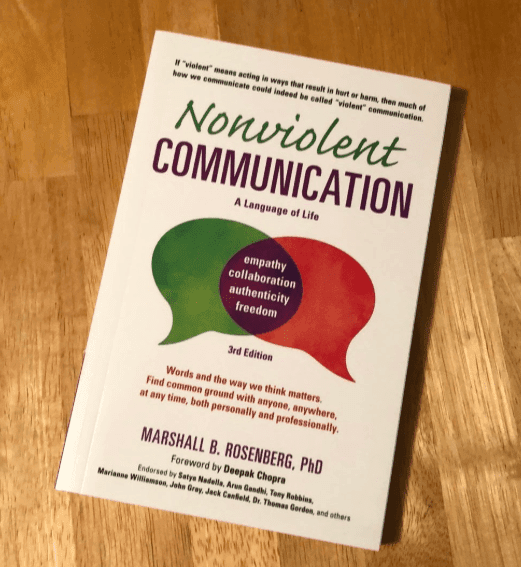
📖 Introduction: Why This Book Matters
We live in a world full of noise—arguments, assumptions, and unspoken frustrations. Nonviolent Communication (NVC) by Marshall Rosenberg offers something rare: a way to communicate with empathy, clarity, and kindness—even during conflict.
Whether you’re navigating a difficult conversation with a partner, trying to get through to your kids, or leading a tense meeting at work, this book provides a powerful framework to connect without judgment or blame. It’s more than a communication method—it’s a new way of living.
🔍 The Author’s Journey
Marshall Rosenberg’s early life in conflict-ridden Detroit sparked a deep curiosity: Why do humans hurt each other with words and actions? His quest led him to earn a PhD in clinical psychology and later establish the Center for Nonviolent Communication.
For over four decades, he used his method to mediate in war zones, schools, prisons, and boardrooms. His mission? Help people hear each other again, beneath the pain and misunderstanding.
🔑 The NVC Model: Four Simple Yet Powerful Steps
At the heart of Nonviolent Communication is a four-step process:
- Observation – Describe the situation without evaluation.
“When I hear you raise your voice…”
- Feelings – Identify what emotions you’re experiencing.
“…I feel overwhelmed…”
- Needs – Acknowledge the universal need behind that feeling.
“…because I need understanding and calm…”
- Request – Ask clearly and respectfully for what would help.
“Would you be willing to speak more softly?”
It’s deceptively simple but radically effective in building bridges instead of walls.
💡 Key Takeaways & Counterintuitive Insights
- Feelings point to unmet needs, not someone else’s behavior. Anger isn’t caused by others—it’s triggered when our core needs aren’t fulfilled.
- Stop playing the blame game. Judgments and criticisms disconnect us. NVC replaces “You’re wrong” with “Here’s what I’m needing.”
- All human behavior is an attempt to meet needs. Even unpleasant behavior is rooted in a desire for love, safety, or connection.
- Empathy over advice. Most people don’t want fixing—they want to be heard.
- Requests must be specific and doable. “Be nice” is vague. “Would you be willing to put your phone down during dinner?” invites connection.
💬 Best Quotes from the Book
- “Anger is not caused by others, but by thoughts that disconnect us from our needs.”
- “Blame and judgment are tragic expressions of unmet needs.”
- “The goal of communication is connection, not coercion.”
🚀 How to Apply Nonviolent Communication Today
- Shift from judgment to curiosity. Next time you’re upset, ask: What am I feeling? What do I need?
- Replace “You” with “I.” Try: “I feel worried when I don’t hear from you” instead of “You always ignore me.”
- Practice daily empathy. Withhold advice. Just reflect: “Are you feeling ___ because you need ___?”
- Create a needs vocabulary. Use lists of feelings and needs to expand your emotional intelligence.
- Make clear requests. Start with “Would you be willing to…” and accept a “no” gracefully.
🤔 Final Thoughts
This book won’t just change how you communicate—it may change how you think about people. It teaches that beneath every outburst is a cry for connection. Though the tone can feel overly structured at times, the principles are universally powerful and deeply human.
If you’re ready to have fewer arguments, better relationships, and a more peaceful mind, Nonviolent Communication is a must-read.
⭐ Rating (4.6/5)
| Aspect | Rating | Why? |
|---|---|---|
| Usefulness | ⭐⭐⭐⭐⭐ | Transformational for communication in any area of life. |
| Readability | ⭐⭐⭐⭐☆ | Clear and practical, though examples can feel scripted. |
| Originality | ⭐⭐⭐⭐⭐ | Introduces a completely new way to communicate. |
| Impact | ⭐⭐⭐⭐⭐ | Real-world impact from couples therapy to global peacemaking. |
| Practicality | ⭐⭐⭐⭐☆ | Needs practice, but highly applicable with commitment. |
🎬 If This Book Were a Movie…
Protagonist: A worn-out parent, teacher, or partner desperate to be understood.
Plot: After years of conflict, they stumble upon NVC. At first it feels awkward, but slowly they rebuild fractured relationships—one honest, compassionate conversation at a time.
Supporting Cast: A resistant teenager, a tough boss, and a quiet child who finally opens up.
🔄 Before & After Reading
Before:
- Believes arguments are won with logic or volume.
- Uses blame or sarcasm during conflict.
- Thinks needs should be hidden, not expressed.
After:
- Focuses on empathy and clarity.
- Recognizes that needs aren’t weaknesses—they’re guides.
- Makes space for honest connection instead of control.
🧠 Myth-Busting Moments
- Myth: “Expressing needs is selfish.”
Truth: Naming your needs gives others the opportunity to meet them. - Myth: “If I’m nice, they’ll change.”
Truth: NVC isn’t about being nice—it’s about being real without hurting. - Myth: “Good communication is about being right.”
Truth: Real communication is about being connected.
📚 Books That Pair Well With This
- Crucial Conversations – For tools on navigating high-stakes talks.
- The Art of Communicating by Thich Nhat Hanh – A spiritual companion to NVC.
- Radical Acceptance by Tara Brach – Deepens the self-compassion needed to practice NVC.
- Difficult Conversations – For understanding the psychology behind why conflict escalates.
🤔 Skeptic’s Corner
Critics argue that NVC can sound robotic or overly “touchy-feely” at first. And yes, saying “I feel unheard because I need acknowledgment” might feel awkward in everyday conversation. But the goal isn’t scripted perfection—it’s intentional presence. With practice, you’ll internalize the process and speak naturally with more empathy.
🧑💼 How Real People Used It
- A school teacher reduced student misbehavior by using NVC to understand unmet needs.
- A couple in therapy rebuilt trust by replacing blame with feelings and needs.
- An HR leader resolved team conflict without firings—just by helping everyone feel heard.
🎯 3-Minute Challenge
🕒 In the next 3 minutes…
- Think of a recent disagreement you had.
- What exactly did the other person say or do? (Just the facts.)
- How did it make you feel?
- What need of yours wasn’t being met?
- Now, write one simple request you could make next time.
Even one mindful conversation can start a ripple effect.
💬 Your Turn
Have you tried applying Nonviolent Communication in your life? Share your story in the comments below or tag me on social media—I’d love to hear how it’s impacted your relationships.