
Outlive by Peter Attia
 wkadmin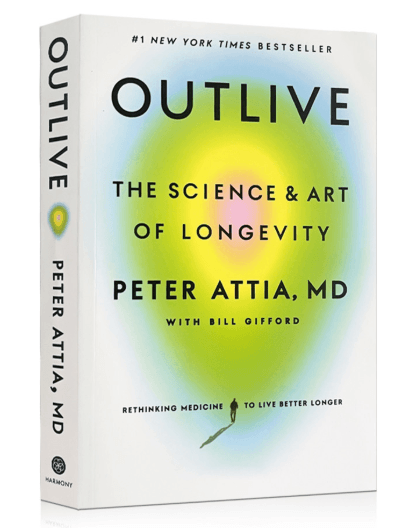
📖 Introduction: Why This Book Matters
Reimagining Healthspan, Not Just Lifespan.
We’ve been taught to fear death—but Outlive asks a better question: What if the bigger tragedy is not dying too soon, but living too poorly for too long?
Dr. Peter Attia’s Outlive isn’t just another wellness book. It’s a strategic, science-backed call to own your health future now—decades before your body starts breaking down. Instead of reacting to disease, Attia urges us to proactively design a life that maximizes strength, clarity, energy, and resilience well into old age.
In a world obsessed with short-term fitness hacks and reactive medicine, Outlive offers a powerful alternative: Medicine 3.0—a preventive, patient-driven model that transforms longevity into something you control.
🔍 The Author’s Journey
Dr. Peter Attia is not your average physician. He began as a surgeon at Johns Hopkins, trained in high-performance endurance sports, and later became disillusioned with the traditional healthcare system that only treated illness once it had already taken root. A personal health crisis—and the death of patients he felt he could’ve helped earlier—sparked his shift toward a longevity-focused, personalized medicine practice.
His work today blends deep science, data, and personal vulnerability—especially around emotional and mental health—to help people live longer and better.
🔑 Key Model/Framework from the Book
Attia introduces the concept of “Medicine 3.0”, which replaces the reactive model of modern healthcare with a proactive, preventive one. It’s built around these core ideas:
- The Four Horsemen of modern chronic disease:
- Heart disease
- Cancer
- Neurodegenerative diseases (like Alzheimer’s)
- Metabolic dysfunction (like diabetes or obesity)
- Five Core Pillars of Longevity:
- Exercise – The most potent longevity drug
- Nutrition – No one-size-fits-all; it’s about consistency and data
- Sleep – Undervalued, yet critical for healthspan
- Emotional Health – The silent killer of longevity
- Supplements/Medicine – Strategic, not random
💡 Key Takeaways & Counterintuitive Insights
- Being “not sick” doesn’t mean you’re healthy. Most people are walking toward chronic disease without any symptoms—until it’s too late.
- Exercise is more powerful than any medication in preventing almost every major disease. Attia calls it the “king” of longevity tools.
- Emotional trauma affects physical health more than most people realize. Healing your inner world is part of living longer.
- VO2 max and strength are better predictors of lifespan than cholesterol levels or BMI.
- Longevity isn’t about living forever—it’s about maximizing healthspan (the quality years).
- Medicine should be proactive, not reactive. Waiting until you’re “sick” to change is like fixing your roof after it’s collapsed.
💬 Best Quotes from the Book
- “You don’t have to choose between living long and living well—you can have both if you start early.”
- “Most people die of diseases they didn’t need to get.”
- “The greatest threat to longevity is emotional illiteracy.”
🚀 Actionable Steps: How to Apply It Today
- Start resistance training and zone 2 cardio (low heart rate, long duration). They build the physical base of longevity.
- Track your sleep for 1 week using any wearable or app—and then actually change one habit to improve it.
- Do an emotional inventory. What’s draining your mental energy? Seek therapy or journaling support.
- Get a blood panel and metabolic screening, not just to treat problems—but to anticipate them.
- Design your “Centenarian Decathlon”—what physical abilities do you want to have at 100? (E.g., carry groceries, climb stairs.) Reverse-engineer your training accordingly.
🤔 Final Thoughts
Outlive is more than a book—it’s a wake-up call. It won’t hand you a magic pill or a 30-day fix. Instead, it gives you a long-term strategy, backed by deep science and heart. Attia’s vulnerability around his own emotional growth makes the message land even more powerfully. If you’re ready to take true ownership of your health—not just to live longer, but to live better—this book is essential.
⭐ Rating (4.8/5)
| Aspect | Rating | Why? |
|---|---|---|
| Usefulness | ⭐⭐⭐⭐⭐ | Practical, evidence-based, and transformational for real-life health. |
| Readability | ⭐⭐⭐⭐☆ | Dense at times, but well-written with clear storytelling. |
| Originality | ⭐⭐⭐⭐⭐ | Unifies science, strategy, and emotional health into a fresh approach. |
| Impact | ⭐⭐⭐⭐⭐ | A complete shift in how we view aging, disease, and health. |
| Practicality | ⭐⭐⭐⭐☆ | Requires effort and discipline, but fully actionable with intention. |
🎬 If This Book Were a Movie…
Protagonist: A driven but burned-out professional in their 40s who looks healthy but feels worn down.
Plot Arc: After a sudden health scare, they meet a doctor who challenges everything they know about “wellness.” They dive into fitness, self-reflection, medical diagnostics, and emotional healing—emerging stronger, wiser, and more resilient.
Supporting Characters: A skeptical spouse, a data-driven doctor, a retired athlete, and a quiet therapist who unlocks buried trauma.
🔄 Before & After Reading
Before:
- “I’m fine—my doctor says my labs look okay.”
- “I’ll worry about my health when I’m older.”
- “Exercise is optional. I just need to eat right.”
After:
- “I want to train now for the life I want at 80.”
- “Healthspan > lifespan.”
- “Mental health is physical health.”
🧠 Myth-Busting Moments
- Myth: “As long as I’m not overweight, I’m healthy.”
Truth: Metabolic health matters more than body size. - Myth: “Getting old means slowing down.”
Truth: Decline is not inevitable—it’s preventable. - Myth: “Cardio is enough.”
Truth: Strength training and VO2 max are crucial for longevity. - Myth: “Therapy is for people with problems.”
Truth: Emotional wellness is preventive care.
📚 Books That Pair Well With This
- Lifespan by David Sinclair – A scientific look at reversing aging
- The Blue Zones by Dan Buettner – Lifestyle secrets of the longest-living people
- Why We Sleep by Matthew Walker – Deep dive into the underrated longevity pillar
- Atomic Habits by James Clear – Behavior change to support long-term health goals
🤔 Skeptic’s Corner
Some readers may find Attia’s level of detail and scientific depth overwhelming—especially those new to medical science or fitness. There’s also a risk of perfectionism: trying to optimize every metric can lead to stress or burnout.
But the key is balance. The book isn’t a rigid prescription—it’s a toolkit. Apply what works for your life and scale up gradually.
🧑💼 How Real People Used It
- A 55-year-old corporate executive built a fitness habit using the “Centenarian Decathlon” idea—and reversed early signs of insulin resistance.
- A 30-something mom with anxiety used the book to understand the link between stress and long-term health, starting weekly therapy and morning walks.
- A personal trainer overhauled their programs to focus on VO2 max and strength metrics, not aesthetics.
🎯 3-Minute Challenge
🕒 In the next 3 minutes…
- Visualize yourself at age 80. What do you want to be able to do (climb stairs, dance, play with grandkids)?
- Write down 3 physical abilities you’ll need to maintain.
- Pick 1 small habit you can start this week that supports that vision. (Example: 15-minute walk every morning.)
Live long. But more importantly—live well.