
Influence: The Psychology of Persuasion by Robert Cialdini
 wkadmin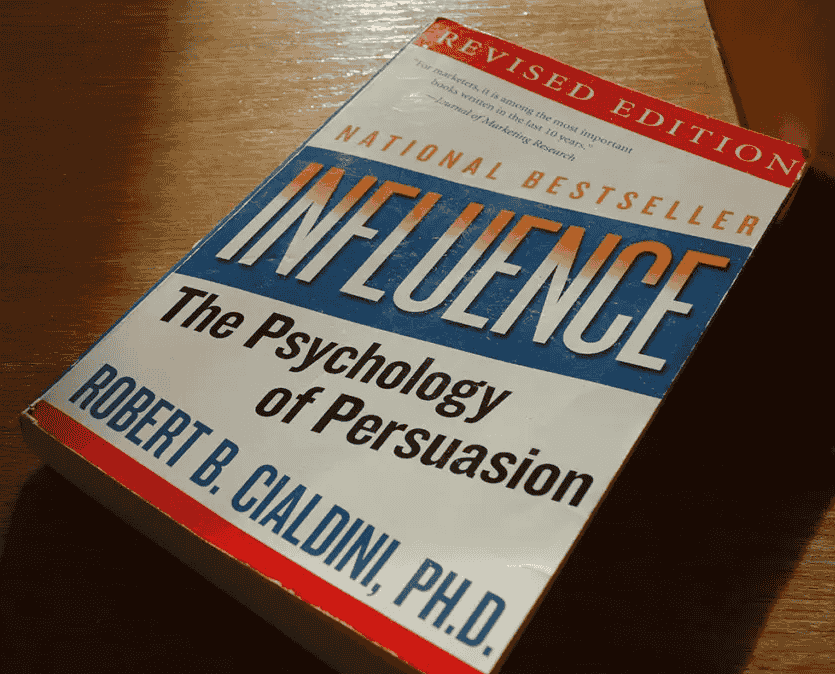
📖 Introduction, Why This Book Matters?
Understanding the Science Behind Why We Say “Yes”.
In a world where we’re bombarded with 3,000+ persuasion attempts daily, understanding the hidden triggers that make us say “yes” isn’t just useful—it’s survival. Cialdini’s masterpiece doesn’t just explain why we buy things we don’t need or agree to requests we should refuse; it reveals the psychological autopilot that governs most human decisions. This book transforms you from a passive victim of influence into an aware participant who can both resist unwanted persuasion and ethically guide others toward better decisions.
🔍 The Author’s Journey
Robert Cialdini began his journey as a confused academic who couldn’t understand why he kept falling for sales pitches, con artists, and fundraisers. Instead of accepting his fate as a “sucker,” he embarked on a three-year undercover mission, infiltrating car dealerships, telemarketing companies, and fundraising organizations to decode the secrets of professional persuaders.
What he discovered shocked him: all persuasion could be distilled into six fundamental principles that exploit our evolutionary wiring. These weren’t random tricks but systematic approaches that tap into our deepest psychological programming, making us comply almost automatically without conscious thought.
🔑 Key Model/Framework from the Book
The Six Weapons of Influence:
- Reciprocity – We feel obligated to return favors, even unwanted ones
- Commitment/Consistency – We align with our previous commitments and self-image
- Social Proof – We follow the crowd, especially in uncertain situations
- Authority – We defer to experts and authority figures
- Liking – We say yes to people we find attractive, similar, or complimentary
- Scarcity – We value things more when they’re rare or limited
Each principle works as a psychological shortcut that bypasses our rational thinking and triggers automatic compliance.
💡 Key Takeaways & Counterintuitive Insights
The Expensive = Good Stereotype: We often equate higher prices with higher quality, even when no rational connection exists. A jewelry store that doubled prices on turquoise pieces saw sales skyrocket simply because customers assumed the higher price meant better quality.
The Rejection-Then-Retreat Strategy: When someone makes a large request followed by a smaller one, we’re more likely to accept the smaller request even if we would have rejected it initially. This isn’t just about comparison—it triggers our reciprocity response.
Social Proof Backfires: Anti-littering campaigns that highlight how many people litter actually increase littering by suggesting it’s normal behavior. The message “Don’t be like the majority who litter” tells people most others are doing it.
The Benjamin Franklin Effect: Asking someone to do you a small favor makes them like you more, not less. This reverses common sense and occurs because people rationalize their actions by assuming they must like you if they helped you.
Commitment Escalation: Once we’ve taken a small step toward a commitment, we’re psychologically programmed to take bigger steps. This explains why many cults use small, harmless requests as gateways to major life changes.
💬 Best Quotes from the Book
“A well-known principle of human behavior says that when we ask someone to do us a favor we will be more successful if we provide a reason.”
“The way to love anything is to realize that it may be lost.”
“When it comes to the influence process, there is no more powerful weapon than the weapon of influence consistent with our previous commitments.”
“We use others to help us choose how to act, especially when we are feeling uncertain.”
“The highest form of human architecture is the architecture of consent.”
🚀 Actionable Steps & How to Apply It Today
For Resistance:
- Before making any significant purchase, sleep on it and ask yourself if you’re being influenced by scarcity or social proof
- Question why you’re being asked to make an immediate decision
- Identify the specific influence technique being used and consciously resist it
For Ethical Influence:
- Start with small requests before making bigger ones (commitment/consistency)
- Use social proof by showing how similar people have made similar choices
- Be genuinely helpful first, then make your request (reciprocity)
- Establish your credibility and expertise before making recommendations (authority)
For Negotiations:
- Create scarcity by highlighting unique benefits or limited availability
- Use the “because” technique to provide reasons, even simple ones
- Find common ground and genuine similarities (liking)
🤔 Final Thoughts
This book is absolutely worth reading—it’s one of the rare books that immediately changes how you see the world. After reading it, you’ll notice these principles everywhere: in marketing campaigns, political speeches, and everyday conversations. The insights remain remarkably relevant decades after publication, which speaks to their foundation in fundamental human psychology rather than trendy techniques.
The book’s greatest strength is its scientific approach combined with entertaining real-world examples. Cialdini doesn’t just tell you these principles exist; he shows you exactly how they work through controlled experiments and field studies. This makes the concepts both memorable and actionable.
⭐ Rating (4.5/5)
| Aspect | Rating (out of 5 stars) | Why? |
|---|---|---|
| Usefulness | ⭐⭐⭐⭐⭐ | Immediately applicable to daily life and professional situations |
| Readability | ⭐⭐⭐⭐⭐ | Engaging stories and clear examples make complex psychology accessible |
| Originality | ⭐⭐⭐⭐⭐ | Groundbreaking synthesis of persuasion research into practical framework |
| Impact | ⭐⭐⭐⭐⭐ | Changed how entire fields approach influence and compliance |
| Practicality | ⭐⭐⭐⭐⭐ | Every principle can be applied immediately with specific techniques |
| Timelessness | ⭐⭐⭐⭐⭐ | Based on fundamental human psychology, not temporary trends |
🎬 If This Book Were a Movie
Protagonist: Robert Cialdini would be played by someone like Bryan Cranston—a mild-mannered professor who discovers he has a hidden talent for seeing through deception and manipulation.
Plot Arc: The film would follow Cialdini’s transformation from a naive academic constantly falling for scams to a skilled analyst who can decode any persuasion attempt. Each act would focus on uncovering one of the six principles through undercover work in different industries.
Supporting Characters: A wise mentor figure (an elderly con artist who becomes an ally), various antagonists representing different influence techniques (the smooth car salesman, the aggressive telemarketer, the charismatic cult leader), and a loyal research assistant who helps document the findings.
Climax: Cialdini must use all six principles to expose a major fraud while resisting the same techniques being used against him.
🔄 Before & After Reading
Before Reading:
- You might blame yourself for “weak willpower” when you make impulsive decisions
- You could feel frustrated by your inability to resist sales pitches or manipulation
- You might use basic persuasion techniques without understanding why they work or fail
- You could be unaware of how your daily choices are influenced by psychological triggers
After Reading:
- You recognize influence attempts in real-time and can consciously choose your response
- You understand that falling for persuasion isn’t personal weakness but human nature
- You can ethically guide others toward better decisions using scientific principles
- You make more conscious choices based on actual preferences rather than psychological triggers
🧠 Myth-Busting Moments
Myth: People make rational decisions based on facts and logic. Reality: Most decisions are made emotionally and justified rationally afterward. The six principles work because they bypass rational thinking entirely.
Myth: If someone is trying to influence you, they’re being manipulative. Reality: Influence is neutral—it’s how we coordinate society and make decisions. The ethics depend on whether it’s used for mutual benefit or exploitation.
Myth: Smart people are immune to influence techniques. Reality: Intelligence doesn’t protect against these principles; in fact, smart people are often more susceptible because they’re confident in their decision-making abilities.
Myth: Awareness of these techniques makes you immune to them. Reality: Even knowing about these principles doesn’t make you immune—you must actively use that knowledge to resist when appropriate.
📚 Books That Pair Well With This
“Thinking, Fast and Slow” by Daniel Kahneman – Explains the dual-system thinking that makes influence techniques so effective
“The Persuasion Code” by Christophe Morin – Applies neuroscience to persuasion with modern brain imaging insights
“Made to Stick” by Chip Heath – Shows how to make your ideas more memorable and persuasive
“Nudge” by Richard Thaler – Explores how to influence behavior for better outcomes through choice architecture
“The Art of Negotiation” by Michael Wheeler – Applies influence principles specifically to negotiation scenarios
🤔 Skeptic’s Corner
Some critics argue that Cialdini’s principles can be misused for manipulation, but this misses the point—these techniques exist whether we acknowledge them or not. The book empowers readers to recognize and respond to influence attempts rather than being unconscious victims.
The research is primarily from the 1970s and 1980s, but the principles have been consistently validated in modern studies. If anything, digital technology has made these techniques more powerful and ubiquitous.
Some examples may feel dated (like mail-order sales), but the underlying psychology remains constant. Modern readers can easily translate these principles to digital marketing, social media, and online commerce.
🧑💼 How Real People Used It
Marketing Professional: Sarah used the scarcity principle to increase email signups by 300% by creating “limited time” offers that generated genuine urgency rather than false scarcity.
Teacher: Mike improved student participation by using the commitment/consistency principle—instead of telling students what to do, he asked them to set their own goals and then reminded them of their commitments.
Negotiator: Lisa used the reciprocity principle in salary negotiations by first offering flexible concessions on scheduling and work arrangements, making her employer more likely to agree to her compensation request.
Parent: John used the authority principle by explaining the reasoning behind rules rather than just enforcing them, making his teenage daughter more willing to comply because she understood the logic.
🎯 3-Minute Challenge
In the next 3 minutes, identify one area of your life where you want to influence someone (yourself, a family member, colleague, or friend) toward a better decision. Pick one of the six principles from this book and design a simple approach to encourage that better choice. For example, if you want a family member to eat healthier, use social proof by sharing stories of similar people who successfully changed their eating habits and the positive results they experienced. Write down your approach and try it within the next 24 hours.
💬 Your Turn
Now that you’ve explored the psychology of influence, it’s time to reflect on your own experience. Think about a recent decision you made that you later regretted—whether it was a purchase, agreeing to a request, or changing your mind about something important. Can you identify which of Cialdini’s six principles was at play? Was it the salesperson who gave you a small “free” sample first (reciprocity)? The limited-time offer that made you feel rushed (scarcity)? Or perhaps the testimonials from “people just like you” (social proof)?
Now consider this: What’s one relationship or situation in your life where you could use these principles ethically to create positive change? Maybe you want to encourage a friend to pursue their dreams, help your team be more collaborative, or inspire your family to adopt healthier habits. Choose one principle and design a gentle, respectful approach that honors the other person’s autonomy while guiding them toward what you believe is a better choice for them.
Remember, the goal isn’t manipulation—it’s understanding the psychological reality of how influence works and using that knowledge to create win-win situations. The most powerful influence isn’t about getting people to do what you want, but about helping them make decisions that align with their own best interests and values.