
Elon Musk by Walter Isaacson
 wkadmin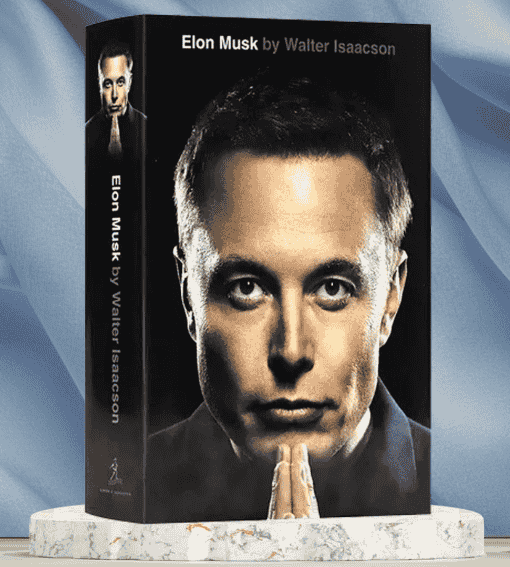
📖 Introduction: Why This Life Matters
In an era where humanity stands at the crossroads of technological revolution and existential crisis, one man’s obsession with the impossible has redefined what it means to dream big. Elon Musk’s story isn’t just about building companies—it’s about a relentless pursuit to solve civilization’s greatest challenges while battling his own inner demons.
Living through the dawn of the internet age, the climate crisis, and the space race’s revival, Musk embodies the contradictions of our time: a visionary who can be ruthlessly demanding, a genius who struggles with human connection, and an entrepreneur who risks everything on bets that others call insane. His life reflects the broader question of whether brilliant, flawed individuals can save humanity from itself.
👥 Who Should Read This
This biography speaks to entrepreneurs wrestling with the cost of ambition, leaders trying to balance vision with humanity, and anyone fascinated by the psychology of greatness. It’s essential reading for tech enthusiasts, business students, and those curious about how childhood trauma can fuel world-changing innovation. Parents, educators, and managers will find insights into nurturing (or managing) unconventional minds.
🔍 The Author’s Approach
Walter Isaacson gained unprecedented access to Musk’s inner circle, conducting extensive interviews during some of the most turbulent periods of his subject’s life. Rather than producing a sanitized corporate biography, Isaacson chose to shadow Musk through crisis moments, capturing the raw intensity of his decision-making process.
The biographer’s approach reveals both the brilliance and the darkness—showing how Musk’s childhood experiences in South Africa shaped his worldview, and how his need for control and perfection drives both his greatest successes and his most controversial moments. Isaacson doesn’t shy away from the difficult questions about whether genius justifies cruelty.
⏰ Timeline Snapshot
Early Years (1971-1995): Born in Pretoria during apartheid, survived brutal bullying, developed escape through books and computers, immigrated to North America
Dot-Com Era (1995-2002): Co-founded Zip2 and X.com (later PayPal), experienced first taste of massive wealth and bitter corporate battles
The Impossible Years (2002-2012): Founded SpaceX with Mars colonization dreams, joined Tesla as chairman then CEO, nearly went bankrupt multiple times
The Acceleration (2012-2018): Tesla’s breakthrough, SpaceX’s success, launched Neuralink and The Boring Company, took Tesla private controversy
The Twitter Era (2018-Present): Acquired Twitter/X, continued pushing boundaries while facing increased scrutiny of his methods and motivations
🌟 The Person Behind the Legend
At his core, Musk is driven by an almost pathological need to solve problems that others consider unsolvable. His childhood in South Africa, marked by an abusive father and relentless bullying, forged a personality that views life as a series of missions to accomplish rather than experiences to enjoy.
He operates with an intensity that borders on obsession, often working 100-hour weeks and expecting the same from others. His mind processes information differently—he thinks in first principles, questioning every assumption and rebuilding solutions from the ground up. This approach has made him both a visionary and someone who struggles with human relationships.
The driving force behind his relentless ambition appears to be a genuine fear that humanity might not survive its own technological and environmental challenges. This existential anxiety fuels his mission to make humans a multiplanetary species and accelerate sustainable energy adoption.
📊 By the Numbers
- 12 years old: Age when he taught himself computer programming
- $22 million: His share from Zip2 sale at age 28
- $165 million: His PayPal windfall that funded his next ventures
- 3 near-bankruptcies: Tesla and SpaceX almost failed multiple times
- $44 billion: Amount paid to acquire Twitter
- 6: Number of companies he’s founded or co-founded
- 280+ million: His Twitter/X followers at peak
- Multiple $100+ billion valuations: Achieved with both Tesla and SpaceX
💡 Key Life Lessons
Think in First Principles: Question every assumption and rebuild solutions from fundamental truths rather than accepting how things have always been done.
Embrace Impossible Deadlines: Setting seemingly unrealistic goals forces innovation and reveals what’s truly possible when conventional thinking is abandoned.
Learn Through Immersion: Musk’s ability to master complex fields quickly comes from total immersion—reading everything, questioning experts, and hands-on experimentation.
Iterate Rapidly: Fail fast, learn faster. His companies embrace failure as a learning mechanism rather than something to avoid.
Solve Problems That Matter: Focus on challenges that genuinely threaten human progress rather than incremental improvements to existing systems.
Control Your Destiny: His need for control stems from childhood powerlessness, but it drives him to own entire supply chains and control every aspect of his vision.
🧠 Myth-Busting Moments
Myth: Musk is a naturally gifted engineer who invented everything himself.
Reality: He’s brilliant at learning quickly and asking the right questions, but his strength lies in synthesizing knowledge from experts and pushing them beyond their comfort zones.
Myth: He’s motivated primarily by money and fame.
Reality: His lifestyle is surprisingly modest for someone of his wealth, and he’s repeatedly risked personal fortune on ventures that others considered hopeless.
Myth: His success is purely due to luck and timing.
Reality: While timing helped, his willingness to bet everything on technologies others dismissed as impossible, combined with his ability to attract top talent, created his own luck.
Myth: He’s a calm, collected CEO who makes rational decisions.
Reality: He’s often driven by emotion, makes impulsive decisions, and his management style can be brutal, though this intensity also drives breakthrough innovations.
💬 Most Revealing Quotes
The biography reveals Musk’s philosophy through his own words about viewing life as a video game where the goal is to contribute something meaningful to human civilization. His reflections on childhood trauma show how pain can become fuel for world-changing ambition.
His thoughts on risk-taking reveal someone who genuinely believes that betting everything on seemingly impossible goals is the only way to achieve breakthrough innovations. The book captures his evolution from someone seeking validation to someone willing to be misunderstood for the sake of his mission.
🎭 Defining Moments
The Bullying Years: Brutal childhood experiences in South Africa that forged his determination to never be powerless again and shaped his worldview about human nature.
The PayPal Coup: Being ousted as CEO taught him about corporate politics and the importance of maintaining control over his vision.
The 2008 Crisis: Nearly losing both Tesla and SpaceX simultaneously, requiring him to choose between them, ultimately deciding to split his remaining money between both companies.
The Twitter Acquisition: His most controversial purchase, revealing both his commitment to free speech principles and his willingness to risk his reputation for his beliefs.
The Ukraine Starlink Decision: Navigating geopolitical pressures while maintaining his companies’ mission, showing the complexity of being a global technology leader.
🏆 Legacy & Impact
Musk has fundamentally altered multiple industries that had remained stagnant for decades. He proved that electric vehicles could be desirable, that private space exploration was viable, and that ambitious timelines could accelerate innovation across entire sectors.
His approach to manufacturing and engineering has influenced how other companies think about vertical integration and rapid iteration. More importantly, he’s shifted global conversations about climate change and space exploration from abstract concepts to urgent priorities.
The broader lesson from his life is that individuals can still change the world’s trajectory, but the personal cost of such ambition is enormous. His story raises important questions about the relationship between genius and personal fulfillment.
⚡ First 24 Hours Section
Start questioning one assumption you’ve always accepted about your field or life. Write down why you believe it’s true, then research whether there’s evidence supporting it. This is how first-principles thinking begins—with curiosity about why things are the way they are.
🤔 Final Thoughts
This biography succeeds in showing both the inspiring and troubling aspects of extreme ambition. Isaacson doesn’t present Musk as a perfect hero but as a complex human whose childhood wounds became the source of his drive to solve civilization’s biggest challenges.
The book is worth reading because it offers insights into how breakthrough innovation happens and what it costs. It’s a cautionary tale about the price of greatness and an inspiring story about refusing to accept limitations. Most importantly, it shows that changing the world requires accepting that you might be misunderstood.
⭐ Rating: 4.2/5
| Aspect | Rating | Why? |
|---|---|---|
| Research Quality | ⭐⭐⭐⭐⭐ | Unprecedented access and comprehensive interviews |
| Storytelling | ⭐⭐⭐⭐⭐ | Gripping narrative that reads like a thriller |
| Insight | ⭐⭐⭐⭐⭐ | Deep psychological analysis of genius and its costs |
| Relevance | ⭐⭐⭐⭐⭐ | Highly relevant to understanding modern innovation |
| Readability | ⭐⭐⭐⭐ | Engaging but occasionally repetitive in places |
| Historical Value | ⭐⭐⭐⭐ | Important now, but too recent to assess long-term impact |
🎬 If This Biography Were a Movie
Genre: Psychological drama with thriller elements
Tone: Intense, complex, with moments of triumph and despair
Key Scenes: The childhood bullying, the 2008 near-bankruptcy, the Twitter acquisition
Supporting Cast: His siblings, early employees, rivals, and the brilliant engineers he’s pushed to their limits
Plot Arc: From traumatized child to world-changing entrepreneur, exploring whether success heals old wounds or creates new ones
🔄 Before & After Reading
Before: Readers might see Musk as either a tech hero or villain, viewing his success as primarily due to luck or genius.
After: Understanding that he’s a complex individual whose childhood trauma became the fuel for world-changing ambition. Readers gain insight into how breakthrough innovation requires accepting personal costs and how the same traits that drive success can damage relationships. The book reveals that changing the world is possible but requires sacrifices that most people aren’t willing to make.
📚 Books That Pair Well With This
- “Steve Jobs” by Walter Isaacson – Another complex tech visionary biography
- “The Innovator’s Dilemma” by Clayton Christensen – Understanding disruptive innovation
- “Principles” by Ray Dalio – First-principles thinking in business
- “The Hard Thing About Hard Things” by Ben Horowitz – The reality of building companies
- “Shoe Dog” by Phil Knight – Another story of entrepreneurial obsession
📚 Resources
- SpaceX and Tesla official websites for current developments
- Musk’s interviews on podcasts for unfiltered perspectives
- Documentary series about space exploration and electric vehicles
- Academic papers on innovation and entrepreneurship psychology
- News coverage of his companies’ ongoing developments
🤔 Skeptic’s Corner
Some readers might question whether Isaacson’s access led to too favorable a portrayal, or whether Musk’s controversial statements and management style receive sufficient criticism. The book’s timing during the Twitter acquisition period might make some sections feel incomplete as that story continues to unfold.
Critics might argue that the biography doesn’t sufficiently address the broader systemic issues that enable one person to accumulate so much influence over critical infrastructure. The portrayal of his childhood might also be seen as overly deterministic in explaining his adult behavior.
🧑💼 How Their Principles Apply Today
Modern entrepreneurs are adopting Musk’s approach to vertical integration, with companies like Rivian and Canoo building their own manufacturing capabilities. His emphasis on rapid iteration is now standard in tech development cycles.
Business leaders are increasingly using first-principles thinking to challenge industry assumptions, from financial services to healthcare. His willingness to set impossible deadlines has influenced how other companies approach goal-setting and innovation timelines.
🎯 3-Minute Challenge
Write down one assumption you’ve always accepted about your industry or personal life. Now spend two minutes researching whether there’s actual evidence supporting this assumption, or if it’s just “how things have always been done.” This is the beginning of first-principles thinking—questioning the foundations before building something new.
💬 Your Turn
What’s one “impossible” problem in your field that everyone accepts as unsolvable? What would happen if you approached it like Musk approaches his challenges—assuming the current solutions are wrong and starting from scratch?