
The Subtle Art of Not Giving a F*ck by Mark Manson
 wkadmin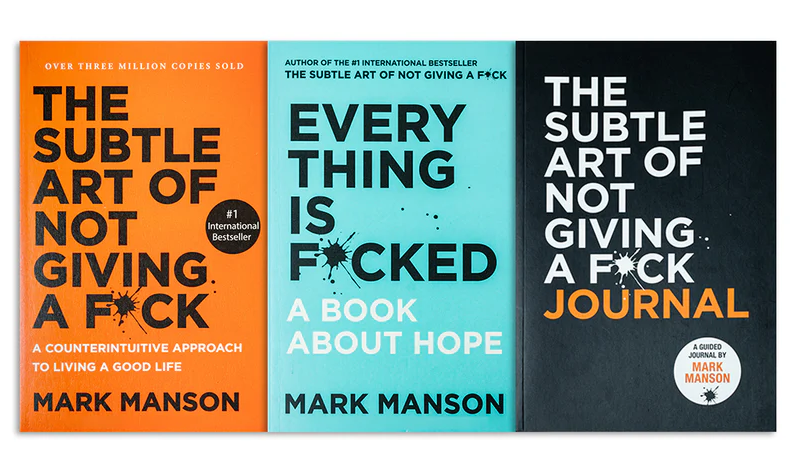
📖 Introduction, Why This Book Matters?
In a world obsessed with positivity, success mantras, and “you can do anything” philosophies, Mark Manson throws a curveball that hits differently. This isn’t your typical self-help book wrapped in rainbow unicorns and motivational quotes. It’s a raw, unfiltered wake-up call that challenges everything you’ve been told about happiness, success, and what truly matters in life.
The book matters because it strips away the Instagram-perfect facade of modern self-improvement and gets real about human struggle, limitations, and the art of choosing your battles wisely. In an era of infinite distractions and manufactured outrage, learning what not to care about becomes a superpower.
👥 Who Should Read This
- Overwhelmed achievers drowning in society’s expectations
- Chronic people-pleasers who say yes to everything and everyone
- Perfectionist procrastinators paralyzed by the fear of failure
- Social media addicts comparing their behind-the-scenes to everyone’s highlight reel
- Quarter-life and mid-life crisis survivors questioning their path
- Anyone tired of toxic positivity and ready for some honest truth
🔍 The Author’s Journey
Mark Manson started as a pickup artist blogger who helped men navigate dating, but something felt hollow about the whole charade. He realized he was teaching people to become someone they weren’t, rather than helping them become the best version of who they already were. This existential crisis led him down a rabbit hole of philosophy, psychology, and brutal self-reflection.
His transformation from someone obsessed with external validation to someone who learned to choose his struggles wisely became the foundation for this book. Manson discovered that the secret wasn’t avoiding problems—it was choosing better problems to have.
🔑 Key Model/Framework from the Book
The “F*ck Budget” Philosophy: You have a limited amount of energy and attention (your “f*cks”) to give each day. Most people waste theirs on trivial nonsense—traffic jams, social media drama, what strangers think of their outfit. The framework teaches you to:
- Audit your current f*ck spending
- Identify your core values (what deserves your f*cks)
- Practice strategic indifference to everything else
- Embrace responsibility for your chosen struggles
- Accept uncertainty as a fundamental part of life
📊 By the Numbers
- 90% of our problems stem from caring about the wrong things
- 24 hours is roughly how long most people’s outrage lasts before moving to the next drama
- 5-7 core values are typically all a person can meaningfully maintain
- 80/20 rule applies: 80% of your stress comes from 20% of your problems (usually the ones you shouldn’t care about)
💡 Key Takeaways & Counterintuitive Insights
The Backwards Law: The more you desperately want something, the more you suffer. The more you accept your current situation, the more likely you are to improve it.
Pain is Inevitable, Suffering is Optional: Problems never go away—they just get upgraded. Choose problems that align with your values.
You Are Not Special: And that’s liberating. Stop trying to be extraordinary at everything and focus on being ordinary at the things that matter.
Negative Emotions Are Useful: They’re your internal GPS system telling you when something needs attention.
Certainty is the Enemy of Growth: The moment you think you know everything is the moment you stop learning.
🧠 Myth-Busting Moments
MYTH: “Think positive and everything will work out” REALITY: Blind positivity ignores real problems that need solving
MYTH: “You can be anything you want to be” REALITY: You have limitations, and accepting them frees you to excel within them
MYTH: “Failure is not an option” REALITY: Failure is feedback, and avoiding it guarantees mediocrity
MYTH: “Follow your passion” REALITY: Passion follows action, not the other way around
💬 Best Quotes from the Book
“The desire for more positive experience is itself a negative experience.”
“You are already choosing what to give a fck about, so change is just a matter of choosing better things.”*
“Problems never stop; they merely get exchanged and/or upgraded.”
“The only way to overcome pain is to first learn how to bear it.”
🚀 Actionable Steps & How to Apply It Today
The Daily F*ck Audit: Each evening, list what consumed your mental energy. Ask: “Did this deserve my attention?”
The Values Clarification Exercise: Write down what you stood for this week. If you can’t name it, you’re probably living someone else’s values.
The Responsibility Flip: Instead of asking “Why is this happening to me?” ask “How am I responsible for this situation?”
The Certainty Challenge: Identify one strong belief you hold and actively seek evidence that challenges it.
⚡ First 24 Hours
Hour 1-2: Complete the F*ck Audit for yesterday Hour 3-8: Practice saying “no” to one small request Hour 9-16: When something annoys you, pause and ask “Is this worth my energy?” Hour 17-24: Choose one meaningful problem to focus on instead of scrolling social media
🤔 Final Thoughts
This book is a philosophical slap in the face that most people desperately need. Manson doesn’t sugarcoat the human condition—he serves it straight, no chaser. While some might find his approach too blunt, the core message is profoundly liberating: you don’t have to care about everything, and choosing what matters is a skill worth developing.
The book succeeds because it combines ancient Stoic wisdom with modern psychology and packages it in accessible, often hilarious language. It’s not perfect—some examples feel repetitive—but the central thesis is rock solid.
⭐ Rating: 4.2/5
| Aspect | Rating | Why? |
|---|---|---|
| Usefulness | ⭐⭐⭐⭐⭐ | Immediately applicable life philosophy |
| Readability | ⭐⭐⭐⭐⭐ | Engaging, conversational, sometimes profane |
| Originality | ⭐⭐⭐⭐ | Fresh take on ancient wisdom |
| Impact | ⭐⭐⭐⭐⭐ | Life-changing for many readers |
| Practicality | ⭐⭐⭐⭐ | Clear frameworks and exercises |
| Timelessness | ⭐⭐⭐⭐ | Addresses eternal human struggles |
🎬 If This Book Were a Movie
Protagonist: A burned-out millennial drowning in societal expectations and social media comparison
Plot Arc: Hero’s journey from people-pleasing perfectionist to someone who knows their values and lives by them
Supporting Characters:
- The Wise Mentor (representing Manson’s voice)
- The Toxic Positivity Friend (the antagonist)
- The Authentic Challenger (someone already living these principles)
- The Former Self (flashbacks to who they used to be)
Climax: Protagonist faces a major life decision and chooses the harder path that aligns with their values rather than the easier path that pleases others
🔄 Before & After Reading
BEFORE:
- Stressed about everyone’s opinion
- Says yes to everything
- Chases every opportunity
- Avoids difficult conversations
- Believes happiness should be constant
- Thinks problems are obstacles to overcome
AFTER:
- Selective about whose opinions matter
- Comfortable saying no
- Focused on meaningful pursuits
- Embraces necessary conflicts
- Accepts struggle as part of growth
- Views problems as choices to be made
📚 Books That Pair Well With This
- “Digital Minimalism” by Cal Newport – Applies similar principles to technology
- “Essentialism” by Greg McKeown – The disciplined pursuit of less
- “Meditations” by Marcus Aurelius – Original Stoic wisdom
- “The Power of Now” by Eckhart Tolle – Present-moment awareness
- “Antifragile” by Nassim Taleb – Thriving from disorder
📚 Resources
- Mark Manson’s blog and newsletter
- Stoic philosophy texts (Epictetus, Seneca)
- Cognitive Behavioral Therapy resources
- Mindfulness and meditation apps
- Philosophy podcasts exploring existentialism
🤔 Skeptic’s Corner
Potential Issues: The profanity might feel gimmicky to some readers, and the “bro philosophy” tone could alienate certain audiences. Some critics argue the book oversimplifies complex psychological issues or that the “not caring” message could be misinterpreted as apathy or selfishness.
Modern Context: In today’s mental health-aware culture, some might worry the book dismisses legitimate anxiety or depression. The key is understanding that Manson advocates for strategic caring, not emotional numbness. The principles should complement, not replace, professional mental health support when needed.
🧑💼 How Real People Used It
Sarah, Marketing Manager: Used the values clarification exercise to quit a high-paying job that drained her soul. Now runs a small nonprofit and reports being “poor but purposeful.”
Mike, College Student: Applied the responsibility principle to stop blaming professors for his grades. Started taking ownership, saw immediate academic improvement.
Jennifer, Working Mom: Implemented the F*ck Budget to stop volunteering for every school event. Now has energy for the activities that truly matter to her family.
🎯 3-Minute Challenge
Right now, grab a piece of paper. Write down three things that consumed your mental energy yesterday that, in hindsight, weren’t worth it. Next to each one, write what you could have focused on instead. Finally, choose ONE thing from your “could have focused on” list and do it for the next 10 minutes. No excuses, no delay. Your future self will thank you.
💬 Your Turn
The book’s central question echoes long after the last page: What are you giving your f*cks to, and are they worthy of your finite energy? In a world that profits from your attention, learning to be selectively indifferent isn’t just helpful—it’s revolutionary. The question isn’t whether you’ll have problems; it’s whether you’ll choose better problems to have.