
The Story of My Experiments with Truth by Mahatma Gandhi
 wkadmin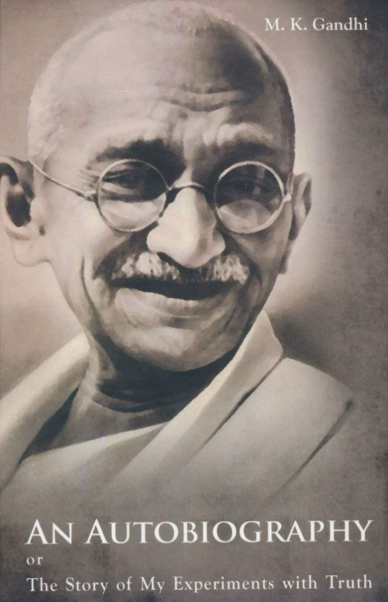
📖 Introduction: Why This Life Matters
In a world drowning in noise, Gandhi’s autobiography stands as a beacon of radical honesty—a man dissecting his own soul with surgical precision. This isn’t just the story of India’s independence; it’s the blueprint of how an ordinary lawyer transformed himself into an extraordinary force of change through relentless self-examination. Written during his time in prison, these pages reveal the intimate struggles behind the public saint, making his journey achingly human and surprisingly accessible.
Gandhi lived through the twilight of the British Empire and the dawn of modern India (1869-1948), witnessing humanity’s capacity for both breathtaking cruelty and sublime compassion. His experiments weren’t just with truth—they were with the very essence of what it means to be human in an imperfect world.
👥 Who Should Read This
Anyone wrestling with their own contradictions will find a kindred spirit here. Perfect for leaders seeking authentic power, activists learning the art of peaceful resistance, entrepreneurs building purpose-driven ventures, parents navigating moral complexity, and anyone curious about the anatomy of personal transformation. If you’ve ever wondered how ordinary people become extraordinary, this is your roadmap.
🔍 The Author’s Approach
Gandhi writes with the vulnerability of a confession booth and the precision of a scientist. He doesn’t paint himself as a hero—quite the opposite. He exposes his failures, doubts, and embarrassing mistakes with brutal honesty, creating perhaps the most self-aware autobiography ever written. His approach is experimental: try, fail, learn, adjust, repeat.
What makes this unique is that Gandhi is both the researcher and the subject, documenting his own evolution in real-time. He treats his life as a laboratory, his choices as hypotheses, and his results as data points in the grand experiment of righteous living.
⏰ Timeline Snapshot
- 1869: Born in Porbandar, Gujarat
- 1888: Sails to London for law studies (and struggles with vegetarianism)
- 1893: Arrives in South Africa, experiences racial discrimination
- 1906: Launches first satyagraha campaign
- 1915: Returns to India, begins independence movement
- 1920s: Leads non-cooperation movement, multiple imprisonments
- 1930: Salt March to Dandi
- 1942: Quit India Movement launched
- 1947: India gains independence
- 1948: Assassination in New Delhi
🌟 The Person Behind the Legend
Gandhi emerges as startlingly human—a perfectionist tortured by his own imperfections, a leader who never stopped being a student. His core traits include relentless self-criticism, experimental mindset, and an almost childlike curiosity about human nature. He was driven not by ambition for power, but by an obsession with aligning his actions with his ideals.
Behind the iconic figure was a man who struggled with anger, battled dietary choices, and constantly questioned his own motives. His greatest strength wasn’t fearlessness—it was his willingness to be vulnerable in public about his fears.
📊 By the Numbers
- 21 years in South Africa developing his philosophy
- 4 major fasting periods for political causes
- Multiple imprisonments totaling several years
- 300+ pages of raw self-reflection
- 7 principles of satyagraha (truth-force)
- Countless experiments in simple living
- 1 assassination attempt that succeeded
💡 Key Life Lessons
Truth as North Star: Gandhi discovered that absolute honesty—even when painful—becomes a superpower. When you stop protecting your image, you become unstoppable.
Small Steps, Big Changes: His philosophy of gradual self-improvement through tiny daily adjustments shows that transformation happens in inches, not miles.
Failure as Teacher: Gandhi treated his mistakes as curriculum, not catastrophes. Each failure became data for the next experiment.
Service as Strength: True power comes not from dominating others, but from serving them so completely that leadership becomes inevitable.
Inner Work First: Before changing the world, Gandhi obsessively worked on changing himself—proving that external revolution begins with internal transformation.
🧠 Myth-Busting Moments
Contrary to popular belief, Gandhi wasn’t born wise—he was born stubborn and had to learn wisdom through painful trial and error. He wasn’t naturally fearless; he was naturally anxious but chose courage anyway. The spinning wheel wasn’t just symbolism; it was economics—a practical tool for Indian self-reliance.
Perhaps most surprising: Gandhi didn’t hate the British. He hated the system but maintained friendships with individual Britons, showing how to separate people from policies with surgical precision.
💬 Most Revealing Quotes
Gandhi’s words cut through pretense like a blade through silk, revealing the raw humanity behind the global icon. His reflections on failure, growth, and the courage to be wrong publicly show a mind unafraid of its own contradictions.
🎭 Defining Moments
The Train Incident (1893): Thrown off a train in South Africa for being Indian, Gandhi’s humiliation became his awakening. That cold night on Pietermaritzburg station, he chose fight over flight.
The Vow of Truth: When Gandhi decided to tell only truth, regardless of consequences, he discovered that radical honesty becomes radical power.
The Salt March (1930): A 240-mile walk to the sea transformed simple defiance into global theater, proving that symbols can topple empires.
Fasting for Unity: Using his own body as a weapon against hatred, Gandhi showed how personal sacrifice can heal collective wounds.
The Last Fast: Even in his final days, Gandhi was experimenting—this time with whether love could overcome the partition’s hatred.
🏆 Legacy & Impact
Gandhi proved that one person’s commitment to truth can reshape entire civilizations. His methods influenced everyone from Martin Luther King Jr. to Nelson Mandela, showing that non-violence isn’t passive—it’s the most aggressive form of resistance.
He didn’t just free India; he freed humanity from the belief that might makes right. His legacy lives in every peaceful protest, every act of civil disobedience, and every person who chooses conscience over convenience.
⚡ First 24 Hours Section
Start with Gandhi’s morning routine: wake early, pray, spin cotton, and ask yourself three questions: What did I learn yesterday? How did I fail? What will I experiment with today? Begin treating your life as a laboratory where every interaction is data and every mistake is curriculum.
🤔 Final Thoughts
This isn’t just biography—it’s archaeology of the soul. Gandhi excavates his own motivations with unflinching honesty, showing us that greatness isn’t about perfection; it’s about perfect commitment to growth. You’ll finish this book not worshipping Gandhi, but understanding that his path is available to anyone brave enough to experiment with truth.
⭐ Rating: 4.8/5
| Rating Category | Score | Justification |
|---|---|---|
| Research Quality | ⭐⭐⭐⭐⭐ (5/5) | Unparalleled – the author is the subject himself, providing first-hand insights with brutal honesty and self-reflection that no external biographer could match |
| Storytelling | ⭐⭐⭐⭐⭐ (5/5) | Compelling narrative structure that reads like a spiritual thriller; Gandhi’s vulnerability and honesty create genuine emotional connection with readers |
| Insight & Depth | ⭐⭐⭐⭐⭐ (5/5) | Profound philosophical and practical wisdom; offers both universal principles and specific methodologies for personal transformation |
| Historical Relevance | ⭐⭐⭐⭐⭐ (5/5) | Irreplaceable primary source document covering pivotal moments in world history; essential for understanding 20th century political movements |
| Modern Applicability | ⭐⭐⭐⭐⭐ (5/5) | Timeless principles directly applicable to contemporary leadership, activism, personal development, and ethical decision-making |
| Readability | ⭐⭐⭐⭐ (4/5) | Surprisingly accessible despite heavy subject matter; some sections on Indian politics may feel dense to modern readers |
| Educational Value | ⭐⭐⭐⭐⭐ (5/5) | Serves multiple educational purposes: history, philosophy, psychology, leadership studies, and moral development |
| Inspirational Impact | ⭐⭐⭐⭐⭐ (5/5) | Transforms how readers view personal growth and social change; demonstrates that ordinary people can achieve extraordinary things |
| Cultural Significance | ⭐⭐⭐⭐⭐ (5/5) | Foundational text for understanding non-violent resistance, Indian independence, and the philosophy of satyagraha |
| Practical Usefulness | ⭐⭐⭐⭐ (4/5) | Offers concrete methods for self-improvement and ethical living, though some practices require adaptation for modern contexts |
🎬 If This Biography Were a Movie
Genre: Spiritual thriller meets political drama Tone: Intimate and epic simultaneously Key Scenes: The train incident, salt march, prison writings, final fast Supporting Cast: Kasturba (the patient wife), British officials as reluctant adversaries, fellow freedom fighters as chosen family
🔄 Before & After Reading
Before: Gandhi was a distant saint, admirable but unreachable After: Gandhi becomes your neighbor—flawed, struggling, but showing what’s possible when someone commits completely to their values, making his path feel accessible rather than impossible.
📚 Books That Pair Well With This
- “Long Walk to Freedom” by Nelson Mandela (student meets teacher)
- “Letter from Birmingham Jail” by Martin Luther King Jr. (philosophy in action)
- “The Autobiography of Benjamin Franklin” (another self-experimenter)
- “Man’s Search for Meaning” by Viktor Frankl (finding purpose in suffering)
📚 Resources
- Gandhi Heritage Sites: Sabarmati Ashram in Ahmedabad, Mani Bhavan in Mumbai
- Films: “Gandhi” (1982), “The Making of the Mahatma” (1996)
- Museums: National Gandhi Museum, New Delhi
- Online: Complete works available through Gandhi Heritage Portal
🤔 Skeptic’s Corner
Gandhi’s experiments were conducted in specific cultural and historical contexts—what worked in colonial India might not translate directly to modern challenges. His harsh self-criticism might reflect cultural guilt rather than universal wisdom. Some critics argue his methods only worked against opponents with consciences (the British) rather than truly ruthless regimes.
🧑💼 How Their Principles Apply Today
Corporate Leaders: Radical transparency in communication, servant leadership models Activists: Building movements through personal example rather than just messaging Entrepreneurs: Testing ideas through small experiments before massive investments Parents: Teaching through modeling rather than lecturing Politicians: Choosing principle over polling, truth over tactics
🎯 3-Minute Challenge
Write down one quality Gandhi embodied that you want to develop. What’s one small action you can take this week to practice it? Gandhi would say: start with something so small you can’t fail, but commit to it completely. The path to transformation begins with a single, sincere step.
💬 Your Turn
Gandhi’s autobiography isn’t meant to be admired—it’s meant to be emulated. His greatest gift wasn’t his achievements; it was showing us that the laboratory of self-improvement is always open, and the only equipment needed is honesty, courage, and the willingness to experiment with truth. What will your experiments reveal?