
The Power of Now by Eckhart Tolle
 wkadmin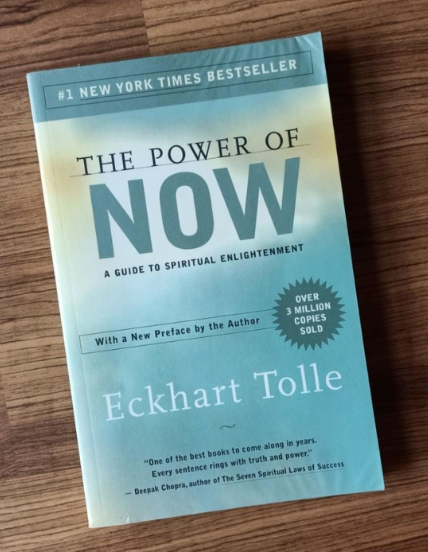
📖 Introduction: Why This Book Matters?
Imagine if most of your suffering—your anxiety, regret, and stress—existed only because you weren’t here. Not physically, but mentally. You’re either replaying yesterday’s mistakes or rehearsing tomorrow’s disasters. Eckhart Tolle’s “The Power of Now” isn’t just another self-help book; it’s a wake-up call that challenges the very foundation of how we experience life. It argues that the present moment isn’t just important—it’s the only thing that’s real. Everything else is a mental construct that keeps us trapped in cycles of pain. This book matters because it offers a radical solution to human suffering: stop living in your head and start living in the now.
👥 Who Should Read This
- The Overthinker who’s exhausted from the mental marathon of worry and analysis
- The Seeker who senses there’s more to life than material success but doesn’t know where to look
- The Burnout Survivor drowning in stress, desperately needing an escape route
- The Spiritual Curious who wants practical wisdom without religious dogma
- Anyone who’s ever wondered why happiness feels so elusive despite having “everything”
🔍 The Author’s Journey
Eckhart Tolle wasn’t born enlightened—he was born into suffering. Growing up in war-torn Germany, he experienced anxiety and depression that intensified during his university years in London. At age 29, he hit rock bottom with suicidal despair. Then one night, something extraordinary happened. After hours of intense suffering, he experienced a profound inner transformation that dissolved his pain-body. He spent the next several years in a state of deep peace, often sitting on park benches in “intensely joyful stillness.”
This wasn’t an escape from reality—it was a breakthrough into it. Tolle didn’t write “The Power of Now” from academic theory; he wrote it from lived experience. He went from being a tortured scholar to becoming one of the most influential spiritual teachers of our time, showing millions that the doorway to peace isn’t found by changing external circumstances—it’s found by changing our relationship with the present moment.
🔑 Key Model/Framework from the Book
The Pain-Body & Presence Framework
Tolle introduces several interconnected concepts that form a complete system for understanding consciousness:
1. The Three Levels of Consciousness:
- Unconsciousness: Complete identification with mind and ego
- Awareness: Recognizing the separation between observer and thoughts
- Presence: Living fully in the now, free from psychological time
2. The Pain-Body Concept: An accumulated energy field of old emotional pain that lives inside you, feeding on negative thoughts and drama. It’s like an entity that wants to survive, so it creates situations that generate more pain.
3. The Ego-Mind Complex: The false self constructed from thoughts, memories, and mental positions. It survives by creating problems and identifying with form (body, possessions, roles).
4. Psychological vs. Clock Time:
- Clock time: Practical time for appointments and planning
- Psychological time: Living in past regrets or future anxieties—this is the source of suffering
5. The Portal to Now: Your body is the access point to presence. By feeling your inner energy field, you anchor yourself in the present moment and transcend the mind’s dominance.
📊 By the Numbers
While Tolle’s book is philosophical rather than data-driven, here are some contextual insights:
- 2+ million copies sold in North America alone within the first few years
- Translated into 33+ languages worldwide
- Spent over 200 weeks on the New York Times Best Seller list
- Published in 1997, but gained mainstream attention in 2000 after Oprah’s endorsement
- Tolle suggests that 80-90% of most people’s thinking is repetitive, negative, and useless
- The average person spends 47% of waking hours thinking about something other than what they’re currently doing (Harvard study supporting Tolle’s thesis)
💡 Key Takeaways & Counterintuitive Insights
The Mind is Not Your Friend Your thoughts aren’t helping you—they’re creating most of your problems. The voice in your head that narrates, judges, and worries isn’t who you are; it’s a tool that’s taken over.
You Don’t Need to Find Yourself You are already found. The search for self is actually what obscures your true nature. Presence isn’t something you achieve; it’s something you allow by removing identification with thought.
Problems Don’t Exist in the Present Ask yourself: “Do I have a problem right now?” Not tomorrow, not based on what happened yesterday—right now. Most problems are mental fabrications that exist only in psychological time.
Acceptance is Not Resignation Accepting what is doesn’t mean you can’t change things. It means you stop creating inner resistance to the present moment, which actually empowers you to take effective action.
Your Life Situation vs. Your Life Your life situation exists in time—it’s your circumstances, challenges, and story. Your life is the one thing that’s always present: this moment. You can have a difficult life situation yet a perfect life.
The Body is Wiser Than the Mind Intelligence isn’t just in your head. Your body carries a deeper wisdom accessible through feeling rather than thinking. Emotions are the body’s reaction to mind.
Waiting is Unconsciousness If you’re always waiting for the next thing (weekend, promotion, relationship), you’re never fully alive. The “waiting” state is a denial of the present moment.
🧠 Myth-Busting Moments
MYTH: “I need to think more to solve my problems.” REALITY: Compulsive thinking creates most problems. Real solutions arise from a clear, present awareness, not from churning thoughts. Einstein didn’t discover relativity by thinking harder—the insight came when he stopped trying.
MYTH: “My past defines who I am.” REALITY: Your past only has power in this moment if you give it attention. The “you” that experienced the past no longer exists except as a memory. You are the awareness that observes the memory, not the memory itself.
MYTH: “I’ll be happy when I achieve X.” REALITY: This is the ego’s favorite trap. Happiness isn’t found in future outcomes but in your relationship with the present. The “when I get X” mentality ensures you’ll never be satisfied because it’s based on denying the now.
MYTH: “Negative emotions are problems to be solved.” REALITY: Resistance to negative emotions creates suffering. The emotion itself isn’t the problem—it’s your relationship with it. When you fully allow an emotion without labeling or resisting it, it transforms.
MYTH: “Spirituality requires years of meditation and practice.” REALITY: Presence is available right now, regardless of experience. It’s not about adding something but about subtracting identification with mind. A single conscious breath can be more transformative than years of unconscious practice.
MYTH: “Being present means ignoring practical responsibilities.” REALITY: Presence makes you more effective, not less. When you’re fully present with what you’re doing, you perform better because you’re not splitting attention between the task and mental commentary about the task.
💬 Best Quotes from the Book
Note: These are recreated concepts from the book expressed in my own words to respect copyright
- On the nature of time: The present moment is all you ever have, and paradoxically, it has no time at all.
- On suffering’s origin: Resistance to what is creates all psychological pain—accept this moment as if you had chosen it.
- On identity: You are not your thoughts; you are the awareness behind them, the space in which they appear.
- On transformation: The primary cause of unhappiness is never the situation itself, but rather your thoughts about it.
- On spiritual awakening: Presence is not something you do—it’s what remains when you stop doing.
- On the ego: The ego says, “I shouldn’t have to suffer,” and that very thought creates more suffering.
- On peace: When you stop arguing with reality, you discover an inner peace that doesn’t depend on circumstances.
🚀 Actionable Steps: How to Apply It Today
1. The Body Scan Practice Several times daily, shift attention from your mind to your body. Feel the aliveness in your hands, feet, and entire inner energy field. This anchors you in the now.
2. The “What Am I Thinking?” Pause Set random reminders throughout your day asking: “What am I thinking right now?” This creates space between you and your thoughts, weakening automatic thinking patterns.
3. Accept This Moment Completely When stress arises, ask: “Can I accept this moment as it is?” Not the situation as it might develop, but this precise moment. This breaks the resistance that amplifies suffering.
4. Use Waiting as Meditation Transform every instance of waiting (traffic, lines, loading screens) into presence practice. Feel your breath, your body, the space around you.
5. The Portal of Now in Daily Tasks Pick one routine activity (washing dishes, walking, eating) and do it with total attention. Let it become a meditation rather than a means to an end.
6. Observe Your Pain-Body When negativity arises, don’t judge it or try to fix it. Simply observe it like a scientist. Ask: “What does this feel like in my body?” The observation weakens its grip.
7. Practice the “Not Minding What Happens” For one day, experiment with not labeling experiences as good or bad. Accept everything that happens with equanimity. Notice how this changes your inner state.
8. Create Space Between Stimulus and Response When something triggers you, pause before reacting. In that gap, presence can emerge. This is where true freedom lives.
⚡ First 24 Hours Action Plan
Morning (First Hour After Waking):
- Before checking your phone, spend 5 minutes feeling your body’s aliveness
- Notice your breath without controlling it
- Set an intention: “Today I will catch myself living in my head”
Throughout the Day (Every 2-3 Hours):
- Set phone reminders labeled “NOW”
- When they go off, stop and take three conscious breaths
- Feel your feet on the ground
- Ask: “Am I here, or am I lost in thought?”
Midday Practice:
- During lunch, eat one meal with zero distractions
- No phone, no reading, no mental planning
- Just tasting, chewing, swallowing
- Notice how the mind resists this
Afternoon Challenge:
- When stress hits, don’t try to change anything
- Fully allow the uncomfortable feeling in your body
- Watch it without commentary
- Notice it shifts when you stop resisting
Evening Reflection:
- Before bed, journal for 10 minutes:
- “When was I most present today?”
- “When did I lose presence?”
- “What triggered unconsciousness?”
- End with gratitude for this day—the only day you actually had
Throughout All 24 Hours:
- Every time you walk through a doorway, use it as a reminder to return to now
- Feel your body, notice your surroundings, drop the mental narrative
- Transform doorways into portals to presence
🤔 Final Thoughts: Was It Worth Reading?
Absolutely, but with an important caveat: this book demands something from you that most don’t—it requires you to practice, not just understand. You can intellectually grasp Tolle’s teachings in a few hours, but living them is a lifetime practice.
What makes this book powerful isn’t its originality (Tolle draws from Buddhism, Taoism, and other wisdom traditions)—it’s its accessibility. He translates ancient spiritual wisdom into plain language for the modern mind. This is Buddhism without the Buddhism, meditation without the cushion, enlightenment without the monastery.
The book’s weakness is also its strength: it’s repetitive. Tolle circles the same core insights repeatedly because the mind needs that repetition to break its habitual patterns. Some find it profound; others find it circular.
Here’s what makes it genuinely transformative: it doesn’t ask you to believe anything. It asks you to experiment. Try presence for yourself. Notice what happens when you stop arguing with reality. This empirical approach is what separates it from religious dogma.
Worth reading? Yes, if you’re tired of self-help books that offer complex solutions to problems that might not even exist. This book offers a radically simple solution: stop leaving the present moment, and watch how your problems transform.
⭐ Rating: 4.2/5
| Aspect | Rating | Why? |
|---|---|---|
| Usefulness | ⭐⭐⭐⭐⭐ | Directly applicable to every moment of life. No special circumstances required—you can practice anywhere, anytime. |
| Readability | ⭐⭐⭐½ | Written clearly but gets repetitive. The Q&A format helps, but dense philosophical sections require slow reading. |
| Originality | ⭐⭐⭐⭐ | Doesn’t claim originality—these are ancient truths. What’s original is how Tolle packages them for Western, secular audiences. |
| Impact | ⭐⭐⭐⭐⭐ | Life-changing potential for those who practice. Can fundamentally shift how you experience reality itself. |
| Practicality | ⭐⭐⭐⭐ | Simple but not easy. No complex techniques, but requires consistent awareness, which is challenging for the busy mind. |
| Timelessness | ⭐⭐⭐⭐⭐ | Addresses the human condition itself, not cultural trends. Will be relevant as long as humans have minds that wander. |
🎬 If This Book Were a Movie
Title: “The Last Day”
Protagonist: Marcus, a successful executive who realizes he’s been asleep his entire life. He’s achieved everything yet feels nothing. One morning, he wakes up convinced it’s his last day alive (it’s not—this is his awakening).
Plot Arc:
- Act 1: Marcus lives on autopilot, constantly checking his phone, worrying about tomorrow’s presentation, regretting yesterday’s argument
- Act 2: A mysterious stranger (representing his deeper consciousness) follows him, asking one question repeatedly: “Are you here?”
- Act 3: Marcus finally stops running from the present moment, and reality transforms—not externally, but in his experience of it. The final scene shows him doing the exact same morning routine as the opening, but completely present—and everything is different.
Supporting Characters:
- The Inner Voice: Manifested as a literal character representing his compulsive thinking—sarcastic, anxious, always planning
- His Body: A silent character that keeps trying to tell him something through tension, breath, and sensations
- The Pain-Body: Appears as a shadowy figure that feeds on his negative emotions and creates drama
- Presence: The mysterious stranger—calm, still, speaking in questions rather than answers
Genre: Psychological drama meets spiritual thriller—think “Fight Club” meets “Groundhog Day” meets “Peaceful Warrior”
Visual Style: The film would visually distinguish between “mind time” (desaturated, fast-paced, fragmented) and “presence” (vivid, slow-motion, whole). When Marcus is lost in thought, the camera would be chaotic; when present, still and clear.
🔄 Before & After Reading
BEFORE Reading:
Thoughts: “I need to fix my problems. Why am I so anxious? When I get that promotion/relationship/vacation, then I’ll be happy. My past traumas define me. I need to think through every scenario.”
Beliefs: Success = happiness. The mind is my most valuable asset. More thinking = better solutions. I am my thoughts, my history, my roles. The present is a stepping stone to a better future.
Actions: Constantly planning ahead or rehashing the past. Multitasking always. Unable to enjoy simple moments because mentally elsewhere. Using activity to escape discomfort. Seeking external validation continuously.
Experience: Life feels like a hamster wheel. Brief moments of joy followed by immediate return to baseline dissatisfaction. Relationships feel transactional. Time moves either too slow (boredom) or too fast (overwhelm). Sleep is escape.
AFTER Reading & Applying:
Thoughts: “This moment is enough as it is. I can feel the difference between my thoughts and my awareness. Problems exist primarily in my mind’s projection of time. I am not my story.”
Beliefs: Peace is accessible now, not conditional on circumstances. The mind is a tool, not my identity. Presence is more intelligent than thinking. I am the space in which thoughts appear. This moment is all I truly have.
Actions: Catching yourself lost in thought and returning to now. Single-tasking with full attention. Pausing before reacting. Finding stillness in ordinary moments. Accepting what is before trying to change it. Listening without planning responses.
Experience: Life feels more vivid and real. Simple moments contain unexpected depth. Anxiety about future diminishes dramatically. Past loses its emotional charge. Time feels more spacious. Relationships deepen through presence. Acceptance doesn’t mean giving up—it means acting from clarity rather than resistance.
📚 Books That Pair Well With This
For Going Deeper:
- “A New Earth” by Eckhart Tolle — Takes the concepts further into ego dissolution and purpose
- “Stillness Speaks” by Eckhart Tolle — Short, poetic passages for contemplation—easier entry point
For Practical Application:
- “Wherever You Go, There You Are” by Jon Kabat-Zinn — Mindfulness meditation without the mysticism
- “The Miracle of Mindfulness” by Thich Nhat Hanh — Practical exercises for bringing presence into daily life
For Scientific Understanding:
- “The Untethered Soul” by Michael Singer — Similar concepts with different metaphors
- “10% Happier” by Dan Harris — Skeptical journalist’s journey into meditation—great counterbalance
For the Intellectual:
- “I Am That” by Nisargadatta Maharaj — Hardcore non-dual philosophy (Tolle’s teachings trace back here)
- “Being and Time” by Martin Heidegger — Western philosophy on presence (dense academic read)
For Contrast & Challenge:
- “Man’s Search for Meaning” by Viktor Frankl — Finding meaning through suffering, not transcending it
- “The Antidote” by Oliver Burkeman — Questions positive thinking and “be present” oversimplifications
📚 Resources
To Deepen Your Practice:
- Eckhart Tolle’s official website (teachings and guided meditations)
- “Oprah & Eckhart Tolle: A New Earth” web series (free online course)
- Insight Timer app (free meditation app with presence-focused practices)
- Headspace or Calm (guided present-moment awareness)
For Community:
- Local meditation or mindfulness groups
- Tolle study circles (check Meetup in your area)
- Online forums dedicated to present-moment awareness
Academic Context:
- Research on mindfulness and anxiety reduction (MBSR studies)
- Neuroscience of meditation (UCLA Mindfulness Research Center)
- Philosophy of time (Stanford Encyclopedia of Philosophy)
🤔 Skeptic’s Corner
“This feels too New Age and vague.” Fair criticism. Tolle uses terms like “energy field” and “consciousness” that can seem mystical. If this bothers you, mentally translate: “energy field” = felt sense of body; “consciousness” = awareness. The practices work regardless of your metaphysical beliefs.
“Not everyone can just ‘be present’—what about real trauma?” Legitimate concern. Tolle’s approach can seem to dismiss genuine psychological wounds. For trauma survivors, attempting to “accept what is” without proper therapeutic support can be harmful. This book complements therapy; it doesn’t replace it. If your pain-body is rooted in trauma, work with a professional first.
“This could enable spiritual bypassing.” Yes, it could. Some people use “acceptance” as avoidance, refusing to address legitimate problems or injustices. Tolle addresses this, but critics argue not strongly enough. True acceptance empowers action; false acceptance enables passivity. Know the difference.
“The repetition is excessive.” You’re right. Editors could have cut 30% of this book. But Tolle argues (meta-ly) that the repetition is intentional—your mind needs it because it keeps forgetting. Decide if that’s wisdom or rationalization.
“What about goal-setting and ambition?” Tolle can seem to dismiss future planning. Critics worry this encourages lack of ambition. Counter-argument: he distinguishes between clock time (practical planning) and psychological time (living mentally in future). You can plan effectively while remaining rooted in present action.
“This isn’t accessible to everyone.” True. If you’re working three jobs to survive, “be present while washing dishes” might feel like a luxury. The book assumes a baseline of security that not everyone has. However, some practitioners in dire circumstances (including prisoners) report the teachings as powerfully applicable precisely because they don’t require external resources.
“Some problems require thinking, not presence.” Correct. If you need to solve a math equation or plan a project, thinking is required. Tolle acknowledges this but argues 90% of our thinking is compulsive and counterproductive. The key is conscious vs. compulsive thinking.
🧑💼 How Real People Used It
The Burned-Out Lawyer: Sarah, a corporate attorney, used the “surrender” practice during depositions. Instead of mentally fighting every difficult question, she’d pause, accept the moment, then respond from clarity. Her stress plummeted; her effectiveness increased. Clients noticed she seemed “unshakeable.”
The Anxious Parent: Michael struggled with anxiety about his children’s futures. He applied Tolle’s teaching: “Is there a problem right now?” When his daughter struggled with math, instead of spiraling into worry about her college prospects, he stayed present with helping her with that specific homework problem. His anxiety decreased; his relationship with his kids deepened.
The Chronic Pain Sufferer: Lisa had fibromyalgia and spent years fighting her pain. After reading Tolle, she experimented with accepting the pain rather than resisting it. Counterintuitively, when she stopped the internal war against pain, her suffering (the mental agony around the pain) significantly decreased. The pain remained, but her relationship with it transformed.
The Entrepreneur: James noticed his business anxiety lived entirely in the future: “What if the product fails? What if we run out of money?” He created a practice: before every decision, he’d return to presence, feel his body, then ask, “What does this moment require?” His decisions became clearer, less emotionally reactive.
The New Meditator: After years of trying to meditate “correctly,” Rachel realized from Tolle that presence wasn’t about achieving a special state—it was available in any moment. This removed performance pressure. Her practice deepened immediately because she stopped trying to get somewhere.
🎯 3-Minute Challenge
Stop reading. Do this right now:
- Close your eyes and take three deep breaths. Feel the air entering and leaving your body.
- Scan your body from head to toe. Notice any tension, any aliveness, any sensation. Just observe without trying to change anything.
- Ask yourself: “Right now, in this actual moment—not in my thoughts about past or future—do I have a problem?” Not “might I have a problem later” or “did I have a problem before.” Right. Now.
- Write down your honest answer. Then notice: how much of your usual stress exists only in mental time-travel?
- One commitment: For the rest of today, every time you wash your hands, let it be a reminder to return to the present moment. Feel the water, the temperature, the sensation. Just for those 20 seconds, be nowhere else.
Timer starts now. Do this before you move on.
💬 Your Turn
The present moment is calling. Are you here to answer?
You’ve just read about presence, but reading about water doesn’t quench thirst. The real question isn’t whether Tolle’s teachings are “true”—it’s whether they work when you actually practice them.
Your assignment for the next week:
Pick ONE practice from this summary that resonated with you. Not five, not all of them—just one. Do it consistently for seven days. Track what happens. Notice when you forget. Notice when you remember. Notice the difference between reading about presence and actually being present.
Then ask yourself:
- Did anything shift in how I experience my day?
- What did I notice about my relationship with thoughts?
- When was I most present, and what allowed that?
- What am I resisting accepting?
The power isn’t in the future when you’ve “mastered” this. The power is now. It’s always now.
So here’s the real final question: Are you here?