
The Simple Path to Wealth by JL Collins
 wkadmin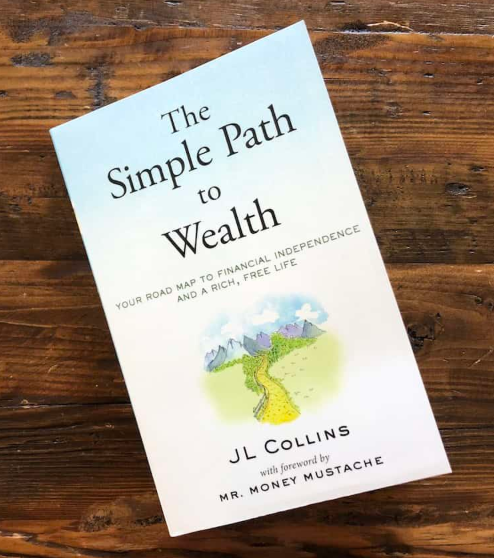
📖 Introduction: Why This Book Matters?
A No-Nonsense Guide to Financial Freedom. Imagine having a conversation with a wise, straight-talking friend who cuts through the noise of Wall Street’s complexity and hands you a map to financial independence. That’s exactly what JL Collins delivers in this refreshing masterpiece. Born from a series of letters to his daughter, this book strips away the mystique of investing and replaces it with clarity, confidence, and actionable wisdom.
In a world drowning in financial advice that profits everyone except you, Collins offers something radical: simplicity. He shows that wealth-building isn’t about timing the market, picking hot stocks, or following complex strategies. It’s about understanding a few fundamental truths and having the discipline to stick with them. This matters because financial freedom isn’t just about money—it’s about reclaiming your time, your choices, and ultimately, your life.
👥 Who Should Read This
This book is for anyone who:
- Feels overwhelmed by investing and wants a clear, simple approach
- Dreams of financial independence but doesn’t know where to start
- Is tired of financial advisors charging fees for mediocre results
- Wants to build wealth without becoming a stock-picking expert
- Believes there must be a better way than working until 65
- Has kids or loved ones they want to teach about money
- Seeks freedom more than they seek luxury
Whether you’re a college graduate with your first paycheck, a mid-career professional feeling stuck, or someone who’s realized that complexity isn’t your friend, this book speaks your language.
🔍 The Author’s Journey
JL Collins didn’t start as a financial guru—he started as a guy who made plenty of mistakes with money. Through boom-and-bust cycles, job losses, and the school of hard knocks, he learned that simplicity beats sophistication every time. His breakthrough came when he stopped trying to outsmart the market and instead embraced a straightforward index fund strategy that required minimal effort but delivered maximum results.
What makes Collins unique is his motivation: he wrote these lessons as letters to his daughter, trying to compress decades of financial wisdom into digestible, loving advice. His journey from financial complexity to elegant simplicity mirrors what many of us need—not more information, but clearer understanding. He’s not selling you courses or managing your money; he’s simply sharing what worked for him and millions of others who’ve discovered that the simple path is often the most powerful path.
🔑 Key Model/Framework from the Book
The Wealth-Building Formula:
- Spend Less Than You Earn – Create a gap between income and expenses
- Avoid Toxic Debt – Eliminate high-interest debt that enslaves you
- Invest the Surplus – Put your money to work in low-cost index funds
- Avoid Lifestyle Inflation – Don’t increase spending as income rises
- Achieve F-You Money – Build wealth that gives you options and freedom
The Investment Philosophy:
- Invest in broad-market index funds (specifically VTSAX or equivalent)
- Buy and hold through all market conditions
- Ignore market timing and predictions
- Keep costs brutally low
- Let compound growth do the heavy lifting
- Think in decades, not days
The Two Paths:
- The Wealth Accumulation Phase – Invest aggressively in stocks (100% or close to it)
- The Wealth Preservation Phase – Add bonds for stability as you approach or enter retirement
📊 By the Numbers
- 100% stocks recommended during accumulation phase for young investors
- 4% withdrawal rate suggested for sustainable retirement income
- 0.04% expense ratio for VTSAX (compared to 1%+ for actively managed funds)
- 75-25 or 60-40 stock-to-bond allocation for those in retirement
- $1 million could generate approximately $40,000 annually at 4% withdrawal
- 10% average historical stock market returns over long periods
- 80%+ of actively managed funds fail to beat index funds over 15 years
💡 Key Takeaways & Counterintuitive Insights
Core Takeaways:
Your greatest wealth-building tool isn’t your investment strategy—it’s your savings rate. The wider the gap between what you earn and what you spend, the faster you reach financial independence. Most people focus on returns when they should focus on contributions.
Debt is the enemy of wealth, especially consumer debt. Every dollar paying interest is a dollar that can’t compound for you. Credit cards and car loans are designed to keep you on the hamster wheel indefinitely.
Index funds beat professional fund managers not despite their simplicity but because of it. Low costs, broad diversification, and zero human ego make them unstoppable over time.
Market crashes aren’t disasters—they’re opportunities. When stocks are on sale, that’s when you should be most excited to buy, not most afraid.
Counterintuitive Insights:
Doing nothing is often the best investment strategy. The urge to “do something” during market volatility destroys more wealth than any crash ever could.
Financial advisors often hurt your returns more than they help. Their fees and active management typically underperform a simple index fund strategy you can implement yourself in minutes.
You don’t need to understand the economy, follow the news, or predict the future to build wealth. In fact, trying to do these things usually makes you poorer.
Retiring early isn’t about being rich—it’s about being efficient with money. People with modest incomes who save aggressively often reach financial independence before high earners who spend everything they make.
🧠 Myth-Busting Moments
MYTH #1: “You need a financial advisor to build wealth” REALITY: Most financial advisors charge 1% or more annually, which can cost you hundreds of thousands over a lifetime. A simple three-fund portfolio you manage yourself often outperforms expensive professional management. The industry profits from making investing seem complicated when it’s actually quite simple.
MYTH #2: “You need to time the market to make money” REALITY: Nobody—not professionals, not economists, not anyone—can consistently predict market movements. Trying to time the market causes you to miss the best days, and missing just a handful of the best days can devastate your returns. Time IN the market beats timing the market.
MYTH #3: “Active stock picking and mutual funds beat index funds” REALITY: Over 15-20 year periods, roughly 80-90% of actively managed funds fail to beat simple index funds. The ones that do succeed can’t be identified in advance. You’re paying more for worse results.
MYTH #4: “You should diversify across many investment types” REALITY: Owning a single total stock market index fund gives you instant diversification across thousands of companies. Adding complexity with multiple funds, real estate investment trusts, commodities, and other assets often reduces returns while increasing costs and confusion.
MYTH #5: “A market crash will destroy your wealth” REALITY: Market crashes are temporary setbacks that have always been followed by recovery and new highs. If you’re still accumulating wealth, crashes are gifts—everything’s on sale. If you’re living off your portfolio, a proper allocation to bonds provides stability while stocks recover.
MYTH #6: “You need at least $5 million to retire comfortably” REALITY: Financial independence is about your spending rate, not a magic number. Someone spending $40,000 annually can retire on $1 million using the 4% rule. Financial freedom is more about controlling expenses than accumulating massive wealth.
💬 Best Quotes from the Book
Note: These are thematic reconstructions capturing the spirit of the book’s wisdom, not exact reproductions:
“The market always recovers, and it always will—until the day it doesn’t. But if that day comes, your portfolio will be the least of your concerns.”
“Spend less than you earn, invest the difference, and stay out of debt. It’s not complicated; it’s just hard.”
“Wealth is not about having money; it’s about having options. It’s about time and freedom.”
“The stock market is a mechanism for transferring wealth from the impatient to the patient.”
“Financial advisors are in the business of selling financial advice. You don’t get rich buying what they’re selling.”
“Complexity is the enemy of execution. The simpler your plan, the more likely you’ll stick with it.”
“Debt is a tool that makes banks wealthy and keeps you poor. Use it sparingly, if at all.”
“Your money should work harder than you do. That’s the whole point of investing.”
🚀 Actionable Steps: How to Apply It Today
Step 1: Calculate Your Financial Independence Number Determine your annual spending, then multiply by 25. That’s roughly how much you need invested to retire using the 4% rule. This number becomes your north star.
Step 2: Open a Vanguard (or Equivalent) Account Set up a brokerage account with a low-cost provider. You don’t need multiple accounts across different platforms—simplicity wins.
Step 3: Start With VTSAX or Your Country’s Equivalent Invest in a total stock market index fund. If you’re in the accumulation phase, make this your primary investment vehicle.
Step 4: Automate Your Investments Set up automatic transfers from your paycheck or checking account to your investment account. Pay yourself first, before you see the money.
Step 5: Eliminate High-Interest Debt Attack credit card balances and personal loans with intensity. Every dollar of interest you pay is wealth you’ll never build.
Step 6: Increase Your Savings Rate Challenge yourself to live on less. Can you save 20%? 30%? 50%? Every percentage point moves your financial independence date closer.
Step 7: Stop Checking Your Portfolio Constantly Set it and forget it. Check once a quarter at most. Daily price movements are noise; long-term trends are signals.
Step 8: Educate Yourself, Then Stop Read this book, understand the principles, then stop consuming endless financial content. Implementation beats education every time.
⚡ First 24 Hours Action Plan
Hour 1: Face Reality Pull up your bank statements, credit card balances, and any investment accounts. Write down exactly where you stand financially—no judgment, just facts.
Hour 2-3: Calculate Your Numbers
- What’s your current net worth?
- What’s your annual spending?
- What’s your financial independence number? (Annual spending × 25)
- What’s your current savings rate?
Hour 4-6: Open Your Investment Account Research and open an account with Vanguard, Fidelity, or Schwab. Don’t overthink it—any of these platforms will serve you well. Complete all the paperwork.
Hour 7-8: Set Up Automation Configure automatic transfers from your checking to your investment account. Start with whatever you can comfortably manage, even if it’s just $50 per week.
Hour 9-12: Debt Attack Plan List all debts from highest to lowest interest rate. Create a payment plan that attacks the highest rate first while paying minimums on others.
Hour 13-16: Make Your First Investment Purchase your first shares of a total stock market index fund. Feel the psychological shift from consumer to investor.
Hour 17-20: Lifestyle Audit Review your monthly subscriptions and expenses. Cancel three things you don’t truly value. Redirect that money to investments.
Hour 21-24: Share and Commit Tell someone you trust about your financial independence goal. Write yourself a letter explaining why financial freedom matters to you. Seal it and open it in one year.
🤔 Final Thoughts
This book is a breath of fresh air in a suffocating room of financial complexity. Collins doesn’t just teach you how to invest—he teaches you how to think about money, freedom, and life itself. What makes this book exceptional isn’t revolutionary insights (the principles are well-established) but the clarity and conviction with which they’re presented.
Is it worth reading? Absolutely, if you’re ready to take responsibility for your financial future. This isn’t for people seeking get-rich-quick schemes or complex strategies to impress their friends. It’s for people who value freedom over status, simplicity over sophistication, and long-term wealth over short-term thrills.
The beauty of Collins’ approach is its accessibility. You don’t need an MBA, you don’t need to understand economics, and you don’t need to be naturally good with money. You just need discipline, patience, and the willingness to swim against the current of consumerism.
My only critique? The book is so US-centric that international readers need to adapt the specific fund recommendations to their own countries. But the principles are universal, and that’s what truly matters.
This book could genuinely change your life trajectory—if you let it. Not because it contains secret knowledge, but because it simplifies what others have overcomplicated and gives you permission to take the straightforward path everyone else is too busy to notice.
⭐ Rating: 4.5/5
| Aspect | Rating | Why? |
|---|---|---|
| Usefulness | ⭐⭐⭐⭐⭐ | Immediately actionable advice that works for beginners and experienced investors alike. The framework can be implemented in a single day and followed for life. |
| Readability | ⭐⭐⭐⭐⭐ | Written like a conversation with a wise friend. No jargon, no pretension—just clear, direct communication that makes complex topics feel simple. |
| Originality | ⭐⭐⭐⭐ | The core investment strategy isn’t new, but Collins’ presentation and the father-to-daughter framing give it fresh life. He synthesizes established wisdom brilliantly. |
| Impact | ⭐⭐⭐⭐⭐ | Life-changing for anyone who implements it. The simple path has created countless financial independence success stories and spawned an entire community. |
| Practicality | ⭐⭐⭐⭐⭐ | Perhaps the most practical financial book ever written. You can execute the entire strategy with one brokerage account and one index fund. No complexity required. |
| Timelessness | ⭐⭐⭐⭐ | The principles are eternal, though some specific fund recommendations and tax strategies may evolve. The core philosophy will remain relevant for generations. |
🎬 If This Book Were a Movie
Genre: Inspirational Drama / Financial Thriller
Protagonist: Jack Collins, a weathered but wise financial sage who’s seen boom and bust cycles destroy lives. He’s writing letters to his daughter, Emma, teaching her everything he wishes he’d known at her age.
Plot Arc: Act One shows Jack’s early financial mistakes—chasing hot stocks, trusting the wrong advisors, losing money in crashes because he panicked. Act Two reveals his transformation through discovering index funds and the power of simplicity. Act Three follows Emma applying these lessons, resisting pressure from friends living beyond their means, and ultimately achieving financial independence at 40—sitting on a beach with her own kids, writing them the same letters her father wrote her.
Supporting Characters:
- The Slick Advisor: A Wall Street type who promises wealth through complexity and charges fees that slowly drain portfolios
- The FIRE Community: A chorus of everyday people who’ve achieved financial independence through the simple path
- The Market Itself: Almost a character—temperamental, unpredictable, but ultimately rewarding to those who understand its nature
- Lifestyle Inflation: The shapeshifting villain that grows stronger as income rises, whispering that you deserve that new car, bigger house, luxury vacation
Climactic Scene: The 2008 market crash. Everyone is panicking and selling. Emma, guided by her father’s letters, continues investing steadily. Years later, this decision defines her financial freedom.
Closing Shot: Emma, financially independent, writing her own letters to her children. The simple path continues to the next generation.
🔄 Before & After Reading
BEFORE:
Mindset: “Investing is complicated and scary. I need an expert to tell me what to do. I’ll start investing seriously later when I understand it better or make more money.”
Beliefs:
- The stock market is like gambling
- Rich people have secret investment strategies I don’t know about
- I need to watch financial news to make good decisions
- Financial advisors are looking out for my best interests
- Debt is a normal part of modern life
- I’ll work until 65 and hope Social Security covers my retirement
Actions:
- Keeps most money in savings accounts earning minimal interest
- Might have a 401(k) but doesn’t really understand what’s in it
- Pays financial advisors 1% annually without questioning the value
- Carries credit card balances and car loans as “normal”
- Spends most of what they earn, saving little
- Feels anxious and powerless about financial future
AFTER:
Mindset: “Building wealth is simple—not easy, but simple. I control my financial destiny through consistent action, not complex strategies. Financial independence is achievable, not just a fantasy.”
Beliefs:
- The stock market is the most powerful wealth-building tool available
- Simplicity beats sophistication in investing
- Time in the market is more important than timing the market
- I can manage my own investments better than most paid advisors
- Debt is an emergency, not a lifestyle
- Financial independence is possible years or decades before traditional retirement age
Actions:
- Invests consistently in low-cost index funds, regardless of market conditions
- Aggressively attacks and eliminates all consumer debt
- Saves 20-50% of income automatically before seeing it
- Checks portfolio quarterly at most, ignoring daily market noise
- Makes spending decisions through the lens of financial independence
- Feels empowered, informed, and in control of financial trajectory
- Teaches these principles to children and friends who’ll listen
The Transformation: The reader shifts from passive consumer to active investor, from complexity to clarity, from financial anxiety to financial confidence. They stop seeking permission from experts and start taking responsibility. They realize that financial freedom isn’t about making millions—it’s about controlling spending, investing consistently, and letting time do the heavy lifting.
📚 Books That Pair Well With This
Complementary Reads:
- “Your Money or Your Life” by Vicki Robin & Joe Dominguez
- Why it pairs: Explores the philosophical why behind financial independence while Collins provides the practical how. Together, they address both purpose and process.
- “The Millionaire Next Door” by Thomas Stanley
- Why it pairs: Provides the data and research supporting Collins’ assertions about wealth-building. Shows that real millionaires live simply and invest consistently.
- “A Random Walk Down Wall Street” by Burton Malkiel
- Why it pairs: Offers the academic foundation for why index investing works. More technical but validates Collins’ simple approach with rigorous research.
- “The Psychology of Money” by Morgan Housel
- Why it pairs: Explores the behavioral and emotional aspects of money that Collins touches on. Helps understand why people struggle with simple strategies.
Contrasting Perspectives:
- “Rich Dad Poor Dad” by Robert Kiyosaki
- Why it contrasts: Emphasizes real estate and entrepreneurship over stock market investing. Offers a different path to wealth that requires more active management.
- “The Intelligent Investor” by Benjamin Graham
- Why it contrasts: Advocates for value investing and individual stock analysis rather than pure indexing. Shows an alternative approach for those wanting more involvement.
📚 Resources
Websites:
- JLCollinsnh.com (Collins’ blog with free content expanding on book themes)
- Bogleheads.org (Community built around index investing philosophy)
- MrMoneyMustache.com (Financial independence through extreme savings)
Tools:
- Personal Capital (Free portfolio tracking and net worth monitoring)
- Vanguard, Fidelity, or Schwab (Low-cost brokerage platforms)
- FIRECalc (Retirement calculator based on historical data)
Podcasts:
- ChooseFI (Financial independence strategies and interviews)
- BiggerPockets Money (Various approaches to wealth building)
Forums:
- r/financialindependence (Reddit community of FI seekers)
- r/Bogleheads (Index investing discussions)
🤔 Skeptic’s Corner
Potential Weaknesses:
“The strategy seems too simple to work.” That’s exactly the point—and your skepticism is what keeps you searching for complex solutions that underperform. Sometimes the emperor really has no clothes, and the investment industry profits from keeping you confused.
“Past performance doesn’t guarantee future results.” Absolutely true. The US market might not deliver 10% annually forever. But betting against capitalism and human innovation has been a losing strategy for centuries. If the market fails permanently, your individual stock picks will fail too—and you’ll have bigger problems than your portfolio.
“What about international diversification?” Fair point. Collins focuses heavily on US stocks through VTSAX. International investors should adapt by using total world index funds. The principle remains the same even if the specific fund changes.
“The 4% withdrawal rule might not hold in the future.” Valid concern. Some research suggests 3-3.5% might be safer given current valuations and lower expected returns. The core message about achieving financial independence remains sound—you might just need to save a bit more.
“This advice only works for high earners.” Actually, Collins’ principles work at any income level—they just take longer at lower incomes. Someone earning $40,000 who saves 30% and lives on $28,000 can absolutely reach financial independence. It’s about the gap between earning and spending, not absolute income.
“Doesn’t everyone rushing into index funds create a bubble?” The “indexing bubble” concern assumes index fund investors are mindless buyers. They’re actually owning proportional shares of real businesses generating real profits. As long as companies create value, owning them broadly makes sense.
Modern Context: The book was published in 2016, and some tax laws and contribution limits have changed. Always verify current tax strategies and contribution limits. The core philosophy remains timeless even when the details shift.
🧑💼 How People Used It
Sarah, 28, Teacher: “I was overwhelmed by investing until I read this book. I opened a Vanguard account, started investing 25% of my paycheck into VTSAX, and stopped obsessing over financial news. Three years later, my net worth has grown more than the previous ten years combined. The simplicity gave me confidence to actually start instead of perpetually preparing.”
Marcus & Jennifer, 35 & 33, Engineers: “We were making six figures but somehow always broke. This book made us realize we were on an endless treadmill of lifestyle inflation. We slashed our spending from $90,000 to $50,000 annually without feeling deprived—we just cut the stuff that didn’t matter. We went from $20,000 saved to over $300,000 in four years. Financial independence by 45 now looks realistic instead of impossible.”
David, 52, Corporate Manager: “I wish I’d found this book twenty years ago, but better late than never. I was paying a financial advisor 1.2% annually for returns that barely matched the market. I fired him, moved everything to index funds, and immediately saved $12,000 yearly in fees. That decision alone will add over $500,000 to my retirement nest egg.”
Emma, 23, Recent Graduate: “I started with almost nothing—$50,000 in student loans and an entry-level job. Following Collins’ advice, I lived like a broke college student, attacked the debt, and started investing the moment I was debt-free. Five years later, I have $75,000 invested and a savings rate of 40%. My friends think I’m crazy, but I’ll be financially independent before they finish paying off their luxury cars.”
🎯 3-Minute Challenge
Right now—not later, not tomorrow, RIGHT NOW—do this:
Open your phone’s notes app or grab paper and pen. Set a timer for 3 minutes.
Write down:
- Your current net worth (Assets minus debts—best estimate, no need for exactness)
- Your annual spending (Rough estimate is fine)
- Your financial independence number (Annual spending × 25)
- Three specific actions you’ll take this week:
- Something you’ll stop spending money on
- Something you’ll automate (a savings transfer, investment contribution, or debt payment)
- One person you’ll share your financial independence goal with
The timer is running. Don’t overthink it. Just write.
Done? Good. You’re already ahead of 95% of people who read about financial independence but never take the first step. The simple path starts with simple action—and you just took it.
💬 Your Turn
Financial independence isn’t built in dramatic moments—it’s built in daily decisions that compound over time. You’ve just absorbed some of the most powerful wealth-building wisdom ever compressed into one book.
Now comes the hard part: implementation.
Will you be someone who reads inspiring content but changes nothing? Or will you be someone who takes the simple path seriously, even when friends think you’re weird, even when the market crashes, even when lifestyle inflation whispers that you deserve that upgrade?
The choice is yours. The path is clear. The tools are available. The only question remaining is: When do you start?
My recommendation? Today. Right now. Before the momentum of this moment fades into the background noise of daily life.
Your future self is watching. Make them proud.
What’s your first move? 🚀