
The 4-Hour Workweek by Tim Ferriss
 wkadmin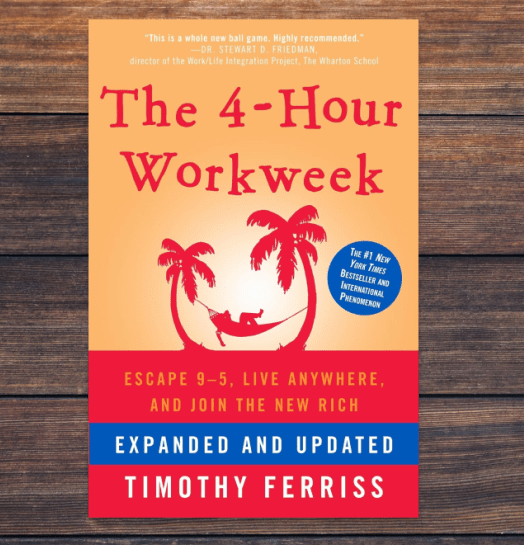
📖 Introduction: Why This Book Matters?
Imagine waking up tomorrow and realizing you don’t need to wait 40 years for retirement to live the life you’ve always dreamed of. What if freedom isn’t about having millions in the bank, but about designing a lifestyle where time, mobility, and purpose reign supreme? Published in 2007, this groundbreaking manifesto challenges everything society taught you about work, success, and happiness. It’s not just a book—it’s a permission slip to rewrite the rules of your existence and join what Ferriss calls “The New Rich”: those who’ve figured out how to live extraordinarily without selling their souls to the corporate machine.
👥 Who Should Read This
This book is your compass if you’re a burnt-out professional questioning whether the corner office is worth sacrificing your best years, an aspiring entrepreneur dreaming of location independence, a graduate standing at the crossroads wondering if there’s an alternative to the conventional path, or anyone who’s ever whispered to themselves at 3 AM: “There has to be more to life than this.” Whether you’re 22 or 62, if you’re ready to challenge the status quo and take radical ownership of your time, this book will shake your world.
🔍 The Author’s Journey
Tim Ferriss discovered these principles while drowning in 14-hour workdays at his sports nutrition company, BrainQUICKEN, feeling trapped and exhausted despite entrepreneurial success Wikipedia. His breaking point came when he took a three-week European sabbatical and experienced an epiphany: what if he could have this freedom all the time? Through trial, error, and relentless experimentation across Europe, Asia, and South America, he systematically dismantled his assumptions about work.
He developed a streamlined approach—checking email once daily, outsourcing tasks to virtual assistants, and automating his business operations Wikipedia. What emerged wasn’t just a survival strategy but a complete lifestyle revolution. The book was rejected by 26 out of 27 publishers, with one bookseller even sending him statistics proving it would never become mainstream X. Yet Ferriss persisted, writing for two close friends and focusing on unconventional solutions that had transformed his own life.
🔑 Key Model/Framework from the Book
The DEAL Framework – Your four-step roadmap to lifestyle liberation:
D – DEFINITION: Redefine what’s possible by rejecting deferred-life plans. Challenge the assumption that you must sacrifice 40 years for a comfortable retirement. Instead, design mini-retirements throughout your life and define what truly excites you—not just what you want, but what would make you leap out of bed every morning.
E – ELIMINATION: Master the art of selective ignorance by applying the Pareto Principle—recognize that 80% of your results come from 20% of your efforts. Eliminate time-wasting activities, adopt a low-information diet, batch similar tasks, and learn that being busy is often just sophisticated procrastination. The goal isn’t time management; it’s time multiplication.
A – AUTOMATION: Build your “muse”—an automated income generator that works while you sleep. Create or find a product serving a defined market, price it between $75-$300 with substantial markup, outsource fulfillment and customer service, and leverage geographic arbitrage to maximize your dollar’s purchasing power across different economies.
L – LIBERATION: Break free from location dependence. Negotiate remote work arrangements with current employers, or design businesses that operate independently of your physical presence. Embrace mobility as the ultimate luxury, understanding that freedom to choose where, when, and with whom you spend your time is the truest form of wealth.
📊 By the Numbers
The book remained on The New York Times Best Seller List for four years, was translated into 40 languages, and sold approximately 2.1 million copies Wikipedia. Ferriss himself went from earning $40,000 annually while working 80 hours weekly to generating $40,000 monthly in just 4 hours per week Amazon. The power of geographic arbitrage means your money can be worth 3-10 times more when you control your location. Using the 80/20 principle, you can potentially eliminate 50% of your workload within 48 hours by focusing ruthlessly on high-impact activities. Virtual assistants can handle routine tasks for approximately $5 per hour, freeing your time for what truly matters.
💡 Key Takeaways & Counterintuitive Insights
Relative income trumps absolute income: It’s not about how much you make—it’s about how much you make per hour of work and how much freedom that buys. Someone earning $50,000 while working 10 hours weekly and traveling the world is wealthier than someone making $250,000 while chained to an 80-hour workweek.
“Someday” is a disease that will bury your dreams: The timing will never be perfect. Waiting for the right moment is just fear wearing a sophisticated disguise. If it matters to you, start today and adjust course as you go.
Retirement is worst-case insurance, not a goal: Why save all your adventures for when your body is breaking down? Distribute mini-retirements throughout your life—alternate between intense activity and recovery periods rather than hoarding rest for your twilight years.
Being busy is a form of laziness: Busyness prevents you from thinking about whether you’re working on what actually matters. Ask yourself daily: if I only accomplished one thing today, what would make this day feel successful?
Fear-setting, not goal-setting: Most people never pursue their dreams because they fear failure. Define your fears explicitly—what’s the absolute worst that could happen? You’ll discover most fears are paper tigers, and even catastrophic outcomes are usually reversible.
Excitement, not happiness, is the goal: Happiness is too vague and passive. Instead, chase excitement—pursue what makes your heart race with anticipation.
🧠 Myth-Busting Moments
Myth: “I need to work harder and longer to be successful.”
Reality: Effectiveness trumps efficiency every time. Doing something unimportant extremely well doesn’t make it important. Focus on the 20% of activities that generate 80% of your results, then ruthlessly eliminate the rest.
Myth: “I need a million dollars to live like a millionaire.”
Reality: People don’t want millions—they want the lifestyle they think millions can buy. With location independence and smart design, you can charter private planes over the Andes and live in luxury for less than rent in Manhattan.
Myth: “I should fix my weaknesses to become well-rounded.”
Reality: Double down on your strengths instead. You’ll achieve far more by becoming exceptional in one area than mediocre in many. Let others handle what you’re weak at.
Myth: “Time management is the key to productivity.”
Reality: Time management is obsolete. You don’t need to fill every minute with work. You need to eliminate the unimportant, then focus exclusively on activities that move the needle.
Myth: “I need permission to live differently.”
Reality: Ask for forgiveness, not permission. Try your experiment, then justify it afterward. Most people who achieve extraordinary things do so by ignoring the gatekeepers.
💬 Best Quotes from the Book
While I cannot reproduce extended quotes, Ferriss emphasizes throughout that people often fear taking action when their only objection is timing, which reveals they’re simply afraid like everyone else. He challenges readers to consider what they would attempt if failure were impossible, and reminds us that options—the ability to choose—represent real power. The book repeatedly stresses that doing less meaningless work to focus on personally important things isn’t laziness but wisdom. One particularly powerful question he poses is what would excite you rather than what you merely want, shifting the focus from vague desires to energizing pursuits.
🚀 Actionable Steps: How to Apply It Today
Week One – Elimination Sprint:
- Conduct a brutal 80/20 analysis: List everything you do in a typical week. Identify which 20% of activities produce 80% of your results and happiness. Schedule elimination of the remaining 80%.
- Start a low-information diet: No news, no unnecessary social media, no meetings without clear agendas. Information is only valuable if it’s actionable and immediately relevant.
- Batch all similar tasks: Check email only twice daily at scheduled times. Group phone calls, errands, and administrative work into single blocks.
Month One – Test Remote Work:
- Build your case: Document increased productivity by working from home one day, then gradually expand.
- Demonstrate value: Show quantifiable business benefits and prove you’re more effective outside the office.
- Create systems: Establish clear communication protocols and deliverables that prove you’re more accessible remotely than colleagues are in-office.
Month Two – Build Your Muse:
- Identify your niche: Combine two areas you understand deeply. Find problems people will pay to solve.
- Micro-test before building: Create a simple landing page, run cheap ads, collect pre-orders. Validate demand with cash before creating anything.
- Automate from day one: Design systems and processes that don’t require your presence. Document everything so you can delegate it later.
Month Three – Outsource Your Life:
- Hire a virtual assistant: Start with small personal tasks to learn how to delegate effectively.
- Create standard operating procedures: Document processes so thoroughly that anyone could execute them.
- Gradually transfer business operations: Move from personal tasks to professional ones, systematically removing yourself from daily operations.
⚡ First 24 Hours: Your Action Plan
Hour 1 – Confronting Fear: Pull out a notebook and complete the fear-setting exercise. Write down something you’ve been afraid to pursue. Define the absolute worst-case scenario if you fail. Be specific and catastrophic. Now write how you would recover from this worst case. You’ll likely discover your fears are manageable.
Hour 4 – The One Thing: Look at tomorrow’s to-do list. Ask yourself for each item: if this were the ONLY thing I accomplished tomorrow, would I consider my day successful? Cross out everything that doesn’t pass this test. You’ve now identified your true priorities.
Hour 8 – Dreamlining: Answer these questions in writing: What would you do if you couldn’t fail? What would you do with $100 million in the bank? What would make you excited to wake up tomorrow? Don’t just think—write. Be specific. Calculate the monthly cost of making these dreams real. You’ll likely discover they cost far less than you imagined.
Hour 24 – The First Experiment: Choose one micro-test that scares you slightly. Could you ask for remote work one day next week? Could you test a product idea with a simple landing page? Could you hire a VA for one small task? Pick your experiment and commit to executing it within seven days. Action without permission is the beginning of freedom.
🤔 Final Thoughts: Was It Worth Reading?
This book is simultaneously revolutionary and controversial, inspiring and infuriating. It’s worth reading not because every piece of advice will work for you, but because it will shatter assumptions you didn’t even know you had. The title itself is slightly misleading—Ferriss likely works far more than four hours weekly on projects he’s passionate about. But that’s precisely the point: when you’re doing what genuinely excites you, the line between work and play dissolves.
The book’s greatest gift isn’t its tactical advice on virtual assistants or automated businesses. It’s the permission it grants you to question everything society told you was non-negotiable. Some strategies will feel dated in today’s world, and certain recommendations may not align with your values. That’s okay. Extract what resonates, discard what doesn’t, and remember that Ferriss himself says to challenge all assumptions—including his.
This book works best as a philosophical framework rather than a step-by-step manual. It’s about redesigning your life around your values instead of someone else’s definition of success. If you’re feeling trapped, uninspired, or convinced there must be another way, this book will show you there is—and it starts with having the courage to try.
⭐ Rating: 4.2/5
| Aspect | Rating | Why? |
|---|---|---|
| Usefulness | ⭐⭐⭐⭐⭐ | Packed with immediately actionable strategies that can transform how you approach work and life within weeks. The frameworks are practical and field-tested. |
| Readability | ⭐⭐⭐⭐ | Ferriss writes with punch and personality, though some find it borderline arrogant. The structure is logical, but at 416 pages, it can feel lengthy. The direct tone keeps you engaged. |
| Originality | ⭐⭐⭐⭐ | While individual concepts (Pareto Principle, Parkinson’s Law, outsourcing) existed before, Ferriss synthesized them into a cohesive lifestyle design framework that was revolutionary for its time. |
| Impact | ⭐⭐⭐⭐⭐ | This book spawned an entire movement of digital nomads, lifestyle entrepreneurs, and remote work advocates. It fundamentally altered how millions view the relationship between work and life. |
| Practicality | ⭐⭐⭐⭐ | Most advice is implementable, though some strategies require entrepreneurial risk-taking or financial cushion. Not everything works for everyone, but enough works for most to justify the investment. |
| Timelessness | ⭐⭐⭐⭐ | Core principles remain relevant, though specific tools and tactics show their age. The philosophy of lifestyle design is timeless; some execution details are dated. Remote work is now mainstream, validating Ferriss’s foresight. |
🎬 If This Book Were a Movie
Protagonist: Tim Ferriss as the unlikely hero—a dyslexic overachiever trapped in his own successful company, suffering from self-imposed imprisonment. Think Office Space meets The Social Network meets Into the Wild.
Plot Arc: Act One shows Tim drowning in work despite entrepreneurial success, highlighting the hollow nature of conventional achievement. Act Two follows his transformation during European travels as he experiments with radical lifestyle changes, facing skepticism from family, colleagues, and publishers. Act Three depicts his systematic dismantling of work-life barriers, culminating in achieving the impossible: freedom without poverty, adventure without irresponsibility, wealth without imprisonment.
Supporting Characters: The skeptical publishers who rejected him (the gatekeepers of conventional wisdom), the virtual assistants in India and the Philippines (the secret weapons of the New Rich), the fellow lifestyle designers who prove the model works (the growing tribe), and the corporate executives who tried it and transformed their companies (the establishment converts).
Climactic Scene: The phone call where his editor tells him he hit The New York Times bestseller list—Tim sliding down the wall, closing his eyes, knowing everything is about to change, that his crazy experiment just proved you can rewrite the rules of success X.
Tagline: “What if everything they told you about success was wrong?”
🔄 Before & After Reading
Before Reading:
- Believes success means climbing the corporate ladder for 40 years
- Thinks retirement at 65 is the reward for decades of sacrifice
- Assumes working harder and longer is the path to financial security
- Views weekends and annual vacations as the only acceptable rest
- Thinks meaningful work must consume most of your waking hours
- Believes you need millions to travel, have adventures, and live well
- Sees “busy” as a badge of honor and constant availability as professionalism
- Thinks asking for remote work is selfish or unprofessional
After Reading:
- Understands lifestyle design is about engineering freedom now, not later
- Recognizes that mini-retirements distributed throughout life beat one long retirement
- Realizes that results matter infinitely more than hours worked
- Questions whether most of their daily activities actually contribute to meaningful outcomes
- Sees “busy” as often just sophisticated avoidance of what truly matters
- Discovers that time and mobility are more valuable than absolute income
- Begins testing micro-experiments to systematically remove constraints
- Views conventional career paths as one option among many, not the only option
- Starts asking “What excites me?” instead of “What should I do?”
📚 Books That Pair Well With This
Complementary Reads:
- Deep Work by Cal Newport – Balances Ferriss’s automation focus with the importance of building rare, valuable skills through focused effort
- Essentialism by Greg McKeown – Reinforces the elimination mindset with powerful frameworks for prioritizing what truly matters
- Company of One by Paul Jarvis – Shows how to build profitable businesses intentionally kept small and simple
- Digital Minimalism by Cal Newport – Provides structure for the low-information diet and reclaiming attention
Contrasting Perspectives:
- So Good They Can’t Ignore You by Cal Newport – Challenges the “follow your passion” narrative, arguing you must build career capital before earning autonomy
- The Subtle Art of Not Giving a Fck* by Mark Manson – Questions whether constant optimization and life-hacking actually lead to fulfillment
- Range by David Epstein – Suggests that developing broad skills and exploring widely might matter more than hyper-specialization
📚 Resources
- Tim Ferriss’s blog (tim.blog) contains extensive tools, templates, and case studies
- The Tim Ferriss Show podcast features in-depth interviews with world-class performers
- Dreamline worksheet and comfort challenges available on fourhourworkweek.com
- Virtual assistant services like Zirtual, Fancy Hands, or Upwork for delegation
- Remote work platforms including FlexJobs and We Work Remotely
- Automation tools: Zapier, IFTTT, and various email management systems
- Online communities of lifestyle designers and digital nomads for peer support
🤔 Skeptic’s Corner
“Isn’t this just privilege disguised as productivity advice?” Valid concern. Many strategies assume you have savings, marketable skills, or the ability to take risks without endangering dependents. The framework works better for some demographics than others. However, the core principles of elimination, automation, and prioritization apply regardless of circumstances—even if full lifestyle design remains out of reach initially.
“The title is clickbait—he doesn’t really work four hours weekly.” Absolutely true. Ferriss admits he works extensively on projects he’s passionate about. But that misses the point: he’s decoupled time from income and chooses how to spend his hours. The goal isn’t laziness; it’s optionality.
“Outsourcing to low-paid virtual assistants feels ethically questionable.” Fair critique. Geographic arbitrage can exploit wage disparities. However, these positions often provide above-average income in their local economies. The question is whether you’re paying fairly within that context and treating people with dignity, not whether everyone earns San Francisco wages.
“This spawned an army of insufferable digital nomads.” The book’s success created a movement that includes genuine lifestyle designers and also get-rich-quick opportunists selling courses about selling courses. Don’t confuse the philosophy with some of its worst practitioners. Judge the ideas on their merit, not on social media caricatures.
“Some advice feels dated.” True—certain tactical recommendations don’t translate perfectly to 2025. The expanded edition helps, but technology has evolved. Extract timeless principles (priority ruthlessly, automate intelligently, question assumptions fearlessly) rather than copying tactics verbatim.
🧑💼 How Real People Used It
Sarah, Marketing Director: Negotiated a four-day workweek by demonstrating she could accomplish more in focused bursts than colleagues in five days of meetings and interruptions. Used the extra day to launch a consulting practice. Within two years, left corporate entirely, now earns more while traveling six months annually.
Marcus, Software Developer: Applied elimination principles to his workday, realizing most meetings were theatrical. Started declining meetings without clear agendas, batched email to twice daily, and tripled his productive coding hours. Became his team’s most valuable member while working fewer hours than peers.
Jennifer & Tom, Couple with Kids: Thought lifestyle design was only for single twentysomethings. Tested mini-retirements by negotiating remote work, then spent three months in Portugal with their two children. Kids attended local schools, learned Portuguese, and the family spent a fraction of their normal living costs. Now planning their next adventure in Thailand.
Raj, Corporate Accountant: Didn’t quit his job but transformed his relationship with work. Eliminated low-value tasks, automated reporting with better tools, and negotiated two days of remote work. Used freed time to pursue photography seriously. Five years later, photography income matches his salary; he’s planning his exit.
🎯 3-Minute Challenge
Right now—not later, not tomorrow, not when you finish other tasks—pull out your phone or grab a piece of paper.
Minute One: Write down one goal you deeply desire but have been postponing. Something that makes your heart beat faster just thinking about it. Not what you think you should want—what genuinely excites you. Be specific.
Minute Two: List three concrete actions you could take this week to move toward that goal. Not someday. Not when the time is right. This week. Small steps count. Buying a domain counts. Making one phone call counts. Reading one chapter counts.
Minute Three: Now write down what you’re afraid of. What’s the absolute worst that could happen if you pursue this and fail spectacularly? Write it all out. Look at it. Is it really as catastrophic as the story you’ve been telling yourself?
You’re done. Three minutes. No excuses. You now have a dream, a plan, and a clearer picture of your fears. The only question left is: what will you do next?
💬 Your Turn
You’ve just invested significant time reading this summary. That time is only valuable if you act. Pick ONE concept that resonated most powerfully with you. Just one. Maybe it’s the 80/20 principle. Maybe it’s fear-setting. Maybe it’s questioning whether you need millions to live well.
Whatever spoke to your soul—commit to one micro-experiment testing that concept within 48 hours. Not a massive life overhaul. Just a single small test. Email your boss suggesting one remote day per week. Hire a VA for one five-dollar task. Identify the 20% of your work producing 80% of results.
The book isn’t called “The 4-Hour Workweek: An Interesting Theory.” It’s a blueprint demanding action. Ferriss didn’t transform his life by reading—he experimented relentlessly, failed often, adjusted constantly, and eventually built something extraordinary.
Your life is happening right now, not someday. The question isn’t whether you have permission to live differently. The question is whether you have the courage to start.
What’s your first experiment?
Remember: The goal isn’t to copy Tim Ferriss’s life. It’s to design your own. Use these principles as scaffolding, not scripture. Question everything—including this summary. Then build something beautiful with the time you have left.