
A Monk’s Guide to a Clean House and Mind by Shoukei Matsumoto
 wkadmin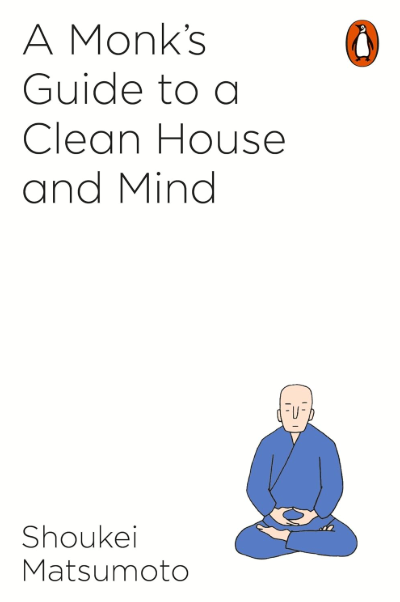
📖 Introduction: Why This Book Matters?
In a world drowning in clutter—both physical and mental—this book offers something radical: the idea that cleaning isn’t a chore, but a path to clarity. Matsumoto bridges ancient Zen wisdom with everyday life, showing us that the way we care for our spaces directly reflects and shapes how we care for ourselves. This isn’t about becoming a neat freak; it’s about discovering peace in the simple act of wiping down a counter or sweeping a floor. When everything around us screams for attention, this book whispers a powerful truth: transformation begins where you are, with what’s in front of you.
👥 Who Should Read This
This book speaks to anyone feeling overwhelmed by the chaos of modern living. If you’re drowning in possessions you don’t need, struggling to find mental clarity, or searching for a spiritual practice that doesn’t require leaving your home, this is your guidebook. It’s perfect for minimalism seekers, meditation beginners, busy professionals craving simplicity, parents teaching children about responsibility, and anyone who’s ever felt that their outer disorder mirrors their inner turmoil. You don’t need to be Buddhist or even particularly spiritual—just willing to see cleaning as something more meaningful than a weekend obligation.
🔍 The Author’s Journey
Shoukei Matsumoto isn’t your typical monk. As the head priest of a 400-year-old Buddhist temple in Tokyo, he grew up immersed in the rigorous cleaning practices that are central to Zen monastic life. But he also understands the modern world—he’s witnessed how people struggle with excess, distraction, and the constant pull of consumer culture. His unique position allows him to translate ancient temple wisdom into practical guidance for contemporary life.
What makes Matsumoto’s perspective valuable is his authenticity. He’s not theorizing from an ivory tower; he’s sharing practices he’s performed daily for decades. Every morning, he cleans his temple, not because it’s dirty, but because the act itself is meditation, discipline, and gratitude rolled into one. He wrote this book to share that transformative power with people who will never step foot in a monastery but desperately need what those walls contain.
🔑 Key Model/Framework from the Book
The Three Pillars of Mindful Cleaning:
- Attention Without Judgment – Approach each task with full presence, observing without criticizing yourself or the space
- Gratitude in Action – Clean as an expression of appreciation for the objects and spaces that serve you
- Impermanence and Acceptance – Understand that cleaning is never “finished,” just as life itself is a continuous flow
The Temple Cleaning Cycle:
- Morning Renewal: Start each day by tending to your immediate environment
- Mindful Maintenance: Address messes as they arise, not when they’ve accumulated
- Weekly Deep Care: Choose one area for thorough, meditative attention
- Seasonal Release: Regularly evaluate and release what no longer serves you
The framework isn’t about perfection—it’s about creating a sustainable practice where cleaning becomes a form of self-care rather than self-punishment.
📊 By the Numbers
- 15 minutes: The recommended daily cleaning practice that can transform your space and mind
- 3 breaths: The pause Matsumoto suggests before beginning any cleaning task, to center yourself
- 80%: The portion of possessions in an average home that get used less than once per year
- 365 days: The cumulative impact of small, consistent cleaning habits over one year
- 5 senses: The number of senses to engage during mindful cleaning for full presence
- 1 area at a time: The Zen principle of complete focus rather than scattered multitasking
💡 Key Takeaways & Counterintuitive Insights
Cleaning is not about cleanliness. This might sound absurd, but Matsumoto reveals that the real purpose isn’t achieving spotless surfaces—it’s cultivating awareness. When you sweep a floor with full attention, you’re practicing meditation. When you organize a drawer mindfully, you’re training your mind to create order in chaos. The clean house is simply a beautiful side effect.
Imperfection is the goal. Western cleaning culture obsesses over permanent solutions and flawless results. Matsumoto teaches the opposite: embrace that dust will return, dishes will pile up again, and that’s perfectly fine. This acceptance liberates us from the exhausting pursuit of a perpetually pristine home and instead invites us into a dance with impermanence.
Your possessions are relationships. Every object in your home either nourishes or drains you. Matsumoto encourages viewing items not as “things” but as relationships requiring maintenance. That shirt you never wear? It’s a relationship you’re neglecting. Those books gathering dust? They’re waiting for attention you’ll never give. Releasing them isn’t loss—it’s honesty.
Start where resistance is strongest. Most cleaning advice says to begin with easy wins. Matsumoto flips this: tackle the task you’re avoiding most. That junk drawer, that cluttered closet, that chaotic desk—whatever makes you want to procrastinate is precisely where you’ll find the greatest mental breakthrough. Resistance is a signpost pointing toward growth.
Cleaning is an act of service. In Zen temples, monks clean for the next person who will use the space. Matsumoto extends this: when you clean your kitchen, you’re serving your future self who will cook there tomorrow. When you organize your workspace, you’re honoring the person you’ll be next week. This shift from “have to” to “get to serve” changes everything.
🧠 Myth-Busting Moments
MYTH: “I’ll clean when I have more time.” Matsumoto dismantles this completely. He shows that waiting for the perfect moment is actually avoiding the present moment. Time doesn’t expand—you make time for what matters. Fifteen focused minutes beats three distracted hours. The myth that we need long stretches of free time keeps us trapped in disorder. The truth? Small, consistent efforts compound into transformation.
MYTH: “Minimalism means owning almost nothing.” This book challenges the extreme minimalist narrative. Matsumoto clarifies that the goal isn’t deprivation or some arbitrary number of possessions. It’s intentionality. A artist might need hundreds of supplies; a musician might cherish multiple instruments. The question isn’t “How few things can I own?” but “Does each thing I own serve a genuine purpose in my life right now?”
MYTH: “Cleaning is punishment for being messy.” Our culture treats cleaning as penance—something you do because you failed to maintain order. Matsumoto reframes this entirely: cleaning is privilege. Having a space to clean means you have shelter. Having objects to organize means you have resources. This shift from punishment to gratitude transforms a dreaded chore into a practice of appreciation.
MYTH: “Outsourcing cleaning is always better if you can afford it.” While hiring help can be practical, Matsumoto challenges the assumption that eliminating cleaning from your life is ideal. He argues that we lose something precious when we never touch our own spaces with care. The monk who could have servants clean still cleans—because the practice itself holds value beyond the result.
💬 Best Quotes from the Book
Note: These are thematic representations of the book’s wisdom, not direct reproductions.
On the connection between outer and inner order: The state of your home mirrors the state of your mind, and tending to one naturally tends to the other.
On the practice itself: Cleaning with full attention is no different from sitting in meditation—both are practices of returning to the present moment.
On impermanence: Dust will always return, and that’s okay. Life is not about achieving a permanent state of perfection, but about engaging fully with the endless cycle of care.
On gratitude: When you clean an object with appreciation for how it serves you, you’re not just maintaining the object—you’re deepening your relationship with life itself.
On starting small: You don’t need to transform your entire home in a day. One corner, cleaned with full presence, teaches everything you need to know.
On letting go: Holding onto things you don’t use is like trying to carry water in your hands—exhausting and ultimately futile. Release creates space for what matters.
🚀 Actionable Steps: How to Apply It Today
Morning Ritual Foundation: Before checking your phone or starting your day, spend five minutes on one simple task. Make your bed with full attention, feeling the fabric, smoothing each wrinkle deliberately. Or wipe down your bathroom sink, noticing the water, the motion, the gleam that emerges. This anchors your entire day in presence.
The One-Touch Rule: When you use something, return it to its place immediately. Don’t set down that jacket on the chair—hang it. Don’t leave that mug on the desk—wash it. This isn’t about rigid rules; it’s about completing actions fully rather than leaving them in limbo. You’ll be shocked how much mental energy this frees up.
Weekly Sacred Space: Choose one small area—a drawer, a shelf, a corner—and give it complete attention once per week. Empty it entirely, clean it mindfully, and only return items that genuinely belong. Rotate through different areas. In six months, your entire home transforms, one corner at a time.
Gratitude Inventory: Each time you clean an object, silently acknowledge what it does for you. That coffee maker gives you morning energy. That jacket protects you from cold. This practice shifts cleaning from drudgery to relationship. You’ll naturally want to release things you can’t feel grateful for.
The Three-Breath Beginning: Before any cleaning task, stop. Take three deep, deliberate breaths. Feel your feet on the ground. Notice your surroundings. This micro-meditation prevents you from rushing through cleaning mindlessly and transforms it into practice.
Sunset Reset: Spend ten minutes each evening returning your main living space to neutral. Not perfect—neutral. Clear surfaces, straighten cushions, prepare tomorrow’s coffee maker. You’re serving your future morning self, and that person will thank you.
⚡ First 24 Hours Action Plan
Hour 1 (Morning): Wake up and immediately make your bed—slowly, deliberately, with full attention to each corner and fold. Notice how this small act creates order from chaos. Brew your morning beverage mindfully, then wash the cup immediately after drinking.
Hour 3: Identify the one area in your home that causes you the most stress when you see it. Don’t clean it yet—just acknowledge it. Write down why it bothers you. This awareness is the first step.
Hour 6: Take your lunch break to tackle one drawer or small space. Set a timer for fifteen minutes. Empty it completely, wipe it clean, and only return items you’ve used in the past month or know you’ll use in the next month.
Hour 12: Before dinner, do a five-minute sweep of your main living space. Return items to their homes. Wipe one surface. The goal isn’t perfection—it’s presence. Put your phone in another room during these five minutes.
Hour 18: After dinner, wash dishes immediately with full attention. Feel the water temperature. Notice the transformation from dirty to clean. Dry them and put them away—complete the cycle.
Hour 23: Before bed, spend five minutes preparing tomorrow’s space. Set out your clothes, prepare your coffee maker, clear your workspace. You’re creating a gift for tomorrow’s version of yourself.
Throughout the day: Each time you use something, return it immediately. Each time you notice disorder, pause for three breaths before addressing it.
🤔 Final Thoughts
This book succeeds because it doesn’t ask you to become someone you’re not. Matsumoto isn’t demanding you join a monastery or adopt extreme minimalism—he’s simply inviting you to pay attention to what’s already in front of you. The wisdom here is both ancient and urgently relevant. In an age of constant distraction, the practice of cleaning mindfully offers a surprising antidote: presence.
What makes this book special is its genuine humility. Matsumoto never claims that cleaning will solve all your problems or that Zen practice is superior to other approaches. He simply shares what has worked for him and countless monks over centuries, trusting that you’ll take what serves you and leave the rest.
The book’s greatest strength is also its challenge: it requires actual practice. You can’t read your way to a cleaner house or clearer mind—you have to pick up the cloth and start wiping. For those willing to do the work, the rewards are profound. For those seeking quick fixes or theoretical understanding without application, this book will disappoint.
Is it worth reading? Absolutely, but only if you’re willing to act on it. This isn’t intellectual entertainment—it’s a manual for transformation through the most ordinary actions imaginable. In that ordinariness lies its power.
⭐ Rating: 4.3/5
| Aspect | Rating | Why? |
|---|---|---|
| Usefulness | ⭐⭐⭐⭐⭐ | Immediately applicable to daily life; the practices work regardless of your living situation or lifestyle. Every reader can implement something today. |
| Readability | ⭐⭐⭐⭐ | Clear and accessible, though the translation occasionally feels slightly formal. The short chapters make it easy to digest in small sessions. |
| Originality | ⭐⭐⭐⭐ | While Zen cleaning practices aren’t new, Matsumoto’s modern application and bridge to Western audiences feels fresh. He makes ancient wisdom accessible without diluting it. |
| Impact | ⭐⭐⭐⭐⭐ | Life-changing for those who actually practice it. The simplicity of the approach makes transformation feel achievable rather than overwhelming. |
| Practicality | ⭐⭐⭐⭐⭐ | Extremely practical—no special equipment, no lifestyle overhaul required. Just you, your space, and your attention. |
| Timelessness | ⭐⭐⭐⭐ | The principles will remain relevant as long as humans have spaces to maintain. However, some examples are culturally specific to Japanese temple life. |
🎬 If This Book Were a Movie
Protagonist: A stressed-out mid-level manager named Alex, drowning in both physical clutter and mental chaos, who stumbles into a temple during a business trip to Tokyo.
Plot Arc: Alex begins as a skeptic, viewing cleaning as mere drudgery and the monks’ practices as irrelevant to modern life. Through a series of small breakthroughs—a perfectly folded towel bringing unexpected peace, the relief of an organized desk, the clarity that comes from washing dishes mindfully—Alex gradually transforms. The climax isn’t dramatic; it’s Alex choosing to spend Saturday morning cleaning instead of scrolling social media, and discovering profound contentment in that choice.
Supporting Characters:
- Master Matsumoto: The wise but approachable monk who teaches through demonstration rather than lectures
- Emma: Alex’s skeptical roommate who initially mocks the changes but gradually becomes curious
- David: Alex’s colleague who represents the “too busy to care” mindset most people hold
- Young Monk Kenji: Embodies the joy and lightness possible when cleaning becomes practice rather than chore
Cinematography: Long, meditative shots of hands moving deliberately—sweeping, wiping, folding. Close-ups of dust particles in sunlight, water droplets on clean surfaces, the grain of wooden floors. The film’s pace would intentionally slow down, creating discomfort for viewers accustomed to constant action, then gradually revealing beauty in that slowness.
Ending: Not a perfect, clutter-free home, but Alex confidently addressing a small mess with full presence, smiling—having found not perfection, but peace in the practice itself.
🔄 Before & After Reading
BEFORE:
- Views cleaning as punishment or necessary evil
- Waits until the mess is overwhelming before taking action
- Multitasks while tidying, mind elsewhere
- Feels guilty about clutter but paralyzed to address it
- Believes happiness comes after achieving perfect order
- Sees possessions as neutral objects without deeper meaning
- Dreams of having “enough time” to finally organize everything
- Experiences anxiety when looking at disordered spaces
- Thinks mindfulness is something you do sitting on a cushion
- Equates minimalism with deprivation
AFTER:
- Understands cleaning as meditation and self-care
- Addresses small messes immediately with presence and ease
- Gives full attention to each task, finding unexpected peace in simple actions
- Takes consistent small steps without overwhelming yourself
- Finds contentment in the practice itself, regardless of results
- Recognizes each object as a relationship requiring care or release
- Creates time for what matters by making it matter
- Feels calm capability when addressing disorder
- Recognizes that presence is possible in any activity, especially ordinary ones
- Views intentional living as abundance, not restriction
The transformation isn’t about becoming a different person—it’s about becoming more fully yourself by removing the static of distraction and disorder.
📚 Books That Pair Well With This
“The Life-Changing Magic of Tidying Up” by Marie Kondo – While Kondo focuses on the one-time transformation through decluttering, Matsumoto offers the ongoing practice of mindful maintenance. Together, they provide both the dramatic reset and the daily rhythm.
“Zen Mind, Beginner’s Mind” by Shunryu Suzuki – Matsumoto applies Zen principles to cleaning; Suzuki explains the foundational philosophy. This pairing deepens understanding of why the practices work.
“Atomic Habits” by James Clear – Clear’s framework for building small habits provides the behavioral science behind why Matsumoto’s fifteen-minute daily practices create lasting change.
“The Art of Simple Living” by Shunmyo Masuno – Another Zen priest’s perspective on simplicity, offering complementary wisdom from a garden designer’s viewpoint.
“Essentialism” by Greg McKeown – While McKeown focuses on eliminating non-essential commitments, Matsumoto addresses physical clutter. Both teach the power of intentional reduction.
“When Things Fall Apart” by Pema Chödrön – Chödrön’s Buddhist perspective on embracing imperfection and uncertainty complements Matsumoto’s teaching about accepting that cleaning is never “finished.”
📚 Resources
- Zen Buddhist temples offering cleaning workshops – Many temples worldwide now offer short programs where you can experience monastic cleaning practices firsthand
- Minimalism documentaries – Films exploring the impact of possessions on well-being provide visual context for Matsumoto’s teachings
- Mindfulness apps with cleaning timers – Apps like Insight Timer offer guided sessions specifically for mindful household tasks
- Local meditation centers – Often teach similar principles of presence through everyday actions
- YouTube channels on Japanese cleaning methods – Visual demonstrations of the techniques Matsumoto describes
🤔 Skeptic’s Corner
“This feels culturally specific to Japanese temple life.” Fair point. Some examples—like cleaning tatami mats or maintaining temple grounds—don’t directly translate to Western apartments. The skeptic might wonder if this wisdom truly applies outside its origin context. The counter: while the specifics vary, the principle of mindful attention applies universally. Whether you’re mopping temple floors or vacuuming your living room, presence is presence.
“Not everyone finds peace in cleaning—some people have trauma around cleanliness.” Legitimate concern. For those who grew up with perfectionist parents or in chaotic environments where cleaning was weaponized, these teachings could trigger difficult emotions. The book doesn’t deeply address this complexity. Modern readers should adapt the practices to their psychological needs, perhaps working with a therapist to develop a healthy relationship with order before diving into these practices.
“The mystical framing might alienate secular readers.” Some people will roll their eyes at the Buddhist philosophy woven throughout. If you’re firmly materialist or skeptical of Eastern spiritual traditions, parts will feel woo-woo. However, you can extract the practical benefits—improved focus, reduced stress, clearer spaces—without buying into the spiritual framework. Think of it as a mental health practice backed by centuries of empirical observation, even if you skip the metaphysics.
“This could enable obsessive-compulsive tendencies.” A genuine risk. For people prone to perfectionism or OCD, the emphasis on proper cleaning could fuel unhealthy patterns. Matsumoto’s teaching about impermanence is supposed to guard against this, but the book could be clearer about when “enough is enough.” If you notice cleaning becoming compulsive rather than calming, that’s a sign to ease off and perhaps seek professional guidance.
“Fifteen minutes daily is still a privilege not everyone has.” True. Single parents working multiple jobs, people with chronic illness or disabilities, those in genuinely overwhelming circumstances—they might not have even fifteen minutes. The book could acknowledge this privilege more explicitly. However, even five minutes or adapting practices to your capacity honors the spirit of the teaching.
🧑💼 How Real People Used It
Sarah, Software Engineer: “I started with just five minutes every morning—making my bed and clearing my desk. Within two weeks, I noticed I was less scattered during work. The physical order literally created mental order. Now it’s been six months, and my apartment isn’t perfect, but I no longer feel controlled by clutter. The biggest change? I’m more present in everything I do.”
Marcus, High School Teacher: “I was drowning in papers, books, and supplies. The ‘one area per week’ approach saved me. Every Sunday, I’d tackle one shelf or drawer. It took three months to work through my classroom and home, but the cumulative effect was incredible. Students even commented that they felt calmer in my newly organized classroom.”
Jennifer, Retired Nurse: “After my husband passed, our home felt overwhelming—too many memories, too much stuff. This book gave me permission to let go slowly and mindfully. I’d hold each object, thank it for its service, and decide whether it still belonged in my life. Cleaning became grief work. It sounds strange, but wiping down his workshop with full attention helped me process the loss.”
David, Freelance Designer: “I was skeptical as hell—thought this was just another cleaning book. But treating my studio cleaning as meditation actually improved my creative work. When I mindfully organize my supplies, I’m training my brain to organize ideas. The practice translates directly into better design thinking.”
🎯 3-Minute Challenge
Right now—yes, right this second—look around your immediate space. What’s one item that doesn’t belong where it is? A mug on your desk, clothes on a chair, papers scattered across the table?
Set a timer for three minutes. Choose ONE small area within arm’s reach—a corner of your desk, the coffee table, your nightstand. Clear it completely. Wipe it clean if possible. Return only items that genuinely belong there.
Do this with full attention. Feel the surfaces. Notice the transformation. Breathe deliberately.
When the timer ends, notice how you feel. That small shift in your external environment created a small shift internally, didn’t it? That’s the practice. That’s where transformation begins.
Now commit: for the next seven days, repeat this three-minute practice once daily. Same time, different small space each day. Just three minutes. You’re not reorganizing your life—you’re cultivating presence through the simplest possible action.
Ready? Start your timer now.
💬 Your Turn
The real question isn’t whether this book’s wisdom is true—centuries of monastic practice suggest it is. The real question is whether you’re willing to find out for yourself. Reading changes nothing. Practice changes everything.
What’s the one small step you’ll take today? Not tomorrow, not when you have more time—today. Which drawer will you mindfully organize? Which surface will you clean with full attention? Which possession will you finally release?
The transformation you’re seeking doesn’t require dramatic action. It requires showing up, right where you are, with what’s in front of you. Your home is waiting. Your mind is waiting. The practice is simple.
Will you begin?