
The Psychology of Money by Morgan Housel
 wkadmin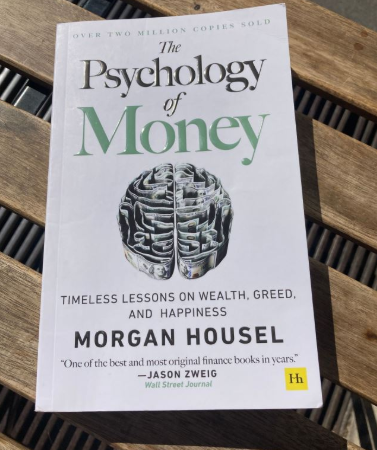
📖 Introduction: Why This Book Matters?
Money isn’t a math problem—it’s a human problem. This book dismantles the myth that financial success requires complex formulas, insider knowledge, or genius-level intelligence. Instead, Housel reveals that wealth is primarily determined by behavior, psychology, and how you think about risk, greed, and enough. In a world drowning in financial advice that treats humans like calculators, this book acknowledges the messy reality: we make decisions based on emotions, experiences, and stories we tell ourselves. It matters because most financial education focuses on what to do with money while completely ignoring why we do the opposite. Housel bridges that gap, showing that a person with average intelligence but exceptional behavior will outperform a genius with poor behavior every single time.
👥 Who Should Read This
Anyone who’s ever felt confused about why they make irrational money decisions. Young professionals starting their financial journey who need perspective more than tactics. Experienced investors who’ve mastered spreadsheets but struggle with emotional discipline. Parents wanting to teach their children healthy money attitudes. People who’ve achieved financial success but still feel anxious or unsatisfied. Those recovering from financial mistakes and seeking wisdom over judgment. Essentially, anyone who realizes that managing money is less about intelligence and more about managing yourself.
🔍 The Author’s Journey
Morgan Housel didn’t arrive at these insights from an ivory tower. He worked as a financial journalist for over a decade, observing how real people—from billionaires to broke families—actually handled money. He watched the 2008 financial crisis unfold, witnessing intelligent people make catastrophic decisions while others with less sophistication survived and thrived. His unique position allowed him to see patterns invisible to pure academics or pure practitioners.
What sets Housel apart is his fascination with the human stories behind financial outcomes. He collected decades of observations about why people succeed or fail with money, focusing less on tactics and more on the psychological patterns that transcend market conditions. He realized that financial advice rarely fails because it’s technically wrong—it fails because it ignores human nature. His writing emerged from the simple question: if money management is mostly behavioral, why does all financial education focus on technical knowledge? This book is his answer, blending history, psychology, and personal finance into something far more useful than either discipline alone.
🔑 Key Model/Framework from the Book
The Core Framework: Behavior Trumps Intelligence
Housel doesn’t offer a single model but rather interconnected principles that form a complete psychology of money:
1. Your Personal Experience Shapes Your Financial Reality
- People raised in different economic eras develop completely different money personalities
- Your investing philosophy is largely determined by which economic period shaped your young adult years
- There’s no universal “right” way because everyone plays a different game with different rules
2. The Three Layers of Financial Success
Layer One: Survival (Getting Wealthy)
- Requires taking reasonable risks
- Demands optimism and action
- Involves finding your edge
Layer Two: Preservation (Staying Wealthy)
- Requires paranoia and humility
- Demands frugality and low ego
- Involves not losing what you’ve gained
Layer Three: Purpose (Using Wealth)
- Requires defining “enough”
- Demands using money as a tool for independence
- Involves converting wealth into time and autonomy
3. The Luck-Risk Spectrum Every outcome is part luck, part risk, part skill. Most success stories overweight skill and underweight luck. Most failure stories do the opposite. Understanding this creates humility in success and compassion in failure.
4. The Power of Compounding The real magic isn’t the math—it’s the psychology of staying in the game long enough for compounding to work. Most people understand compound interest intellectually but fail to capitalize on it because they can’t handle the emotional volatility required to stay invested.
5. The Independence Dividend The highest return money can generate isn’t more money—it’s autonomy, control over your time, and the ability to wake up and do what you want with your day. This is the ultimate goal that most people miss while chasing returns.
📊 By the Numbers
- 40%: The approximate portion of investment returns that comes from the top few days in any given period—miss those days by panic-selling and you miss most gains
- 0.00004%: Your odds of becoming as wealthy as Warren Buffett through stock picking skill alone—his real secret is time and compounding over 75+ years
- 2x: The average person significantly underestimates how much their future self will change, leading to poor long-term planning
- 84 years: Warren Buffett’s age when Housel was writing—his wealth accumulation story is about longevity, not genius
- $70 billion+: Amount of Buffett’s wealth that came after his 50th birthday due to compounding
- 1930s: The decade that shaped Warren Buffett’s Depression-era psychology of extreme frugality and risk aversion despite billions
- 13-year stretch: How long the stock market can go without positive returns, requiring immense patience
💡 Key Takeaways & Counterintuitive Insights
The highest form of wealth is sleeping soundly at night. Financial anxiety destroys quality of life faster than moderate wealth improves it. Someone earning modest income with zero financial stress is objectively wealthier than someone earning millions while paralyzed by fear of losing it. Optimize for peace of mind, not maximum returns.
Being reasonable beats being rational. Academic finance assumes humans are rational calculators. Reality shows that strategies you can emotionally stick with—even if suboptimal on paper—outperform “perfect” strategies you’ll abandon during downturns. A good plan you can actually follow trumps a perfect plan you’ll quit.
Your personal experiences create a unique financial worldview—and everyone else has one too. Someone who graduated college during a recession sees risk everywhere. Someone who entered the workforce during a boom sees opportunity everywhere. Neither is wrong. Understanding this prevents you from judging others’ financial choices through your narrow lens.
Every financial goal has a hidden price tag. The “price” of investment returns isn’t the fees—it’s the emotional volatility, uncertainty, and fear you must endure. The price of entrepreneurial success isn’t just time—it’s stress, failed attempts, and opportunity cost. The key is recognizing the price, accepting it willingly, rather than pretending it doesn’t exist.
Enough is the most powerful financial concept you’ll never master. There is no amount of money that automatically feels like “enough” because humans constantly shift goalposts. The richest people on Earth often chase more with the same intensity as when they had little. Until you deliberately define and internalize “enough,” you’re on a hedonic treadmill that never stops.
Wealth is what you don’t see. The flashy cars, designer clothes, and luxury vacations signal spending, not wealth. True wealth is the assets you’ve accumulated but haven’t spent—the financial runway giving you options, time, and independence. We admire the wrong things because we can only see consumption, not invisible bank accounts.
Long-term thinking is easy to embrace intellectually but brutally difficult emotionally. Everyone agrees compound growth is powerful. Almost no one can emotionally handle watching their portfolio drop 30% and resist panic-selling, which is precisely what long-term investing requires. The gap between knowing and doing is where fortunes are lost.
Room for error is the difference between financial stability and ruin. Plans that require everything to go right eventually collapse when something goes wrong (and something always goes wrong). The best financial strategy builds in massive buffers—more savings than you “need,” lower spending than you can “afford,” more conservative investments than are “optimal.” Margin for error isn’t being pessimistic; it’s acknowledging you can’t predict the future.
You can be optimistic about the future while being paranoid about obstacles. This paradox defines successful long-term thinking. Optimism drives investment and risk-taking. Paranoia prevents devastating losses that erase years of gains. You need both simultaneously, which is psychologically uncomfortable but financially essential.
Independence is the ultimate goal money can buy. Financial freedom isn’t about beach vacations or luxury goods—it’s about controlling your time. The ability to wake up and decide how you’ll spend your day without external constraints is worth more than any material possession. Yet most people sacrifice independence to buy stuff that impresses others.
🧠 Myth-Busting Moments
MYTH: “You need to study finance to be good with money.”
REALITY: Financial success is approximately 80% behavior and 20% technical knowledge. A construction worker with discipline to save consistently and emotional stability to ignore market noise will accumulate more wealth than a finance PhD who panic-sells during downturns or lifestyle-inflates every raise. Knowing the math of compound interest is useless if you can’t control the impulse to withdraw money during scary market periods.
MYTH: “Copy what wealthy people do and you’ll become wealthy too.”
REALITY: Every person is playing a different financial game with different rules, timelines, and goals. A retiree’s strategy (preservation) shouldn’t match a 25-year-old’s strategy (accumulation). A trust fund inheritor faces different challenges than a self-made entrepreneur. Blindly copying someone else’s approach without understanding their circumstances, psychology, and goals is a recipe for disaster. Your financial journey must fit your life, not someone else’s.
MYTH: “More information leads to better financial decisions.”
REALITY: Beyond basic financial literacy, additional information often creates paralysis, overconfidence, or justification for emotional decisions disguised as logic. The person checking their portfolio daily doesn’t outperform the person who checks quarterly—they just experience more anxiety. Most wealthy people succeed with simple strategies executed consistently, not complex tactics requiring constant attention.
MYTH: “The market is purely logical and predictable with enough analysis.”
REALITY: Markets are collections of humans making emotional decisions. Even perfect information can’t predict how millions of people will react to unexpected events. The 2008 crisis wasn’t caused by lack of data—information was abundant. It was caused by human behavior, incentives, and psychological forces that no model predicted. Treating markets as purely logical systems misses the entire human element.
MYTH: “The goal is to maximize returns.”
REALITY: The goal is to maximize returns you can actually capture and sustain psychologically. A strategy promising 15% annual returns that you’ll abandon after one bad year is worthless. A strategy delivering 7% returns that you can maintain for 40 years will make you exponentially wealthier. Sleep-at-night returns you can stick with always beat maximum-on-paper returns you’ll quit.
MYTH: “Saving is for people who can afford it; I need to earn more first.”
REALITY: Savings rate is largely independent of income. High earners often save nothing due to lifestyle inflation; modest earners sometimes save significant percentages. The wealthiest person isn’t necessarily the highest earner—it’s the person with the largest gap between earnings and ego. You don’t need more income; you need to control the impulse to spend every raise.
MYTH: “Financial mistakes mean you’re stupid or lazy.”
REALITY: Financial mistakes usually stem from reasonable decisions given someone’s unique experiences and information at the time. Someone who avoided stocks after watching their parents lose everything in 2008 isn’t stupid—they’re responding rationally to trauma. Judging past financial decisions with current information is unfair and unhelpful. Context matters enormously.
💬 Best Quotes from the Book
“Doing well with money has little to do with how smart you are and a lot to do with how you behave.”
“The ability to do what you want, when you want, with who you want, for as long as you want, is priceless. It is the highest dividend money pays.”
“Spending money to show people how much money you have is the fastest way to have less money.”
“You can be risk loving and yet terrified of ruin. And you should be.”
“The hardest financial skill is getting the goalpost to stop moving.”
“Your personal experiences make up maybe 0.00000001% of what’s happened in the world but maybe 80% of how you think the world works.”
“Good investing isn’t necessarily about earning the highest returns. It’s about earning pretty good returns that you can stick with for a long period of time.”
“Less ego, more wealth. Saving money is the gap between your ego and your income.”
“The most important part of every plan is planning on your plan not going according to plan.”
“Use money to gain control over your time, because not having control of your time is such a powerful and universal drag on happiness.”
🚀 Actionable Steps: How to Apply It Today?
Define your personal “enough.” Right now, write down specific financial targets that would make you feel secure and satisfied. What annual income? What net worth? What lifestyle? Be brutally honest about whether you’re chasing genuine needs or societal expectations. Once defined, commit to not moving the goalposts when you hit these numbers.
Calculate your true savings rate. Look at your actual spending versus income over the last three months. Your savings rate matters infinitely more than your investment returns in building wealth. If it’s under 10%, identify one expense you can reduce not through deprivation but by genuinely questioning if it adds proportional value to your life.
Build insane room for error. Whatever your financial plan—emergency fund target, retirement savings, monthly budget—multiply your margin of safety by two. Save more than feels necessary. Spend less than you can afford. Invest more conservatively than seems optimal. Plans that require perfection inevitably fail when reality intervenes.
Separate getting wealthy from staying wealthy. If you’re in accumulation phase, take reasonable risks, stay optimistic, and focus on growth. If you’ve accumulated meaningful assets, shift your psychology toward preservation, paranoia about losses, and protecting what you have. These require opposite mindsets—recognize which game you’re playing.
Identify what you’re optimizing for. Is your financial strategy maximizing returns, minimizing stress, achieving independence, leaving a legacy, or something else? Write it down explicitly. Most people fail because they unconsciously optimize for multiple contradictory goals simultaneously, creating constant internal conflict.
Audit your financial comparisons. Notice when you compare your financial situation to others. Are you comparing your portfolio to your neighbor’s Tesla? Your savings rate to a friend’s vacation photos? Your net worth to someone at a completely different life stage? Stop it. Your only meaningful comparison is your past self versus your current self.
Design behavior-first investment strategies. Choose investment approaches you can emotionally maintain during 40% market crashes. If that means more bonds, smaller positions, or automated systems that prevent panic-selling, so be it. A suboptimal strategy you’ll stick with beats an optimal strategy you’ll abandon at the worst possible moment.
Convert money into time immediately. Look at your current financial resources and identify one way to buy back time or autonomy this month. Hire someone for a task you hate, outsource something consuming mental energy, or reduce work hours if possible. Experience the independence dividend before you’re “wealthy enough”—because that day never arrives otherwise.
⚡ First 24 Hours Action Plan
Hour 1-2: The “Enough” Exercise Pull out paper or open a document. Write down your answers to these questions without self-censorship: What annual income would feel genuinely abundant? What net worth would make you feel secure? What lifestyle brings you actual joy versus impressing others? When would you have “enough” to stop chasing more? Most people discover they’ve never explicitly answered these questions despite spending decades pursuing money.
Hour 3-4: Experience Audit Write a brief financial autobiography. What economic conditions shaped your formative years? How did your parents handle money? What was your first significant financial experience (positive or negative)? What major economic events affected you? This reveals why you have specific money anxieties or tendencies. Understanding your psychological programming is the first step to working with it rather than being controlled by it.
Hour 5-6: Behavior Autopsy Review your last three financial decisions—could be purchases, investment choices, saving decisions, anything. For each one, write the “rational” explanation you’d tell others, then write the honest emotional reason. Did you buy something to feel successful? Avoid an investment because of fear? Make a choice to impress someone? Recognize the gap between your logical explanations and emotional drivers.
Hour 7-10: Build Your Room-for-Error Plan Calculate your current financial margins. Emergency fund? Debt levels? Savings cushion? Then deliberately expand them. Commit to saving an extra 5% beyond your target. Keep an extra month of expenses in your emergency fund. Pay more than minimum on debt. Run scenarios: what happens if you lose your job? Market crashes? Unexpected expense? Your plan should survive multiple simultaneous setbacks, not just one.
Hour 11-14: The Independence Assessment Track where your time goes for one full day. For each block of time, mark whether you’re spending it by choice or obligation. Calculate your “independence ratio”—the percentage of your day spent doing what you want versus what you must. This stark number reveals whether money is actually buying what matters most. Then identify one financial decision that could improve this ratio in the next month.
Hour 15-18: Long-term Commitment Strategy Design an investment approach so boring you’ll ignore it. Set up automatic contributions to index funds. Create systems that remove emotion from the equation. Write down specifically what you’ll do when the market drops 30% (answer: nothing, or buy more). Schedule portfolio reviews quarterly maximum—any more frequent just feeds anxiety without improving outcomes. The strategy itself matters less than removing opportunities for emotional sabotage.
Hour 19-21: Reframe Your Definition of Wealth Look at your social media, the people you compare yourself to, the “successful” people you admire. Now rewrite your definition of wealth focusing purely on autonomy, contentment, and control over time. Write down three people in your life who seem genuinely happy and financially secure (not necessarily rich). What behaviors do they practice? This recalibration exercise breaks the cycle of envying consumption while missing actual wealth.
Hour 22-24: Create Your Financial Narrative Write a one-page statement of your financial philosophy. What matters to you? What game are you playing? What are you optimizing for? What behaviors do you commit to? What price are you willing to pay? This becomes your north star during emotional moments when fear or greed might push you off course. When you’re tempted to panic-sell or make an impulsive decision, reread this to reconnect with your rational intentions.
🤔 Final Thoughts
This is the rare financial book that will be more valuable in 20 years than the day you read it. While most finance books age terribly as tactics become obsolete, Housel writes about human psychology—which hasn’t changed in thousands of years and won’t change in our lifetimes. That’s both the book’s brilliance and its challenge. Reading it feels enlightening, but applying it requires fundamentally changing how you think about money.
What makes this essential isn’t new information—it’s synthesizing scattered insights into a cohesive psychology. Housel gives you permission to be human, to acknowledge that perfect rationality is impossible, and to design financial strategies around your actual psychology rather than pretending you’re a emotionless calculator. That alone is revolutionary in a field that treats human weakness as something to overcome rather than design around.
The writing style is disarmingly simple. Housel tells stories—some historical, some personal—that illustrate principles without preaching. You won’t find complex formulas or dense academic theory. You’ll find the story of a janitor who quietly accumulated millions through patience, a hedge fund manager who destroyed his fortune through leverage, and a parking lot attendant who saved diligently for 70 years. These stories stick in your memory and change behavior more effectively than any mathematical proof.
Is everything perfect? No. Some readers will crave more tactical advice—specific investment recommendations, concrete percentages, detailed strategies. Housel deliberately avoids this because tactics become outdated while principles endure. For DIY investors wanting exact instructions, this might feel frustratingly vague. That’s intentional. He’s teaching you to fish, not handing you a fish.
The book also skews toward long-term, patient, boring strategies that accumulate wealth slowly. If you’re seeking aggressive tactics for rapid wealth creation, you’ll be disappointed. Housel’s philosophy is fundamentally conservative—save more, avoid catastrophic mistakes, stay in the game, let compounding work. This isn’t sexy, but it’s what actually works for the vast majority of people.
Some sections repeat core themes from multiple angles. The message about long-term thinking, room for error, and behavior trumping intelligence appears throughout various stories. For some readers, this reinforcement is helpful. For others, it feels redundant. Your tolerance for repetition will affect your experience.
Worth reading? Absolutely, and it should probably be required reading before anyone opens an investment account. The book won’t make you rich next month. It might make you wealthy over the next 30 years by preventing catastrophic behavioral mistakes. More importantly, it might help you define what “wealthy” actually means to you personally, which is worth infinitely more than generic financial advice.
This is the financial book to give someone at any age or income level. The 22-year-old starting their first job needs these lessons. The 50-year-old executive with millions needs these lessons (maybe more desperately). The concepts transcend life stages because they’re about human nature, not market timing.
If you read one financial book focused on mindset rather than tactics, make it this one. Your future self will thank you—not because you’ll be maximally rich, but because you’ll have made smarter decisions about what role money should play in your life.
⭐ Rating: 4.6/5
| Aspect | Rating | Why? |
|---|---|---|
| Usefulness | ⭐⭐⭐⭐⭐ | Transforms how you think about money permanently. The behavioral insights prevent costly mistakes worth far more than any investment tip could generate. Applicable regardless of your current financial situation. |
| Readability | ⭐⭐⭐⭐⭐ | Exceptionally accessible. Housel writes through stories and examples rather than academic jargon. Each chapter stands alone yet contributes to a cohesive whole. You could give this to someone who’s never read a finance book. |
| Originality | ⭐⭐⭐⭐ | The individual insights aren’t entirely new, but synthesizing behavioral psychology and finance in such a cohesive, story-driven way is unique. Housel’s framing of familiar concepts feels fresh and memorable. |
| Impact | ⭐⭐⭐⭐⭐ | Life-changing for readers open to psychological insights. Won’t impact your finances tomorrow, but will compound into dramatically better decisions over decades. Particularly powerful for preventing devastating mistakes during market volatility. |
| Practicality | ⭐⭐⭐⭐ | Extremely practical for mindset shifts, less so for tactical execution. You’ll understand what behaviors to adopt but may need supplementary resources for the how. The lack of specific tactics is intentional but might frustrate action-oriented readers. |
| Timelessness | ⭐⭐⭐⭐⭐ | Near-perfect. Because it focuses on human psychology rather than market tactics, it will remain relevant indefinitely. The principles apply equally whether the market is bull or bear, regardless of interest rates or economic conditions. |
🎬 If This Book Were a Movie
Protagonist: Emma, a 32-year-old marketing professional earning $85K annually. Smart, hardworking, but financially anxious despite doing “everything right” according to conventional wisdom. She checks her investment accounts daily, experiences panic during market dips, and feels behind despite outearning most peers. Her defining characteristic is the gap between her financial knowledge (extensive) and her financial behavior (emotionally driven).
Opening Scene: Emma has a panic attack watching her portfolio drop $15,000 in a single day during a market correction. She calls her father, a retired teacher who somehow seems financially content on a modest pension despite her making triple his peak income. He asks her a question she can’t answer: “What’s all this money actually for?”
Act One – The Awakening: Through a series of encounters, Emma meets people who challenge her assumptions. A wealthy-looking neighbor files for bankruptcy—turns out the luxury cars were leased and the house mortgaged beyond its value. Her company’s CFO, who makes $500K, confides he’s terrified of running out of money despite having millions saved. Meanwhile, the office janitor retires at 62 with enough to travel comfortably—he quietly saved 30% of his modest income for 40 years.
Rising Action: Emma begins researching not just investment strategies, but the psychology behind financial decisions. She discovers Housel’s concepts through various experiences: witnessing a friend make a fortune in cryptocurrency only to lose it all by over-leveraging; watching her brother, a doctor, lifestyle-inflate every raise until he’s somehow broke on $400K annually; observing her grandmother, who survived the Depression and can’t emotionally handle any risk despite being financially secure.
The Struggle: Emma tries to apply these insights but keeps reverting to old patterns. She defines “enough” but immediately moves the goalpost after her friend buys a bigger house. She creates an automated investment plan but can’t resist checking it daily and occasionally panic-selling. She attempts to separate her self-worth from her net worth but feels inadequate at professional events. The movie shows how knowing better doesn’t automatically translate to doing better.
Climax: Another market crash hits—this time larger, scarier, more prolonged. Emma watches her portfolio drop 35%. Every instinct screams to sell. The news predicts doom. Her colleagues are panicking. This is her defining test: will she abandon her strategy or maintain discipline? She literally puts her phone in a drawer, writes down her financial philosophy statement, and chooses psychological discomfort over reactive decisions.
Resolution: The film jumps forward five years. Emma’s not dramatically richer in dollar terms, but everything has changed. She works four days per week (bought back time using money). Her portfolio has recovered and grown because she stayed invested. Most importantly, she sleeps soundly. At a reunion, former colleagues who made “smarter” tactical moves are stressed, overleveraged, and chasing the next opportunity. Emma has less impressive numbers but infinitely more peace.
Final Scene: Emma’s daughter asks for money advice before college. Emma doesn’t share investment tips. Instead, she tells her: “Money is a tool to buy time and independence. Figure out what ‘enough’ means to you before society tells you. Stay in the game long enough for compounding to work its magic. And remember—the wealthiest people you’ll meet are the ones who don’t need to prove it.”
Supporting Characters:
- The Flashy Friend: Makes aggressive bets, wins big initially, eventually loses everything—embodies the luck/risk spectrum and inability to define “enough”
- The Wise Janitor: Modest income, exceptional behavior, quietly wealthy—represents the power of consistency over intelligence
- The High-Earning Brother: Doctor making $400K but somehow broke—illustrates lifestyle inflation and the ego trap
- The Depression-Era Grandmother: Can’t take any risk despite wealth—shows how personal experiences create unique money psychology
- The Seemingly Successful Neighbor: Facade of wealth built on debt—represents confusing consumption with wealth
- The Humble CFO: Objectively wealthy but psychologically trapped—demonstrates that more money doesn’t solve mental relationship with money
Tagline: “Getting wealthy is hard. Staying sane about wealth is harder.”
Genre: Character-driven drama with elements of psychological thriller (the internal battle is more intense than any external conflict)
Tone: Contemplative, occasionally humorous, ultimately hopeful—not about getting rich quick but about making peace with money
🔄 Before & After Reading
BEFORE READING:
Beliefs About Wealth: Success is primarily determined by intelligence, education, and effort. Wealthy people have secret knowledge or sophisticated strategies. More money automatically equals more happiness and security. Investment returns are the key to building wealth. Smart people make consistently good financial decisions.
Daily Money Behaviors: Checks portfolio multiple times daily, experiencing emotional swings with every fluctuation. Compares financial situation to peers constantly. Makes investment decisions based on recent performance or hot tips. Spends to signal success or match social circle’s consumption. Saves inconsistently, often influenced by temporary motivation.
Response to Market Volatility: Panic during downturns. Considers selling during crashes. Feels anxiety watching market news. Questions entire financial strategy during turbulent periods. Experiences FOMO during bull markets and terror during corrections.
Definition of Success: Primarily monetary—specific net worth targets, salary levels, material possessions. Constantly moving goalposts—”I’ll feel successful when I have X” but X increases the closer you get to it. Externally focused—success is about perception and comparison to others.
Relationship with Risk: Views risk as something to eliminate through perfect information and strategy. Believes some people have “figured it out” and avoid risk. Either excessively risk-averse (missing opportunities) or dangerously risk-seeking (overleveraged positions). Doesn’t distinguish between good risks and Russian roulette risks.
Time Horizon: Theoretically long-term but emotionally short-term. Agrees intellectually that long-term thinking matters but makes decisions based on recent performance. Checks results frequently, undermining long-term strategy. Impatient for results, frustrated by slow progress.
Self-Perception: Judges past financial mistakes harshly. Believes they should be “better” with money. Feels behind peers. Experiences shame about financial situation regardless of objective circumstances. Views financial struggles as personal failings rather than normal human experiences.
AFTER READING:
Beliefs About Wealth: Wealth is primarily behavioral and psychological. Success requires average intelligence plus exceptional discipline and patience. Money’s purpose is buying time and autonomy, not impressing others. Savings rate and behavior matter infinitely more than investment returns. Everyone makes financial mistakes—the key is surviving them.
Daily Money Behaviors: Checks portfolio quarterly maximum. Automated systems handle most financial decisions, removing emotion from the equation. Consciously distinguishes between purchases that add genuine value versus those that signal status. Saves consistently regardless of motivation fluctuations. Focuses on controlling behavior rather than predicting markets.
Response to Market Volatility: Expects volatility as the price of admission to long-term returns. Views downturns as normal rather than catastrophic. Maintains existing strategy or sees opportunities during crashes. Experiences discomfort but doesn’t let it drive decisions. Has predetermined plans for various scenarios, removing real-time emotional decisions.
Definition of Success: Clearly defined “enough” that doesn’t constantly move. Success is autonomy over time, sleeping soundly at night, and having options. Internally focused—success is about life satisfaction, not comparison. Recognizes the goalpost will try to move and consciously resists.
Relationship with Risk: Accepts that all outcomes involve luck and risk, not just skill. Understands room for error is essential—plans that require everything to go right eventually fail. Distinguishes between risks worth taking (calculated, survivable) and risks that could cause ruin. Comfortable with uncertainty, knowing perfect information is impossible.
Time Horizon: Emotionally aligned with long-term thinking, not just intellectually. Makes decisions based on 20+ year consequences. Comfortable with short-term discomfort for long-term gain. Patient with results, understanding compounding requires decades not months. Has systems preventing short-term emotional interference with long-term plans.
Self-Perception: Compassionate about past mistakes, recognizing they made sense given information and experiences at the time. Views financial journey as learning process rather than success/failure binary. Compares only to past self, not peers. Acknowledges managing money is difficult for everyone, reducing shame. Separates self-worth from net worth.
Practical Changes Implemented:
- Emergency fund expanded beyond “recommended” 3-6 months to 12+ months (room for error)
- Investment strategy simplified to boring index funds checked quarterly instead of complex tactics managed daily
- “Enough” explicitly defined in writing and reviewed regularly to prevent goalpost movement
- Time-buying purchases prioritized over status-signaling purchases
- Automated systems handle savings and investing, removing opportunities for emotional sabotage
- Portfolio designed for psychological sustainability during 40%+ crashes, not maximum theoretical returns
- Focus shifted from maximizing income to maximizing gap between earnings and spending
- Recognized current game being played (accumulation vs. preservation) and adjusted strategy accordingly
Psychological Shifts: The most profound change isn’t behavior—it’s the reduction in financial anxiety despite potentially having less “optimal” returns on paper. Understanding that reasonable beats rational, that everyone’s playing different games, and that controlling behavior matters more than predicting markets creates sustainable peace with money. The reader stops fighting their humanity and starts designing systems that work with their psychology rather than requiring them to be someone they’re not.
📚 Books That Pair Well With This
Complementary Books (Deepen the Behavioral Psychology):
- “Thinking, Fast and Slow” by Daniel Kahneman – Deep dive into cognitive biases affecting all decisions, including financial ones. Housel applies these concepts specifically to money; Kahneman provides the comprehensive psychological foundation.
- “The Behavior Gap” by Carl Richards – Similar philosophy applied visually and more practically. Richards focuses on the specific gap between what we know we should do and what we actually do with money.
- “Your Money or Your Life” by Vicki Robin & Joe Dominguez – Complements Housel’s focus on independence by providing tactical steps to achieve financial freedom. While Housel explains the psychology, this book gives the methodology.
- “Die with Zero” by Bill Perkins – Pushes back against infinite accumulation and asks what money is actually for. Perfect companion to Housel’s “define enough” principle, with more actionable frameworks for spending optimally.
Contrasting Perspectives (Challenge Some Assumptions):
- “The Millionaire Fastlane” by MJ DeMarco – Directly contradicts Housel’s patient, slow-wealth-building philosophy. Argues against the “get rich slow” approach Housel accepts. Useful for understanding aggressive entrepreneurial wealth-building perspectives.
- “The Simple Path to Wealth” by JL Collins – More prescriptive and tactical than Housel. While Housel says “be reasonable,” Collins says “here’s exactly what reasonable looks like.” Great for readers wanting concrete investment instructions after Housel’s psychological foundation.
- “Rich Dad Poor Dad” by Robert Kiyosaki – Emphasizes asset acquisition and entrepreneurship over Housel’s broader behavioral philosophy. Different game, different rules—illustrates Housel’s point that everyone plays their own game.
Historical Context and Stories:
- “The Great Depression: A Diary” by Benjamin Roth – Real-time account of someone living through economic catastrophe. Brings Housel’s historical examples to life with granular detail about how people actually behaved.
- “Against the Gods: The Remarkable Story of Risk” by Peter Bernstein – Comprehensive history of how humans understand and manage risk. Provides context for Housel’s risk discussions.
Tactical Implementation (After You Understand the Psychology):
- The Bogleheads’ Guide to Investing” by Taylor Larimore – Once you understand Housel’s behavioral principles, this provides simple, specific investment tactics that match that philosophy.
- “I Will Teach You to Be Rich” by Ramit Sethi – Practical systems for automating good financial behavior. If Housel explains why automation matters, Sethi shows how to implement it.
- “A Random Walk Down Wall Street” by Burton Malkiel – Academic foundation for why simple, passive investing works. Supports Housel’s behavioral arguments with data and theory.
Philosophical Expansion:
- “The Almanack of Naval Ravikant” edited by Eric Jorgenson – Explores wealth, happiness, and philosophy. Expands Housel’s ideas about money buying independence into broader life philosophy.
- “Sapiens” by Yuval Noah Harari – Helps understand why humans behave irrationally around money. Our evolutionary psychology wasn’t designed for modern financial systems.
📚 Resources
- Collaborative Fund Blog – Morgan Housel’s writing home with extended essays applying similar thinking to various topics beyond finance
- The Psychology of Money podcast appearances – Housel has been interviewed extensively; hearing him discuss concepts conversationally adds depth
- Behavioral economics research – Kahneman, Tversky, Thaler, and Ariely’s academic work underlies many of Housel’s insights
- Bogleheads Forum – Community embodying Housel’s principles of simple, behavior-focused investing
- r/financialindependence subreddit – Real people applying psychology-first financial principles
- “The Investor’s Podcast” episodes featuring Housel – Practical applications and deeper discussions
- Historical market data (portfoliovisualizer.com) – Experience past volatility to prepare for future volatility emotionally
🤔 Skeptic’s Corner
“The advice is too general and vague to be actionable.” Fair criticism. Housel deliberately avoids specific tactics because they become outdated. Someone wanting exact portfolio percentages, specific investment recommendations, or concrete steps will be frustrated. The book is intentionally principles-focused, requiring readers to determine personal application. This is a feature for some, a bug for others. If you need tactical instructions, supplement with more prescriptive resources.
“Preaching patience and boring strategies misses opportunities for aggressive wealth building.” True. If you’re an entrepreneur, sophisticated investor, or someone with high risk tolerance and time to actively manage investments, Housel’s conservative approach might feel limiting. He’s writing for the majority who will destroy wealth through behavioral mistakes, not the minority who can handle aggressive strategies psychologically. The philosophy works for 90% of people but might not optimize for the 10% with unusual skill, discipline, or circumstances.
“Some examples oversimplify complex situations.” Absolutely. Housel tells clean stories to illustrate points, sometimes losing nuance. Real financial decisions involve more variables than his stories suggest. He acknowledges this but prioritizes memorability over comprehensive accuracy. Treat stories as illustrative, not literal blueprints.
“The ‘everyone plays a different game’ philosophy could justify any behavior.” Potential danger here. While it’s true people have different goals and circumstances, this doesn’t mean all financial behaviors are equally valid. Someone gambling away their family’s savings isn’t just “playing a different game”—they’re making destructive choices. Housel intends this principle to create empathy and reduce judgment, not to excuse harmful behavior. Apply with discernment.
“Too much emphasis on luck undermines personal responsibility.” This bothers some readers. Housel’s focus on luck and risk can feel like it removes agency or discourages effort. The counterpoint: he’s fighting against overconfidence and the just-world fallacy that destroys many investors. Yes, you should take ownership of decisions, but also recognize luck plays a larger role than most admit. Balance is key—acknowledge luck without becoming fatalistic.
“The book assumes a level of financial stability not everyone has.” Valid concern. Much of the advice presumes you have income exceeding basic survival needs. Someone living paycheck-to-paycheck can’t easily “define enough” or “save for 40 years.” The behavioral principles still apply, but practical implementation requires first addressing systemic income issues. Housel writes from a middle-class-and-above perspective that doesn’t fully address poverty-level challenges.
“Historical examples may not apply to current economic realities.” Possibly true. Housel draws heavily from 20th-century American financial history, which featured unique conditions (post-WWII growth, declining interest rates, specific tax environments). Future decades may look dramatically different. However, human psychology remains constant even when economic conditions change. The stories might age, but the behavioral insights transcend specific market eras.
“It’s easier to be patient when you’re already wealthy.” The most cutting critique. Housel wrote this after achieving financial success. Preaching patience and long-term thinking from a position of security is easier than living it while broke and desperate. He acknowledges his privilege but could do more to address how psychological principles apply differently across wealth levels. Someone with $100 to their name faces different pressures than someone with $100,000.
How to read it skeptically today: Extract the psychological insights about human behavior while recognizing the tactical applications must fit your specific circumstances. If you’re young with no assets, aggressive risk-taking might serve you better than conservative preservation. If you’re older with dependents, the opposite applies. Use the framework—everyone plays different games, behavior trumps intelligence, long-term thinking matters—while customizing the execution to your actual life, not a hypothetical average person’s life.
The book’s greatest weakness is assuming a certain baseline of financial stability and agency. Its greatest strength is articulating psychological principles that apply universally regardless of that baseline. Take what resonates, adapt what doesn’t, and remember that no single book—including this one—has all answers for every person’s situation.
🧑💼 How Real People Used It
Michael, 28, Software Engineer: Read the book after experiencing severe anxiety during a 2022 market downturn. Realized he was checking his portfolio 10+ times daily, making himself miserable. The “reasonable beats rational” principle hit hard—his aggressive 100% stock allocation was technically optimal but psychologically unsustainable. He moved to 80/20 stocks/bonds (suboptimal on paper), set up quarterly-only portfolio reviews, and deleted investment apps from his phone. Returns decreased slightly, but his anxiety disappeared entirely. Two years later, he’s actually wealthier because he stopped panic-selling during volatility.
Samantha, 45, Marketing Executive: Made $180K annually but felt perpetually broke due to lifestyle inflation. The chapter on wealth being what you don’t see triggered a complete audit. She realized her luxury car, designer wardrobe, and expensive apartment were consuming nearly everything she earned—she was signaling wealth without building any. Defined her “enough” number ($3M net worth), then reverse-engineered necessary savings. Cut spending by 30% without feeling deprived by eliminating status purchases that added no genuine value. Now saves $70K annually and sleeps soundly despite driving a used Toyota.
David and Lisa, 52 & 50, Married Couple: Approaching retirement with $1.2M saved, but paralyzed by fear it wasn’t enough. They kept working jobs they hated “just one more year” for five consecutive years. The book’s discussion of defining enough and recognizing the goalpost never stops moving was revelatory. They calculated their actual spending needs ($50K annually), realized they’d already won the game, and both retired at 53. The money wasn’t the issue—their inability to recognize sufficiency was.
Jasmine, 34, Teacher: Earned modest $52K salary and felt behind every peer making more. The concept that personal experiences create unique financial worldviews helped her stop judging herself. She couldn’t save like her investment banker friend, but she also didn’t carry his stress. Shifted focus from income comparison to behavior optimization—she saves 25% of her modest income consistently while her wealthier friends save nothing. Ten years later, her disciplined behavior has built more wealth than many six-figure earners with poor habits.
Tom, 61, Small Business Owner: Sold his company for $4M, then watched the market drop 20%, reducing his net worth to $3.2M. Panicked and moved everything to cash, missing the subsequent recovery. Reading this book post-mistake, he recognized the behavioral trap. His personal experience (selling at a “high”) made him paranoid about losing gains. He designed a new strategy accounting for his psychology—70/30 allocation instead of 90/10, predetermined “stay the course” rules during volatility, automated rebalancing to prevent emotional decisions. Wishes he’d read it before selling but credits the book with preventing future mistakes.
Amanda, 26, Recent Graduate: $80K in student debt, entry-level salary, felt hopeless about ever building wealth. The perspective that time is her greatest asset changed everything. Instead of focusing on the debt burden, she recognized she had 40 years for compounding to work. Set up aggressive debt payoff plan while simultaneously starting retirement contributions (seemingly contradictory but psychologically important to start the long-term clock). The “stay in the game” mentality kept her from feeling defeated. Three years later, she’s nearly debt-free and has established habits that will compound for decades.
Common Pattern: These stories share a theme—the book didn’t provide novel tactics but shifted psychological frameworks. People stopped fighting their humanity and started designing financial strategies around their actual psychology. The behavioral insights prevented costly mistakes worth far more than any investment tip could generate. Results weren’t overnight transformations but sustainable changes that compound over time.
🎯 3-Minute Challenge
Stop reading right now. Get out your phone or grab paper.
Minute 1: Define Your Enough Write down the annual income that would make you feel genuinely financially comfortable. Not “rich,” not “impressive”—just secure and satisfied. Be honest, not aspirational. This is your baseline enough. Now write the number that represents “more than enough”—where additional money stops mattering much. Most people realize they’ve been chasing far beyond the second number without noticing.
Minute 2: Calculate Your Independence Ratio Think about your last full workday. How many hours did you spend doing exactly what you wanted versus what you had to do? Write down the percentage. If you worked 10 hours because you had to, and had 2 hours of genuine free time, that’s 17% independence. This number is brutally revealing about whether money is actually buying what matters most.
Minute 3: Identify One Goalpost Write down one financial goalpost you’ve moved recently. Maybe you said “I’ll be satisfied at $50K salary” then made $50K and immediately wanted $75K. Or you targeted $100K net worth then felt poor when you reached it. Name the goalpost. Acknowledge the pattern. This awareness is the first step to breaking the cycle.
That’s it. Three minutes. Three questions. But here’s what just happened:
You likely discovered your “enough” number is lower than you’ve been chasing. You probably realized money isn’t buying as much time freedom as you assumed. And you definitely recognized at least one instance of moving the goalpost without noticing.
Most readers will close this document feeling inspired and do absolutely nothing with these insights. They’ll agree with every principle, nod along with every story, then continue checking their portfolio daily, comparing themselves to wealthier peers, and moving financial goalposts unconsciously.
The psychology of money isn’t complicated—it’s just uncomfortable to implement. It requires admitting your behavior might be irrational. It demands designing systems that acknowledge your limitations rather than pretending you’re perfectly disciplined. It means choosing peace over optimization.
Your three minutes are up. You now have three pieces of data about yourself. What will you do with them?
💬 Your Turn
So here’s the uncomfortable question this book ultimately asks: Are you working for money, or is money working for you?
Not theoretically—actually. If someone gave you enough to cover your expenses forever, what would change about your daily life? If the answer is “everything,” then money currently controls you. If the answer is “not much,” you’ve achieved what most people never find regardless of their net worth.
This book doesn’t give you permission to be lazy with money—it gives you permission to be human. To acknowledge that perfect rationality is impossible. To design systems that work with your psychology rather than against it. To recognize that wealth is subjective, personal, and primarily psychological rather than mathematical.
Most people treat this wisdom like interesting ideas rather than actionable insights. They’ll read this summary, feel motivated for 48 hours, then slide back into checking portfolios compulsively, comparing themselves to wealthier peers, and unconsciously moving financial goalposts.
Don’t be most people.
The concepts in this book become valuable only when you actually implement them. When you explicitly define your enough—in writing, with specific numbers. When you design financial systems so boring you can ignore them. When you stop judging your financial decisions against some theoretical optimal and start measuring against your actual psychological capacity.
This isn’t about getting maximally wealthy. It’s about getting wealthy enough to sleep soundly, control your time, and stop thinking about money constantly. For most people, that number is far lower than they imagine—but they’ll never reach it because they keep moving the target.
So I’ll ask one final time: What’s one behavior you’ll actually change? Not think about changing. Not plan to change eventually. What will you do differently this week based on what you’ve learned?
The psychology of money isn’t about having all the answers. It’s about recognizing that managing money is primarily about managing yourself. And that starts right now, with one decision, followed by another, compounded over decades.
Your move.