
Your Money or Your Life by Joe Dominguez and Vicki Robin
 wkadmin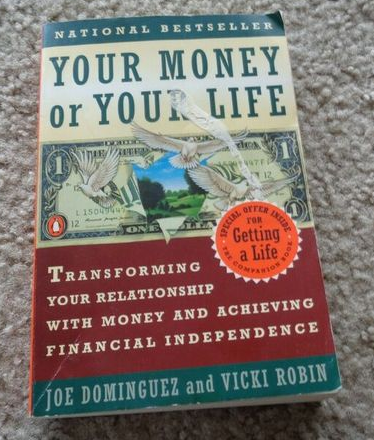
📖 Introduction: Why This Book Matters?
Imagine waking up one day and realizing that the relationship you have with money is completely backwards. You’re trading the irreplaceable hours of your life for dollars, then spending those dollars on things that don’t bring you joy or fulfillment. This book isn’t just about budgeting or saving—it’s about fundamentally transforming how you think about money, time, and what it means to be truly wealthy.
Published in the early 1990s and updated over the years, this revolutionary guide challenges everything society has taught you about earning, spending, and the pursuit of “more.” It offers a nine-step program that has helped hundreds of thousands of people break free from the paycheck-to-paycheck cycle, eliminate debt, and achieve financial independence—often years or decades earlier than they thought possible.
👥 Who Should Read This
This book is for anyone who feels trapped on the hamster wheel of working to spend and spending to work. If you’ve ever thought “there must be more to life than this,” you need to read this book. It’s particularly powerful for:
- Young professionals feeling burned out before they’ve even hit their stride
- Mid-career workers questioning whether climbing the corporate ladder is worth the sacrifice
- Anyone drowning in consumer debt wondering how they got here
- People who want to retire early but think it’s impossible on their income
- Environmentally conscious individuals seeking to align their spending with their values
- Couples fighting about money who need a shared framework for financial decisions
🔍 The Author’s Journey
Joe Dominguez was a former Wall Street analyst who achieved financial independence by age 31, despite never earning a six-figure salary. His secret wasn’t winning the lottery or inheriting wealth—it was applying the principles that became this book. After retiring, he spent the rest of his life teaching others how to transform their relationship with money, living simply in a small apartment while volunteering and pursuing his passions.
Vicki Robin, his co-author and collaborator, embraced these principles and became a prominent voice in the sustainable living movement. Together, they created a methodology that’s been tested by real people in real situations for over three decades. Their approach combines practical financial strategy with deeper philosophical questions about purpose, fulfillment, and what truly constitutes a life well-lived.
🔑 Key Model/Framework from the Book
The Nine-Step Program to Financial Independence:
Step 1: Making Peace with the Past – Calculate your lifetime earnings and net worth to understand where your money has actually gone. This reality check is often sobering but essential.
Step 2: Being in the Present—Tracking Your Life Energy – Calculate your real hourly wage by factoring in all work-related costs and time. This reveals what you’re truly earning per hour of life energy spent.
Step 3: Monthly Tabulation – Track every penny that comes in and goes out of your life. This creates awareness without judgment.
Step 4: Three Questions That Will Transform Your Life – For each spending category, ask: “Did I receive fulfillment, satisfaction, and value in proportion to life energy spent? Is this expenditure in alignment with my values and life purpose? How might this expenditure change if I didn’t have to work for a living?”
Step 5: Making Life Energy Visible – Create a wall chart showing your income and expenses over time. This visual representation makes patterns impossible to ignore.
Step 6: Valuing Your Life Energy—Minimizing Spending – Reduce spending without deprivation by learning to value your life energy more than your stuff.
Step 7: Valuing Your Life Energy—Maximizing Income – Respect the life energy you invest in your job and seek compensation that aligns with your worth.
Step 8: Capital and the Crossover Point – Invest your savings wisely and calculate when your investment income will exceed your expenses—that’s financial independence.
Step 9: Managing Your Finances – Become knowledgeable and sophisticated about long-term income-producing investments.
📊 By the Numbers
- Real hourly wage calculation: Most people discover they earn 25-40% less per hour than they think when accounting for all work-related expenses and time
- Financial independence timeline: Following the program, many participants reach the crossover point in 5-15 years, regardless of starting income
- Spending reduction: Participants typically reduce expenses by 20-30% without feeling deprived
- Life energy awareness: Tracking expenses reveals that 30-50% of spending provides minimal fulfillment
- Savings rate: The program helps people increase their savings rate from the typical 5% to 30-50% or more
💡 Key Takeaways
Money equals life energy. Every dollar you spend represents hours of your finite life that you traded away. When you internalize this truth, frivolous spending becomes physically painful because you’re literally shortening your life’s freedom.
Fulfillment and spending are not directly correlated. The book introduces the concept of the “fulfillment curve”—at first, spending increases happiness, but after meeting basic needs, additional spending often decreases life satisfaction. That designer handbag might cost 40 hours of your life and bring you 2 hours of joy.
Financial independence isn’t about being rich. It’s about having enough passive income to cover your expenses, freeing you from mandatory employment. Someone living on $30,000 a year needs far less capital to achieve FI than someone living on $100,000.
Your real hourly wage is shockingly low. After accounting for commuting time, work clothes, stress-relief spending, taxes, childcare, and career-related expenses, you might be earning half what your paycheck suggests. This realization changes everything.
The price of anything is the amount of life you exchange for it. This Thoreau quote becomes the foundation of conscious spending. That $5 latte isn’t just five dollars—it’s 30 minutes of your life energy at your real hourly wage.
Counterintuitive Insights
More income doesn’t solve money problems. The book reveals that lifestyle inflation typically keeps pace with income increases, meaning high earners often feel just as financially stressed as lower earners. The solution isn’t earning more—it’s transforming your relationship with spending.
Frugality creates freedom, not deprivation. Society tells us that spending equals happiness, but the book demonstrates the opposite: reducing unnecessary expenses liberates time, reduces stress, and increases life satisfaction. Less truly becomes more.
You don’t need to love your job to achieve financial independence. Rather than the modern advice to “follow your passion,” this book suggests viewing paid work as a means to an end. Once you’ve achieved FI, you’re free to pursue passion projects without financial pressure.
Investing can be simple and safe. While modern culture promotes day trading and complex strategies, the book advocates for long-term, conservative investments that provide steady income without constant monitoring or high risk.
🧠 Myth-Busting Moments
Myth: “You deserve to treat yourself after a hard day’s work.”
Reality: This belief creates a vicious cycle where stress from work leads to spending, which requires more work, creating more stress. The book challenges you to recognize that this “retail therapy” actually extends your working years. Real self-care might be working less, not buying more.
Myth: “I’ll start saving when I earn more.”
Reality: The data shows that people at all income levels struggle with savings, while others at modest incomes achieve financial independence. The percentage of income saved matters far more than the absolute amount earned. A teacher who saves 40% of a $50,000 salary will achieve FI faster than a lawyer who saves 10% of $200,000.
Myth: “Financial independence requires extreme sacrifice and deprivation.”
Reality: Participants report increased happiness and life satisfaction while spending less. The secret is conscious spending aligned with values, not arbitrary deprivation. You’re not giving up what matters—you’re eliminating what doesn’t.
Myth: “Retirement planning is for old people.”
Reality: The younger you start, the more options you have. Twenty-somethings who embrace these principles can be financially independent by their 40s or earlier, giving them decades of freedom to pursue meaningful work, travel, volunteer, or start passion projects without financial pressure.
Myth: “Tracking every penny is obsessive and neurotic.”
Reality: The book reframes tracking as consciousness, not obsession. You’re not restricting yourself—you’re gathering data to make informed decisions. Most people discover they stop tracking after a few months because awareness has already transformed their habits.
💬 Best Quotes from the Book
These principles and ideas capture the book’s transformative philosophy:
- The concept that money represents your life energy fundamentally changes how you view every purchase
- The invitation to ask yourself whether your spending is truly in alignment with your values and purpose
- The recognition that financial intelligence is not about how much you earn, but about the relationship between your earning and spending
- The understanding that financial independence is available to anyone willing to transform their relationship with money
- The powerful idea that every expense is a choice to continue working or to gain freedom
🚀 Actionable Steps: How to Apply It Today
Calculate your real hourly wage immediately. Take your monthly income, subtract all work-related expenses (commuting, work clothes, meals out, outsourced household tasks you’d do yourself if you had time, stress-relief spending). Then add up all hours spent on work-related activities (including commute, preparation, decompression, career development). Divide your net income by total hours. The result will shock you.
Start tracking every expense for 30 days. Use an app, spreadsheet, or notebook—the method doesn’t matter. The goal is awareness, not judgment. You can’t change what you don’t measure. Most people discover they have no idea where 30-40% of their money actually goes.
Create your wall chart. Put your monthly income and expenses on a visible chart. Update it monthly. This visual representation makes patterns impossible to ignore and progress impossible to miss. There’s something psychologically powerful about seeing that gap narrow over time.
Ask the three questions about your largest expense categories. Did this spending bring fulfillment proportional to life energy spent? Is it aligned with your values? Would you spend this way if you didn’t have to work? Be ruthlessly honest. You’ll likely discover entire categories of spending that fail all three tests.
Identify your “enough” number. Calculate how much money you actually need per month to live comfortably—not lavishly, not miserably, but genuinely well according to your values. For many people, this number is 30-50% less than they currently spend. This becomes your financial independence target.
Set up automatic investing. Once you’ve reduced expenses, immediately redirect the difference into long-term investments. The book recommends simple, low-cost index funds or Treasury bonds. The key is consistency, not complexity.
Have “the conversation” with your partner or family. Share your real hourly wage calculation. Discuss what financial independence would mean for your family. Create a shared vision that excites everyone rather than a budget that restricts them.
⚡ First 24 Hours Action Plan
Hour 1: The Wake-Up Call Gather every pay stub from the past year and calculate your actual annual income after taxes. Write this number down. Now list every work-related expense: commuting costs, parking, professional wardrobe, lunches out, coffee runs, gym membership you only use because of work stress, that expensive vacation you needed to recover from burnout. Calculate your real hourly wage. Sit with this number.
Hours 2-3: The Truth About Your Time Log every hour of yesterday in 15-minute increments. Include work, commute, getting ready for work, unwinding from work, and everything else. How much of your waking life is consumed by your job? How much is freely yours?
Hours 4-6: The Expense Audit Pull up the last three months of bank and credit card statements. Categorize every single expense. Don’t judge yet—just observe. Where is your life energy actually going? Which expenses light you up when you think about them? Which make you cringe?
Hours 7-12: The Fulfillment Inventory For each major spending category, rate it on a scale of -1 (diminishes life quality) to +1 (enhances life quality). Be honest. That expensive car might be a -1 once you factor in stress, while the modest gym membership might be +1. Calculate which categories give you the most fulfillment per dollar of life energy.
Hours 13-18: The Vision Session Imagine you’ve achieved financial independence. What does your Tuesday morning look like? How do you spend your time? Who are you with? What work, if any, do you do? Write this vision in vivid detail. This is what you’re working toward.
Hours 19-24: The First Moves Identify three expenses that scored low on fulfillment and high on life energy cost. Cancel or reduce them immediately—subscriptions you don’t use, brand-name products you can replace with generics, convenience spending you can eliminate with planning. Set up automatic transfer of the savings into an investment account. Put a wall chart on your refrigerator. You’ve begun.
🤔 Final Thoughts
This is one of those rare books that doesn’t just inform—it transforms. Reading it feels like taking the red pill in The Matrix. Suddenly you see the invisible chains of consumerism that bound you. You recognize that what society calls “success” might actually be a trap keeping you from the life you truly want.
The brilliance lies in how it bridges the practical and philosophical. It gives you concrete steps (track expenses, calculate real hourly wage) while asking profound questions (what is enough? what is your life for?). Unlike most personal finance books that make you feel bad about your latte habit, this one invites you to examine whether that latte truly brings you joy proportional to the life energy it costs.
The book does require real work—tracking expenses, creating charts, having difficult conversations about values and spending. But that work pays compound dividends for the rest of your life. The principles are as relevant today as when first published, perhaps more so in our age of subscription services and one-click purchasing.
Is it perfect? No. Some investment advice feels dated, and the original text occasionally reads like it’s from another era. But the core philosophy is timeless: money is life energy, consciousness is power, and financial independence is achievable for ordinary people who make extraordinary choices.
If you implement even half of what this book teaches, you’ll radically transform your financial future. If you implement all of it, you might just transform your entire life.
⭐ Rating
| Aspect | Rating | Why? |
|---|---|---|
| Usefulness | ⭐⭐⭐⭐⭐ | Provides a complete, actionable system that thousands have used to achieve financial independence. The nine steps are clear, measurable, and effective regardless of income level. |
| Readability | ⭐⭐⭐⭐ | The concepts are accessible and engaging, though some sections can feel repetitive. The updated edition improved flow, but original readers from the 1990s may find certain examples dated. |
| Originality | ⭐⭐⭐⭐⭐ | Revolutionary when published and still unique today. The concept of money as life energy and the emphasis on fulfillment over accumulation was groundbreaking and remains distinctive in personal finance literature. |
| Impact | ⭐⭐⭐⭐⭐ | Launched the FIRE (Financial Independence, Retire Early) movement. Has demonstrably changed hundreds of thousands of lives. The wall chart alone has sparked more financial transformations than most complete financial planning courses. |
| Practicality | ⭐⭐⭐⭐⭐ | Every chapter includes specific, implementable action steps. The tracking system works with any income level or life situation. You can start applying principles within hours of beginning the book. |
| Timelessness | ⭐⭐⭐⭐⭐ | Core principles are eternal: awareness, intentionality, and aligning spending with values will always be relevant. While specific investment advice may need updating, the fundamental philosophy transcends economic eras. |
Overall: 4.8/5 — An essential read that combines practical financial strategy with life philosophy in a way that genuinely changes how you see money, time, and freedom.
🎬 If This Book Were a Movie
Title: “The Crossover Point”
Protagonist: Alex Rivera, a 32-year-old marketing manager driving a leased BMW, living in an expensive apartment, deeply in debt despite a six-figure salary, and suffering from stress-related health issues. After a panic attack at work, Alex discovers the nine-step program and begins the journey from financial slavery to freedom.
Plot Arc: Act One shows Alex’s “successful” but hollow life—expensive dinners masking loneliness, shopping to cope with job stress, Sunday night dread. The inciting incident: calculating real hourly wage and realizing the $100,000 salary equals just $18 per hour after true costs. Act Two follows the transformation: tracking expenses, confronting spending patterns, dealing with social pressure to maintain appearances, relationship strain with a partner who doesn’t share the vision. Act Three shows Alex reaching the crossover point, quitting the toxic job, and discovering what life energy freely spent actually looks like.
Supporting Characters:
- Jamie, the skeptical best friend who thinks Alex has joined a cult but gradually becomes curious
- Sam, the wise mentor who achieved FI at 40 and now volunteers full-time
- Morgan, Alex’s partner who initially resists but becomes the program’s biggest champion
- The old self, appearing as a ghost throughout the film, reminding Alex of who they used to be and what they’re leaving behind
Climactic Scene: Alex’s boss offers a promotion with a substantial raise. The old Alex would have leapt at it. The new Alex calculates the life energy cost, remembers the vision of freedom, and declines. Walking out of the office that day, Alex doesn’t look back.
Final Scene: Five years later, Alex wakes without an alarm, has coffee on a modest patio, spends the morning writing a novel, the afternoon volunteering at a youth center, and the evening cooking with Morgan. The wall chart on their wall shows income lines from investments permanently above expense lines. Freedom, it turns out, looks nothing like the BMW and everything like Tuesday morning.
🔄 Before & After Reading
Before Reading:
You believe success means climbing higher, earning more, and buying better. Your identity is wrapped up in your job title and possessions. You feel trapped but assume everyone feels this way—it’s just called being an adult. Retirement seems impossibly far away, something to worry about later. You justify purchases with phrases like “I work hard, I deserve this” and “you can’t take it with you.” Money stress is constant background noise. You check your bank balance with anxiety. You’re on the hedonic treadmill, always chasing the next purchase that will finally make you happy.
After Reading and Applying:
You see money as frozen time—each dollar represents minutes or hours of your finite life, which fundamentally changes spending decisions. Your identity shifts from consumer to conscious life-energy investor. You realize that financial independence isn’t about being rich; it’s about having enough passive income to make work optional. You’ve calculated your real hourly wage and can’t unsee it—that $50 restaurant meal isn’t $50, it’s three hours of your life. You’ve discovered that beyond basic needs, more spending often decreases happiness rather than increases it.
You track expenses without guilt or shame—just data and awareness. You’ve identified your “enough” number and realize it’s far less than you’re currently spending. Your wall chart shows the gap narrowing between income and expenses, and you can see your crossover point approaching. You’ve cut expenses by 25% but feel wealthier than ever because you’re only spending on what truly adds value. Social pressure to keep up with neighbors has lost its power because you’re playing a different game entirely.
You’ve had honest conversations about money and purpose with your partner. You’ve reclaimed hours previously lost to work and commuting. You sleep better knowing you’re on a path to freedom. You look at purchases through the lens of those three transformative questions, and half the time you realize you don’t want the thing at all. Financial independence has gone from impossible fantasy to concrete goal with a timeline. You’ve stopped asking “can I afford this?” and started asking “is this worth my life energy?” The most surprising change? You’re genuinely happier spending less and living more.
📚 Books That Pair Well With This
“The Simple Path to Wealth” by JL Collins – Complements this book perfectly by providing modern, straightforward investment advice. While “Your Money or Your Life” focuses on the why and how of reducing expenses and transforming your relationship with money, Collins focuses on the what of investing those savings for financial independence.
“Early Retirement Extreme” by Jacob Lund Fisker – Takes the principles even further with extreme frugality and systems thinking. For readers who found “Your Money or Your Life” too moderate and want to achieve FI in 5-7 years rather than 10-15.
“The Psychology of Money” by Morgan Housel – Explores the behavioral and emotional aspects of money decisions. Pairs well because it explains why we make irrational financial choices and how to overcome those tendencies—the psychological companion to YMOYL’s practical framework.
“Walden” by Henry David Thoreau – The philosophical grandfather of this book. Thoreau’s meditation on simple living and his famous quote about the price of anything being the life you exchange for it deeply influenced this work.
“Die with Zero” by Bill Perkins – Offers a contrasting perspective that challenges you to spend more strategically on experiences while you’re young and healthy. Creates interesting tension with YMOYL’s focus on reducing spending, forcing readers to find their own balance.
“Playing with FIRE” by Scott Rieckens – A modern memoir of a family applying these exact principles. Reading this after YMOYL shows you what implementation looks like in real time with real challenges.
“The Millionaire Next Door” by Thomas Stanley – Provides research-backed evidence for the principles taught in YMOYL. Shows that actual millionaires live far below their means, not the lifestyle portrayed in media.
📚 Resources
- FinancialIntegrity.org – The official website with program updates, worksheets, and community forums
- Mr. Money Mustache blog – Modern application of these principles with practical tips for extreme savings
- ChooseFI podcast – Interviews with people who achieved financial independence using these methods
- Reddit’s r/financialindependence – Active community supporting each other through the journey
- The FIRE Movement – General resources for Financial Independence, Retire Early community
- Personal Capital or Mint – Free apps for expense tracking (Step 3)
- Vanguard’s Three-Fund Portfolio Guide – Simple, low-cost investment approach aligned with the book’s philosophy
🤔 Skeptic’s Corner
“The investment advice feels outdated.” Valid concern. The original book recommended Treasury bonds yielding much higher rates than today’s market. Modern FI seekers typically use low-cost index funds instead. The 4% safe withdrawal rule discussed in the book is also debated today—some argue for 3-3.5% given lower expected returns and longer potential retirement periods. Take the philosophical approach as gospel; treat specific investment vehicles as examples rather than prescriptions.
“This requires privilege.” The most common criticism is that the program assumes a certain level of financial stability to begin with. If you’re working multiple minimum-wage jobs to survive, tracking expenses and calculating life energy might feel insulting rather than inspiring. Fair point. The book was written primarily for middle-class individuals who have some margin to optimize. That said, the core principles of intentional spending and aligning resources with values apply at every income level, even if the timeline to financial independence varies dramatically.
“The frugality emphasis can become toxic.” Some readers take the principles to an extreme that damages relationships, quality of life, or mental health. The book promotes consciousness, not deprivation, but some readers miss this nuance. Remember that the goal is fulfillment, not simply spending less. If you find yourself refusing to spend money on things you genuinely value because you’re obsessed with reaching FI three months earlier, you’ve missed the point.
“Financial independence at 40 might mean loneliness at 60.” Critics argue that the single-minded pursuit of FI can cost you relationships, experiences, and memories during your prime years. There’s wisdom here—balance matters. The book’s emphasis on fulfillment should prevent this, but it’s worth being intentional about not sacrificing meaningful connection for financial metrics.
“The environmental framing feels dated.” The original book’s emphasis on reducing consumption for environmental reasons was ahead of its time but uses language and examples from the 1990s. Modern readers interested in sustainability might find more current resources more compelling, though the underlying principle remains sound.
How to interpret in today’s context: Use this book as a philosophical foundation and psychological framework, not a specific financial plan. Apply the consciousness and intentionality principles rigorously. Adapt the specific tactics (investment choices, timeline expectations) to current economic realities. Join modern FIRE communities to see how others are implementing these timeless principles in contemporary contexts. And remember: the point isn’t to become the person who spends the least—it’s to become the person who spends most consciously and lives most fully.
🧑💼 How Real People Used It
Sarah, 29, Teacher: “I was making $48,000 and assumed FI was impossible. After calculating my real hourly wage ($14.50 after all costs), I got angry enough to change. I cut my expenses from $3,200 to $2,100 monthly without suffering—canceled subscriptions I forgot I had, moved to a roommate situation, started meal prepping. Three years later, my wall chart shows I’m halfway to my crossover point. Teaching went from a sentence to a choice I’m making.”
Marcus and Jennifer, 40s, Corporate Jobs: “We were the couple earning $220,000 combined but living paycheck to paycheck with $60,000 in credit card debt. The wall chart was devastating and motivating. Eighteen months later, debt is gone, we’re saving 45% of income, and we’ve calculated we can both leave corporate America in seven years at age 52. Our marriage is better because we finally share financial values instead of fighting about money.”
David, 35, Software Engineer: “I was that stereotypical tech bro—$150K salary, $800 car payment, expensive downtown apartment, eating out twice daily. Calculated my real hourly wage at $37 (not the $72 I assumed) and had an existential crisis. Two years of consciousness later: moved to a modest apartment, bike commute, meal prep, no car. Expenses dropped from $7,500 to $3,200 monthly. I now volunteer teaching coding to kids twice a week—something I ‘never had time for’ before. Reached FI at 38, quit the job that was slowly killing me at 39.”
Patricia, 58, Late Starter: “I thought I’d discovered this book too late—twenty years from retirement with minimal savings. But the principles still worked. I tracked expenses and found I was spending $4,200 monthly out of habit, not need. Cut to $2,600 without deprivation. Started investing the $1,600 difference aggressively. Five years later, I’ve built enough cushion to go part-time in work I actually enjoy rather than full-time in corporate misery. Not full FI, but life-changing freedom nonetheless.”
🎯 3-Minute Challenge
Stop reading right now. Open your phone. Look at your last 10 transactions. For each one, ask yourself: “Did this purchase bring me fulfillment equal to the life energy I spent?”
Be ruthlessly honest. That food delivery last Tuesday when you were tired—did it actually make you feel better, or did you just feel guilty after? The streaming service you forgot you had? The premium gas when regular would work fine?
Now write down your answer to this question: “If I didn’t have to work for money, how would my spending change?”
Don’t overthink it. Just write what comes to mind.
You’ve just completed Steps 3 and 4 of the program. You have two choices: close this summary and continue your current trajectory, or open your banking app and start tracking every expense for the next 30 days.
The three minutes are up. What you do next determines everything.
💬 Your Turn
This book doesn’t ask you to believe anything—it asks you to try something. Track your expenses for one month. Calculate your real hourly wage. Ask the three questions. Create your wall chart.
Give it 90 days of honest effort. If your life doesn’t start changing, go back to your old habits. No harm done.
But if you’re anything like the hundreds of thousands of people who’ve walked this path before you, 90 days from now you’ll be standing at the edge of possibility you didn’t know existed. You’ll see money differently. You’ll see time differently. You’ll see your future differently.
The crossover point is waiting. The question is: are you ready to start moving toward it?
Your money or your life. It’s always been a choice. Now you see it clearly.
What will you choose?