
The One Thing by Gary Keller and Jay Papasan
 wkadmin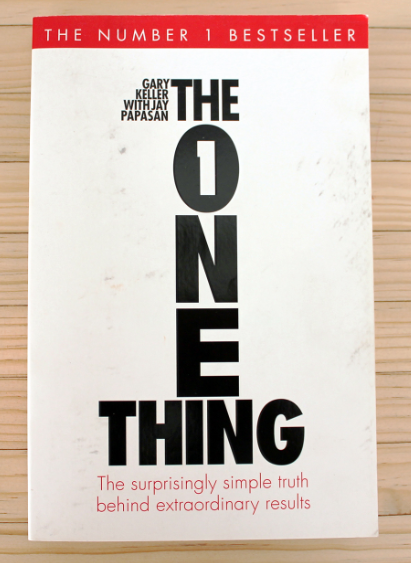
📖 Introduction: Why This Book Matters?
You wake up with a to-do list of twenty items. By noon, you’ve checked off fifteen tasks and feel productive. By evening, you realize you’ve made zero progress on what actually matters. Welcome to the productivity paradox of modern life: being busy but not effective, active but not impactful, moving but not advancing.
This book demolishes the myth that success comes from doing more. Instead, it reveals a counterintuitive truth: extraordinary results come from doing less—much less—but doing it with laser-like focus. The central premise is deceptively simple yet profoundly challenging: at any given moment, only ONE thing matters more than anything else. Identify it, protect it, and pursue it relentlessly.
In a world obsessed with multitasking, work-life balance, and maximizing every minute, this book argues for the opposite: radical prioritization, strategic imbalance, and the courage to say no to everything except your ONE thing. It’s not about time management—it’s about priority management. It’s not about doing everything well—it’s about doing one thing exceptionally. And it works, not just in theory, but in practice, as demonstrated by countless success stories across every field imaginable.
👥 Who Should Read This
This book is essential for anyone drowning in their to-do list while watching their dreams slip further away. It’s for:
- Entrepreneurs juggling a hundred priorities and making progress on none
- Professionals who feel busy all day but can’t point to meaningful accomplishments
- Students overwhelmed by competing demands and unclear about what truly matters
- Leaders struggling to focus their teams on what will actually move the needle
- Anyone who’s ever felt that nagging sense of working hard but not getting ahead
- Creative individuals who know they have something important to create but keep getting distracted
- People who’ve read every productivity book and still feel scattered
- High achievers who suspect their busyness is actually preventing breakthrough success
If you’ve ever ended a week exhausted but unclear about what you actually accomplished, this book will change your life.
🔍 The Author’s Journey
Gary Keller built Keller Williams Realty from a single office into the largest real estate company in the world. His secret wasn’t working longer hours or doing more deals—it was identifying the ONE thing that would make everything else easier or unnecessary, then building his entire strategy around it. For Keller Williams, that ONE thing was recruiting and training exceptional agents. Everything else became secondary.
Jay Papasan, his co-author, came from the publishing world where he’d observed thousands of successful people across diverse fields. Together, they noticed a pattern: the most successful individuals weren’t Renaissance men and women doing everything well. They were specialists who’d discovered their ONE thing and protected it fiercely. The book emerged from their curiosity about this pattern and their determination to codify what separated extraordinary success from ordinary achievement. Their research revealed that success leaves clues, and the biggest clue is focus—narrow, persistent, almost obsessive focus on what matters most.
🔑 Key Model/Framework from the Book
The Focusing Question:
The entire methodology centers on one deceptively simple question that you ask repeatedly at different levels:
“What’s the ONE thing I can do [such that by doing it] everything else will be easier or unnecessary?”
This question has layers of application:
Right now – What’s my ONE thing today? This week – What’s my ONE thing this week? This month – What’s my ONE thing this month? This year – What’s my ONE thing this year? Five years – What’s my ONE thing for my five-year goal? Someday – What’s my ONE thing for my life?
The Domino Effect:
Success builds sequentially, not simultaneously. When dominoes are lined up correctly, knocking over the first one creates a chain reaction. But here’s the extraordinary part: a domino can knock over another domino 50% larger than itself. This means if you start with a small domino (5mm) and each subsequent domino is 50% larger, by the 23rd domino you’re knocking over something the size of the Eiffel Tower, and by the 57th domino, you’d reach from Earth to the Moon.
Your ONE thing is the first domino. But most people are trying to knock over the Eiffel Tower directly instead of lining up the smaller dominoes first.
The Success Habit:
Success is sequential, not simultaneous. You can’t do everything at once, but you can do one thing at a time. The habit is asking the focusing question every day and protecting your answer with time-blocking.
Time Blocking:
Block four hours every day (preferably morning) for your ONE thing. This is sacred time. No meetings. No emails. No interruptions. Just you and your most important work. Everything else gets scheduled around this block, not the other way around.
The Four Thieves of Productivity:
- The Inability to Say No – Success requires saying no to everything except your ONE thing
- Fear of Chaos – Pursuing your ONE thing means letting other areas become temporarily unbalanced
- Poor Health Habits – Energy is finite; extraordinary results require protecting your physical capacity
- Your Environment Doesn’t Support Your Goals – Willpower is overrated; environment is everything
The Accountability Cycle:
People → Accountable For → Commitments → Actions → Results → New People
Your results determine who wants to work with you next, creating an upward or downward spiral.
📊 By the Numbers
- 28% – The percentage by which multitasking reduces productivity, according to research cited in the book
- 4 hours – The recommended daily time block for your ONE thing (time to achieve breakthrough results)
- 66 days – The average time it takes to form a new habit (not the commonly cited 21 days)
- 23 dominoes – The number needed to knock over something the size of the Eiffel Tower when each is 50% larger
- 50% – The size increase each domino can knock over in the domino effect analogy
- 80/20 principle on steroids – Not just 80% of results from 20% of efforts, but finding the ONE thing within that 20%
- 10,000 hours – Referenced regarding Malcolm Gladwell’s expertise principle, but reframed: 10,000 hours on your ONE thing, not scattered across many things
💡 Key Takeaways
The ONE thing philosophy isn’t about doing one thing forever—it’s about doing one thing at a time. At any moment, only one thing deserves your full attention. It might change tomorrow, next week, or next year, but right now, there’s always a singular priority that trumps everything else. The magic is in the ruthless identification and protection of that priority.
Extraordinary success is sequential, not simultaneous. We’re taught to be well-rounded, to develop multiple skills, to keep all balls in the air. But breakthrough success stories reveal a different pattern: someone identified their ONE thing, went all-in on it until mastery, then leveraged that mastery to achieve what seemed impossible. Michael Phelps didn’t become the greatest Olympian by being good at many sports—he became legendary by being the absolute best at one.
Going small is ignoring all the things you could do and focusing on what you should do. It’s recognizing that not everything matters equally, and most things don’t matter at all. It’s having the wisdom and courage to distinguish between urgent and important, between motion and progress, between being busy and being effective.
Multitasking is a lie. Your brain can’t actually focus on two things simultaneously—it switches rapidly between tasks, and every switch costs time, energy, and quality. What feels like efficiency is actually a form of attention bankruptcy. When you’re doing two things, you’re doing both poorly.
Willpower is not unlimited—it’s a finite resource that depletes throughout the day. This is why your ONE thing must happen in the morning, before decision fatigue sets in, before your willpower account is drained by a thousand small choices. Structure your day so the important happens before the urgent even has a chance to intrude.
Success requires purposeful imbalance. The quest for work-life balance is a trap. Extraordinary results require extraordinary effort in one area, which necessarily means other areas receive less attention temporarily. The key word is temporarily—you counterbalance, you don’t balance. You focus intensely on one thing until it’s done, then shift focus to what needs attention next.
Environment is stronger than willpower. Trying to rely on self-discipline alone is like swimming against a current—exhausting and ultimately futile. Instead, design your environment to make your ONE thing easy and everything else hard. Remove temptations, create barriers, build systems that support your priority automatically.
Counterintuitive Insights
Big is bad? No, go bigger. We’re taught to set realistic, achievable goals. But the book argues that thinking big actually makes things easier, not harder. Big goals force you to think differently, to abandon incremental approaches in favor of revolutionary ones. A 10% improvement requires optimization; a 10x improvement requires innovation. Which sounds more exciting?
Discipline is overrated, habit is underrated. You don’t need iron discipline for everything—you need enough discipline to build a habit. Once the habit is established, it runs on autopilot. The average person thinks they need more discipline; the successful person builds better habits.
Saying yes isn’t always positive, and saying no isn’t negative. Every yes is a no to something else. When you say yes to a trivial task, you’re saying no to your ONE thing. Learning to say no with grace is actually saying yes to what matters most.
Being busy is a form of laziness. It’s easier to respond to emails all day than to tackle the hard, important work. Busyness gives the illusion of progress while allowing you to avoid the difficult, uncertain work that would actually move your life forward. It’s lazy ambition—looking like you’re working hard while avoiding what’s truly hard.
Success doesn’t lead to balance; it requires calculated imbalance. You can have it all—just not all at once. Legendary success in any area requires a season of imbalance, of obsessive focus, of letting other areas slide temporarily. The work-life balance crowd won’t tell you this, but every extraordinary achievement you admire came from someone who was spectacularly unbalanced during the creation process.
🧠 Myth-Busting Moments
Myth: “I can get more done by multitasking.”
Reality: Multitasking is actually task-switching, and it makes you dramatically less effective at both tasks. Research shows that people who think they’re good at multitasking are actually worse at it than people who don’t multitask. When you try to write an email while on a conference call, you write a worse email and miss critical information from the call. The human brain is designed for sequential focus, not parallel processing. The most productive people don’t multitask—they single-task with intensity, then switch completely to the next thing.
Myth: “All things matter equally, so I need to give equal attention to everything.”
Reality: This is perhaps the most damaging lie of modern productivity culture. Not all tasks are created equal. Some things matter infinitely more than others. Some things actively move you toward your goals; others merely maintain the status quo; still others actively undermine your progress. The 80/20 principle suggests that 20% of your efforts produce 80% of your results—but this book goes further, suggesting that within that 20%, there’s ONE thing that matters more than all the rest combined. Treating everything as equally important is a guaranteed path to mediocrity.
Myth: “I need to be well-rounded to be successful.”
Reality: Well-rounded might be good for Renaissance fairs, but it’s terrible for extraordinary achievement. Every person at the top of their field got there by being spectacularly unbalanced—by developing one skill, one capability, one area of expertise to extraordinary levels while letting other areas remain merely adequate. Steve Jobs wasn’t well-rounded. Michael Jordan wasn’t well-rounded. Marie Curie wasn’t well-rounded. They were spikes—towering achievements in one area, acceptable in others, and that’s exactly what made them legendary.
Myth: “Discipline is the key to success—I just need more self-control.”
Reality: Relying on discipline is exhausting and ultimately unsustainable. Discipline is required only long enough to build a habit. Once established, habits run automatically, requiring minimal willpower to maintain. The secret isn’t having superhuman discipline—it’s being disciplined long enough (about 66 days on average) to make your ONE thing a habit. Then the habit carries you forward with minimal effort. Design systems, not willpower requirements.
Myth: “Work-life balance is essential for happiness and productivity.”
Reality: Balance is bogus. The pursuit of constant balance is actually what keeps most people from extraordinary achievement. You can’t be fully present at work and fully present at home simultaneously. You can’t build a business and be an Olympic athlete at the same time. Extraordinary results require extraordinary focus, which means purposeful imbalance. The solution isn’t balance—it’s counterbalance. Focus intensely on your ONE thing for a season, then counterbalance by shifting focus to relationships, health, or whatever got shortchanged. The successful don’t balance; they cycle between areas of focus.
Myth: “Big success requires big actions every day.”
Reality: Big success comes from small, focused actions repeated consistently over time. You don’t need to do something huge every day—you need to do the right small thing every day. The domino effect illustrates this perfectly: you don’t start by trying to knock over the Eiffel Tower-sized domino. You start with something small and let momentum build. One focused hour on your ONE thing today. Same tomorrow. Same the day after. Six months later, you’ve made progress that seemed impossible at the start.
💬 Best Quotes from the Book
The core wisdom distilled into memorable principles:
- The focusing question that serves as your compass: asking what ONE thing you can do such that everything else becomes easier or unnecessary
- The recognition that success is built sequentially—like dominoes knocking each other over, not like juggling multiple balls
- The understanding that going small isn’t about doing less total work, but about channeling all your energy into the highest-leverage point
- The powerful reframing that extraordinary results are directly determined by how narrow you can make your focus
- The truth that those who achieve the most are those who protect their time by saying no to everything except their ONE thing
- The insight that when you say yes to something, you’re simultaneously saying no to everything else during that time
🚀 Actionable Steps: How to Apply It Today
Ask the focusing question right now. Write it out: “What’s the ONE thing I can do today such that by doing it, everything else will be easier or unnecessary?” Don’t overthink it. Your gut knows the answer. That project you’ve been avoiding? That difficult conversation? That creative work that scares you? That’s probably your ONE thing. Write it down. Circle it. Make it impossible to ignore.
Time-block tomorrow morning. Open your calendar and block the first four hours of your day—no meetings, no interruptions, just you and your ONE thing. Treat this block as sacred as a surgery appointment or a flight departure. If someone asks for that time, the answer is no. You’re not available. You’re busy with your ONE thing.
Audit your current commitments. List everything you’ve committed to—projects, committees, social obligations, recurring meetings. Now ask: “Does this directly support my ONE thing?” If the answer is no, you have three options: delegate it, delete it, or tolerate it temporarily while you plan your exit. Be ruthless. Every commitment that doesn’t support your ONE thing is stealing time from what matters.
Create a not-to-do list. Productivity advice usually focuses on what to do. Flip it. Write down five things you will absolutely not do anymore because they distract from your ONE thing. Maybe it’s checking email before noon. Maybe it’s attending meetings without a clear agenda. Maybe it’s saying yes to projects out of guilt. Post this list where you’ll see it daily.
Design your environment for success. Look at your physical workspace. Does it support your ONE thing or sabotage it? Remove distractions. Put your phone in another room during your time block. Use website blockers. Delete social media apps. Make it physically difficult to do anything except your ONE thing during your sacred hours. Environment beats willpower every time.
Identify your lead domino. Map out your goal backward. What’s the ultimate outcome you want? What would need to happen right before that to make it possible? What would need to happen before that? Keep going until you identify the first small domino—something achievable this week that starts the chain reaction. That’s where you begin.
Schedule your counterbalance. If you’re going hard on your ONE thing this month, schedule when you’ll counterbalance. Maybe next month you focus on family. Maybe you schedule a vacation. The key is planning the imbalance rather than letting guilt erode your focus. When you know you’ll counterbalance later, you can focus completely now without guilt.
Find an accountability partner. Share your ONE thing with someone who will ask you about it regularly. Not a cheerleader—an interrogator. Someone who will ask “Did you do your ONE thing today?” and not accept excuses. The power of external accountability cannot be overstated.
⚡ First 24 Hours Action Plan
Hour 1: The Big Picture Grab paper and answer: “What’s the ONE thing I want my life to be about?” Not your job, not your to-do list—your life. What do you want to be known for? What impact do you want to have? This might take the full hour. Don’t rush it. Everything else flows from this answer.
Hours 2-3: The Five-Year Question Now zoom in. “What’s the ONE thing I can do in the next five years for my [career/health/relationships/finance] such that by doing it, everything else will be easier or unnecessary?” Answer this for the one or two life areas that matter most right now. Be specific. Not “get healthier” but “run a marathon.” Not “improve my career” but “become a recognized expert in X.”
Hours 4-6: This Year’s ONE Thing Break down your five-year goal. “What’s the ONE thing I can do this year to put me on track for my five-year goal?” This should feel challenging but achievable. Something that scares you a little. Write it down. Make it concrete. Set a measurable outcome.
Hours 7-9: This Month’s ONE Thing Get more tactical. “What’s the ONE thing I can do this month that will move me significantly toward my yearly goal?” This is where strategy meets reality. Maybe it’s completing a major project. Maybe it’s establishing a crucial habit. Maybe it’s having a difficult conversation. Whatever it is, commit.
Hours 10-12: This Week’s ONE Thing Almost there. “What’s the ONE thing I can do this week that will make the most progress on my monthly goal?” Now we’re in execution territory. This should be something you can start immediately and complete within seven days.
Hours 13-16: Tomorrow’s Time Block Open your calendar. Find the first four hours you’re awake tomorrow. Block them. Label the block “ONE THING TIME.” Below it, write your weekly goal and the specific action you’ll take during those four hours tomorrow. Now look at the rest of your calendar. Move, cancel, or delegate anything that would interfere with your ONE thing block.
Hours 17-20: Environment Engineering Look around your workspace. What needs to change to make your ONE thing easier and everything else harder? Remove distractions. Charge your devices in another room. Lay out anything you’ll need tomorrow. Tell people who live with you about your morning time block and ask them not to disturb you. Set up physical barriers to distraction.
Hours 21-24: The Domino Mapping Before bed, map your domino sequence. Start with tomorrow’s small domino. Draw the progression: this small win leads to this medium win leads to this big win. Visualize each domino knocking over the next larger one. Post this somewhere you’ll see it first thing in the morning. Fall asleep thinking about that first small domino you’ll topple tomorrow.
🤔 Final Thoughts
This book does something rare in the productivity genre: it simplifies instead of complicates. While most books add more techniques, more hacks, more systems to already overwhelmed lives, this one strips everything away until only the essential remains. The focusing question alone is worth the price of admission.
What makes the book powerful isn’t just the concept—it’s the permission structure it creates. Permission to say no. Permission to be unbalanced. Permission to disappoint people by not attending to their priorities. Permission to be unremarkable at most things so you can be extraordinary at one thing. In a culture that glorifies busy-ness and well-roundedness, this permission is revolutionary.
The domino metaphor is brilliant because it makes abstract success concrete. You can visualize those dominoes. You can see how starting small leads to something massive. It transforms overwhelming goals into a simple question: what’s my first domino?
Is it perfect? No. The book occasionally repeats its core point more than necessary—you get it after the first section, but it keeps hammering home. Some readers might find this reinforcing; others might find it redundant. The business examples skew heavily toward entrepreneurs and executives, though the principles apply universally. And while the authors acknowledge counterbalancing, they don’t fully address the very real costs of the imbalance they advocate.
But these are minor quibbles. The core framework is transformative. The focusing question is one of the most practical tools ever devised for cutting through complexity and noise. The time-blocking approach actually works when you commit to it. And the permission to go narrow, to ignore most things in favor of the one thing, is liberating in a world that constantly demands you do more, be more, and spread yourself thinner.
If you implement even the basic time-blocking and focusing question, your productivity will transform. If you go all-in on the philosophy—saying no relentlessly, pursuing purposeful imbalance, designing your environment around your ONE thing—you’ll achieve results that seem impossible from your current vantage point.
The book’s greatest strength is also its greatest challenge: simplicity. The advice is so simple that it seems obvious. Of course you should focus on what matters most. Of course you should protect your time. Of course you should say no to distractions. But knowing and doing are different countries. This book gives you the map, but you still have to make the journey.
⭐ Rating
| Aspect | Rating | Why? |
|---|---|---|
| Usefulness | ⭐⭐⭐⭐⭐ | The focusing question alone transforms how you approach every decision. The time-blocking method is immediately implementable and produces measurable results. This is one of those rare books where applying even 25% of the content changes your life. |
| Readability | ⭐⭐⭐⭐ | Clear, concise, and well-structured. Uses stories and examples effectively. Some repetition of core concepts could be streamlined, but overall it’s an easy, engaging read that respects your time—fitting for a book about focus. |
| Originality | ⭐⭐⭐⭐ | The focusing question is a genuinely novel contribution to productivity thinking. While it builds on existing concepts like 80/20 and Pareto principle, the execution and framework feel fresh. The domino effect metaphor is brilliant and original. |
| Impact | ⭐⭐⭐⭐⭐ | This book has influenced countless entrepreneurs, executives, and high performers. The ONE thing framework has become productivity shorthand in many circles. Its impact on how people think about priority and focus is substantial and measurable. |
| Practicality | ⭐⭐⭐⭐⭐ | Supremely practical. You can start applying the focusing question within minutes of learning it. Time-blocking is straightforward. The domino effect helps you map concrete steps. Nothing mystical or theoretical—just actionable frameworks that work immediately. |
| Timelessness | ⭐⭐⭐⭐⭐ | The principles of focus, priority, and sequential success are eternal. While examples may date, the core framework will be relevant in any era. Focus was important 2000 years ago and will be important 2000 years from now. This isn’t a trend—it’s fundamental truth. |
Overall: 4.7/5 — A masterclass in simplification that cuts through productivity noise with a single, powerful question. The rare business book that’s actually worth reading twice.
🎬 If This Book Were a Movie
Title: “The First Domino”
Protagonist: Jordan Chen, a 34-year-old product manager at a tech company, juggling twenty projects, attending eight meetings daily, working 70-hour weeks, and accomplishing nothing meaningful. Despite the hustle, Jordan’s been passed over for promotion twice and feels like a hamster on a wheel—running hard but going nowhere. Personal life? What personal life? The dream of launching an independent software company gathers dust while Jordan drowns in other people’s priorities.
Plot Arc:
Act One opens with Jordan’s typical chaos—switching between seven browser tabs, on three Slack channels simultaneously, eating lunch during a meeting while responding to emails. The illusion of productivity. The performance of busyness. Then comes the breaking point: Jordan’s biggest project fails not from lack of effort but from lack of focus. During the post-mortem, the CEO delivers a devastating truth—Jordan works harder than anyone but accomplishes less than most. That night, Jordan discovers the focusing question and decides everything changes tomorrow.
Act Two follows Jordan’s transformation. The first week is brutal—saying no to meetings feels like career suicide. The calendar time block feels selfish. Colleagues complain Jordan is “not a team player anymore.” A mentor explains the domino effect, helps Jordan identify the first small domino. Jordan starts with one focused hour daily on the abandoned software project. That hour becomes two, then four. Small dominoes fall. Progress becomes visible. But there’s resistance—a boss who wants Jordan in all meetings, a partner who resents the imbalance, inner demons screaming that focus is selfishness.
Act Three brings the crisis and resolution. A promotion opportunity appears, but accepting means abandoning the ONE thing for more meetings, more diffusion, more everything. Jordan faces a choice: the safe path of busywork and external validation, or the uncertain path of focus and building something meaningful. Jordan chooses focus, declines the promotion, and goes all-in on the software project. Six months later, Jordan’s side project has gained traction. A year later, it’s a business. Two years later, Jordan is acquiring the company that offered that promotion.
Supporting Characters:
- Sam, Jordan’s mentor who achieved early retirement by focusing on one skill until becoming irreplaceable, then licensing that expertise
- Alex, Jordan’s partner who struggles with the imbalance, wanting the old Jordan back, until realizing the old Jordan was miserable
- Priya, the skeptical colleague who mocks Jordan’s focus obsession but secretly starts copying the approach after seeing results
- The CEO, who delivers harsh truths but eventually becomes Jordan’s biggest champion
- The inner voices, literally portrayed as characters—the Pleaser (say yes to everyone), the Perfectionist (make everything perfect), the Scatterer (why focus when you could do everything?)
Climactic Scene: Jordan stands in a conference room with the promotion offer on one side of the table and a laptop showing the growing software project on the other. The old Jordan would have grabbed the promotion instantly. The new Jordan asks the focusing question out loud: “What’s the ONE thing I can do right now such that by doing it, everything else will be easier or unnecessary?” The answer is clear. Jordan walks out of the meeting, opens the laptop, and gets back to work on the ONE thing.
Final Scene: Three years later, Jordan gives a TED talk about the focusing question. The camera pans to the audience—it’s filled with people from Jordan’s old company, including the former boss who offered that promotion. Jordan holds up a small domino and places it on the podium. End credits roll over footage of domino chains—small ones knocking over increasingly massive ones—until the final domino towers over a city skyline.
🔄 Before & After Reading
Before Reading:
Your days are an endless sprint through competing priorities. You pride yourself on multitasking—conference call on one screen, email on the other, texting on your phone, somehow convincing yourself this is efficient. Your to-do list has forty items, and you’re constantly adding more. When someone asks you to do something, your default answer is yes—after all, successful people are helpful, right?
You measure productivity by how busy you feel. A day without meetings feels unproductive. Saying no feels irresponsible. You believe success requires excellence in multiple areas—you need to be great at your job AND have perfect relationships AND maintain peak health AND develop multiple skills. The quest for balance is exhausting, but you assume that’s just what adult life requires.
You’re frustrated because you work harder than almost everyone you know but don’t seem to get ahead. You attend every meeting, respond to every email within an hour, volunteer for projects, and yet promotions go to others. You have big dreams—that book you’ll write, that business you’ll start, that skill you’ll master—but there’s never time. Maybe someday when things calm down, when you have fewer responsibilities, when life gets less busy. You don’t realize that day will never come unless you make it come.
After Reading and Applying:
You wake up and immediately ask the focusing question: “What’s the ONE thing I can do today such that by doing it, everything else will be easier or unnecessary?” You know the answer before you finish the question. Your calendar has a four-hour block every morning labeled “ONE THING”—it’s sacred time, protected like a fortress, and everyone in your life knows it’s non-negotiable.
You’ve become comfortable saying no. In fact, you’ve become excellent at it. Most requests get an immediate, polite decline because they don’t serve your ONE thing. You’ve discovered that people respect you more for protecting your priorities than for being endlessly available. Your reputation has shifted from “helpful generalist” to “specialist who gets results.”
Your to-do list has three items. That’s it. And you only work on one at a time. Multitasking now seems absurd—like trying to dig two holes simultaneously instead of digging one deep hole. You’ve learned that sequential focus produces better results than parallel diffusion. When you work, you work with intensity. When you’re done, you’re actually done—no guilt, no residual thoughts, complete presence wherever you are.
You’ve embraced purposeful imbalance. For three months, you went all-in on a critical project, and yes, other areas suffered. Your house was messier. You saw friends less. You didn’t read as much. And you’re okay with that because you completed something that matters. Now you’re counterbalancing—this month is about relationships, next month is about health. You cycle rather than balance.
The transformation shows in results. That side project you started six months ago? You’ve made more progress on it in six months of focused effort than you made in three years of scattered attempts. Your performance reviews highlight fewer accomplishments but more impactful ones. You’re not busier—you’re better. Not stretched thin across everything—deep in what matters.
The most surprising change? You’re happier. Less stressed. The constant background anxiety of a thousand uncompleted tasks has been replaced by clarity. You know your ONE thing. You protect it. You advance it daily. And that singular focus has brought peace that no amount of busyness ever provided.
📚 Books That Pair Well With This
“Deep Work” by Cal Newport – The perfect companion. While “The ONE Thing” helps you identify what to focus on, “Deep Work” teaches you how to focus on it with intensity and minimal distraction. Together, they form a complete focus system: identify your ONE thing, then do deep work on it.
“Essentialism” by Greg McKeown – Expands on the philosophy of less but better. Where “The ONE Thing” gives you a focusing question, “Essentialism” provides a broader framework for systematic elimination of non-essentials. Read “The ONE Thing” first for the concept, then “Essentialism” for the lifestyle.
“Atomic Habits” by James Clear – Complements the ONE thing framework by showing how to build sustainable habits around your priority. The ONE Thing identifies what to do; Atomic Habits ensures you actually do it consistently through better habit design.
“So Good They Can’t Ignore You” by Cal Newport – Challenges the “follow your passion” advice and advocates for building rare and valuable skills through deliberate practice. Pairs perfectly with the ONE thing concept—identify your ONE skill, then make yourself so good they can’t ignore you at it.
“Eat That Frog” by Brian Tracy – A complementary approach to prioritization. Tracy’s “frog” is essentially your ONE thing for the day. The books reinforce each other: identify your ugliest task (the frog/ONE thing) and do it first thing in the morning.
“The 4-Hour Workweek” by Tim Ferriss – Provides the lifestyle vision that motivates applying ONE thing principles. Ferriss shows what’s possible when you eliminate non-essentials and automate ruthlessly. Different approach, complementary vision.
“Getting Things Done” by David Allen – GTD is the tactical system for managing all the things that aren’t your ONE thing. Use Allen’s system to clear your mind and organize tasks, then use The ONE Thing to decide which task actually matters.
“The War of Art” by Steven Pressfield – Addresses the resistance you’ll face when trying to focus on your ONE thing. Short, powerful read about overcoming the internal forces that keep you scattered and unfocused.
📚 Resources
- TheOneThingBook.com – Official website with additional resources, worksheets, and tools
- The ONE Thing planner – A physical planner designed around the focusing question and time-blocking
- Success Magazine articles – Gary Keller’s regular contributions expanding on ONE Thing principles
- Keller Williams University – While focused on real estate, offers masterclasses on the ONE Thing methodology
- The Focusing Question poster – Free downloadable reminder for your workspace
- Community forums – Online groups of readers implementing and discussing the principles
- Time-blocking templates – Calendar templates specifically designed for protecting your ONE thing
- The Domino Effect worksheet – Tool for mapping your sequential success path
🤔 Skeptic’s Corner
“This only works for certain personality types.” Fair concern. The book definitely favors linear, focused thinkers over multi-passionate creatives. If you’re someone who thrives on variety and gets energy from juggling multiple interests, the rigid focus might feel stifling. However, even creative types can apply the principle in seasons—focus intensely on one creative project until completion, then switch to the next. The framework is adaptable if you’re willing to reinterpret it.
“The work-life balance criticism is valid but downplayed.” The book’s advocacy for purposeful
imbalance can be dangerous if taken to extremes. Yes, building something extraordinary requires seasons of intense focus, but those seasons can’t last indefinitely without serious costs to health, relationships, and mental wellbeing. The counterbalancing concept is mentioned but not developed sufficiently. Be careful not to use the ONE thing philosophy as justification for workaholism or neglecting fundamental human needs.
“It oversimplifies complex situations.” Sometimes success requires managing multiple priorities simultaneously. A single parent working two jobs doesn’t have the luxury of saying no to most things. A startup founder in the first year can’t delegate everything except one task. The book’s examples skew heavily toward established professionals with resources and flexibility. The principles are sound, but implementation requires adaptation to real-world constraints.
“The domino effect math is more metaphor than reality.” While the domino size-increase math is mathematically accurate, it’s not a promise that your success will compound that dramatically. The metaphor is inspiring but shouldn’t be taken as a guarantee. Success is messier than falling dominoes—sometimes dominoes fall sideways, sometimes you need to reset the chain, sometimes external factors knock everything over.
“It can enable avoidance behavior.” There’s a risk of using “that’s not my ONE thing” as an excuse to avoid difficult but necessary tasks. Relationships, health, and financial basics can’t be perpetually deferred as “not my ONE thing right now.” The framework requires wisdom to distinguish between productive focus and destructive neglect.
How to interpret in today’s context: Use the focusing question as a prioritization tool, not an absolutist religion. Apply the 4-hour time block but remain flexible for genuine emergencies. Embrace purposeful imbalance but set clear time boundaries for counterbalancing. Remember that your ONE thing might shift between life seasons—building a career in your 30s, prioritizing family in your 40s, focusing on health in your 50s. The power is in the question and the principle of sequential focus, not in rigid adherence to a single priority for years. Use this book as a lens for cutting through noise, not as permission to ignore everything except one thing indefinitely.
🧑💼 How Real People Used It
Michael, 28, Software Developer: “I was trying to learn five programming languages simultaneously, building three side projects, and making progress on none. Asked the focusing question: what’s my ONE skill that would make everything else easier? Answer: mastering React. Spent six months doing nothing but React—tutorials, projects, contributions. Became the go-to React expert at my company, got promoted, now get job offers weekly. The other languages? Still haven’t learned them. Don’t need to. One deep skill beats multiple surface-level skills.”
Linda, 42, Author and Mom: “Trying to write my novel while managing everything else was impossible. After reading this, I told my family: 5-9am is sacred writing time. No exceptions. They thought I was crazy at first. Eight months later, the novel is done—90,000 words I wrote during those protected morning blocks. Everything else still got done, just later in the day. The ONE thing wasn’t instead of family—it was before everything else demanded my attention.”
Raj, 35, Entrepreneur: “I was running my startup into the ground with ‘balanced priorities.’ Marketing, product, sales, operations, finance—trying to be CEO of everything. Asked the focusing question: what’s my ONE thing? Answer: sales. Nothing else mattered until we had revenue. Hired a COO to handle the rest. Spent three months doing nothing but selling. Hit our revenue target in 90 days. Once cash flow stabilized, I could address other areas. Sequential, not simultaneous. Saved the company.”
Emma, 24, Recent Graduate: “Felt paralyzed by career options—grad school? Corporate job? Nonprofit? Travel? The focusing question cut through the noise: what ONE thing will position me best for the future I want? Decided it was building a professional network in my target industry. Spent a year saying no to everything except networking—coffee meetings, conferences, informational interviews. That network led to my dream job. No grad school debt, no wasted time exploring paths I didn’t want. Just relentless focus on the thing that would open doors.”
Carlos and Maria, 50s, Couple: “Our marriage was dying from dual-career chaos. We each had our priorities, and our relationship wasn’t in anyone’s top five. After reading together, we asked: what’s our ONE thing as a couple? Answer: daily connection time. We block 8-9pm every night—no phones, no TV, just us. Everything else schedules around it. Three years later, we’re closer than we’ve been in decades. One protected hour daily saved twenty years of marriage. That’s the domino effect.”
🎯 3-Minute Challenge
Stop right now. Close all other tabs. Put your phone face-down.
Take out a piece of paper or open a blank document.
Set a timer for three minutes.
Write your answer to this question:
“What’s the ONE thing I can do this week such that by doing it, everything else will be easier or unnecessary?”
Don’t overthink it. Don’t edit yourself. Don’t worry if it’s the “right” answer. Your gut knows.
Write it down.
Now below it, write the day and time you’ll do it. Be specific: “Tuesday, 6-10am” not “sometime this week.”
Timer’s done.
You just identified your first domino. Tomorrow you’ll knock it over. Everything else follows from this moment.
No excuses. No “I’ll think about it.” You know your ONE thing. Now protect it like your life depends on it—because in a very real sense, it does.
The distance between who you are and who you want to be is measured in focused hours on your ONE thing. Start the clock now.
💬 Your Turn
Here’s the uncomfortable truth: this summary changed nothing. Reading about focus doesn’t make you focused. Understanding the domino effect doesn’t knock over your first domino. Agreeing with the principles doesn’t protect your time block.
The only thing that matters is what you do in the next hour.
You have a choice. You can close this, tell yourself “that was interesting,” and return to your scattered existence. Or you can pull out your calendar right now, block four hours tomorrow morning, and label it with your ONE thing.
Most people will choose the former. They’ll nod along, feel inspired for ten minutes, then get sucked back into reactive busyness. The focusing question will become another piece of productivity wisdom they know but don’t apply. Another book they read but didn’t live.
Don’t be most people.
Your ONE thing is waiting. It’s been waiting while you’ve been busy with everything else. It’s the project that could change your career. The habit that could transform your health. The relationship that needs attention. The skill that could make you irreplacable. The dream you keep deferring.
It’s still waiting.
Ask yourself the question. Answer it honestly. Block the time. Do the work.
Everything else will follow.
But only if you start. Only if you protect it. Only if you choose focus over diffusion, depth over breadth, sequential over simultaneous.
The first domino is small. Knock it over tomorrow morning. See what happens.
Your move.