
The Obstacle Is the Way by Ryan Holiday
 wkadmin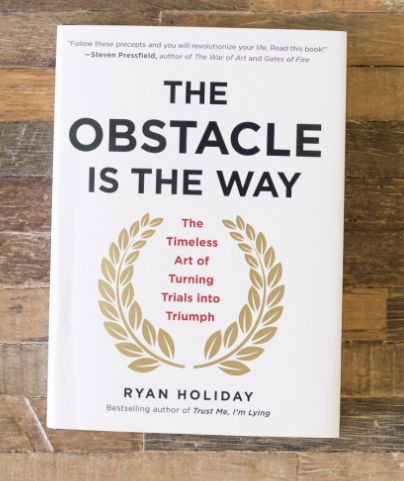
📖 Introduction: Why This Book Matters?
Life doesn’t ask permission before throwing challenges your way. Jobs disappear. Relationships crumble. Dreams get deferred. Most people see obstacles as roadblocks—things to avoid, curse, or surrender to. But what if every obstacle is actually the path forward? What if the very thing blocking you is the key to your breakthrough?
Ryan Holiday resurrects an ancient Stoic principle that turns conventional wisdom on its head: obstacles aren’t just inevitable, they’re essential. This isn’t a book about positive thinking or pretending problems don’t exist. It’s a manual for transforming adversity into advantage, using principles that guided emperors, entrepreneurs, and revolutionaries through impossible situations. In a world obsessed with hacking success and avoiding discomfort, this book dares to suggest something radical—your biggest problems might be your greatest opportunities.
👥 Who Should Read This
- The perpetually stuck: People facing a career setback, personal crisis, or seemingly insurmountable challenge
- Entrepreneurs and leaders: Those navigating uncertainty, failure, and constant pressure
- Athletes and competitors: Anyone seeking mental toughness and resilience under pressure
- The historically curious: Readers fascinated by how great figures overcame adversity
- Philosophy seekers: People drawn to Stoicism but wanting practical, modern applications
- The overwhelmed: Anyone drowning in obstacles and looking for a fundamentally different approach
If you’re tired of self-help books that promise easy answers, and you’re ready for a philosophy that acknowledges life is hard but gives you tools to thrive anyway—this book is your battle plan.
🔍 The Author’s Journey
Ryan Holiday isn’t an armchair philosopher. He dropped out of college at 19 to become a protégé of controversial author Robert Greene, then became the marketing director for American Apparel while still in his twenties. He witnessed firsthand how pressure reveals character—watching companies implode, campaigns fail, and egos crumble when things got hard.
His path led him deep into Stoic philosophy, not as academic study but as survival strategy. He discovered that Marcus Aurelius, a Roman emperor, and James Stockdale, a Vietnam POW, used identical principles to endure vastly different hells. Holiday realized these weren’t just historical curiosities—they were battle-tested frameworks for turning obstacles into stepping stones. He’s since become one of the leading voices making ancient wisdom accessible to modern audiences, counseling everyone from NFL coaches to tech CEOs on how to leverage adversity.
🔑 Key Model/Framework from the Book
The Three-Step Discipline of Perception, Action, and Will
Holiday structures the entire philosophy around three interconnected practices:
1. PERCEPTION: How you see the problem determines everything. The obstacle isn’t inherently good or bad—your judgment makes it so. Strip away emotional reactions and see things objectively. Ask: “What can I control here? What’s the opportunity hiding in this crisis?”
2. ACTION: Once you see clearly, move. Not recklessly, but persistently. Break impossible problems into manageable pieces. Focus on process, not outcomes. Try the front door, the side door, the window—and if all else fails, create a new entrance. Action creates momentum and reveals possibilities invisible from the starting point.
3. WILL: When action isn’t enough—when you face the truly immovable—internal strength becomes everything. Will is about accepting what you cannot change while maintaining purpose and perspective. It’s preparing for the worst while working toward the best. It’s finding the gift in loss, the lesson in suffering.
These aren’t sequential steps but ongoing practices. You continuously refine how you see problems, respond to them, and endure through them.
📊 By the Numbers
- 3 core disciplines: Perception, Action, Will—the complete framework
- 50+ historical examples: From ancient figures to modern icons demonstrating these principles
- 2,000+ years old: Stoic philosophy that’s outlasted countless self-help trends
- Countless applications: One approach that works across business, relationships, sports, creativity, and crisis
💡 Key Takeaways & Counterintuitive Insights
Our perceptions shape our reality more than reality itself. Two people face identical setbacks; one sees catastrophe, the other sees a forcing function for necessary change. The difference isn’t the situation—it’s the lens.
Obstacles don’t just build character; they reveal opportunities invisible from comfort zones. When conventional paths close, creativity flourishes. Constraints force innovation. Dead ends require new maps.
The goal isn’t to eliminate obstacles but to develop the skills to leverage them. Life will never be obstacle-free. The question isn’t “How do I avoid problems?” but “How do I become the kind of person who thrives amid problems?”
Action is inherently therapeutic. Paralysis feeds anxiety. Movement—even imperfect movement—creates clarity, reveals options, and builds momentum. You don’t need the complete plan; you need the next step.
Acceptance isn’t defeat; it’s strategic wisdom. Some things genuinely can’t be changed. Fighting the unchangeable wastes energy that could be redirected toward what you can control. The Stoics called this “the art of acquiescence”—saying yes to reality while maintaining agency within it.
Your obstacles are custom-designed for your growth. The specific challenges you face are uniquely positioned to develop the specific strengths you lack. Career collapse teaches resilience. Betrayal teaches discernment. Failure teaches humility and iteration.
🧠 Myth-Busting Moments
MYTH: “I need more resources/time/money/connections before I can succeed.”
REALITY: Constraints are features, not bugs. Limited resources force creativity and focus. Holiday shows how figures like Demosthenes overcame speech impediments to become history’s greatest orator, how companies pivoted during crises to find unexpected success. Abundance often breeds complacency; scarcity breeds ingenuity.
MYTH: “Positive thinking and optimism are the keys to overcoming obstacles.”
REALITY: Unrealistic optimism sets you up for devastation when reality hits. The Stoic approach is “objective pessimism”—prepare for the worst outcomes, rob them of their power, then work toward the best. Hope isn’t a strategy; clear-eyed assessment plus relentless action is.
MYTH: “Great people succeed because they’re naturally talented or lucky.”
REALITY: Holiday demonstrates through countless examples that great people succeed because they developed specific skills for converting adversity into advantage. They weren’t born with these abilities—they practiced them. Excellence isn’t innate; it’s cultivated through how you handle what life throws at you.
MYTH: “You should try to avoid or minimize obstacles.”
REALITY: Seeking only smooth paths produces fragility. Muscles grow through resistance. Character develops through challenge. Those who face and overcome obstacles become stronger; those who avoid them remain perpetually vulnerable to the inevitable difficulties ahead.
💬 Best Quotes from the Book
“The impediment to action advances action. What stands in the way becomes the way.”
“There is no good or bad without us, there is only perception. There is the event itself and the story we tell ourselves about what it means.”
“We must all either wear out or rust out, every one of us. My choice is to wear out.”
“It’s okay to be discouraged. It’s not okay to quit.”
“The obstacle in the path becomes the path. Never forget, within every obstacle is an opportunity to improve our condition.”
“Where one person sees a crisis, another can see opportunity. Where one is blinded by success, another sees reality with ruthless objectivity.”
🚀 Actionable Steps: How to Apply It Today
REFRAME ONE CURRENT OBSTACLE
Take your biggest current problem. Write it down. Now rewrite it as an opportunity statement. “I lost my job” becomes “I now have time to pursue the career I actually want” or “This is a forcing function to develop new skills.” The situation didn’t change—your perception did.
PRACTICE THE PREMEDITATIO MALORUM
This Stoic exercise involves visualizing worst-case scenarios not to catastrophize, but to rob them of power. Spend 10 minutes imagining your biggest fear happening. What would you actually do? You’d survive, adapt, rebuild. Now that fear has less control over your decisions.
IDENTIFY YOUR CONTROLLABLES
List everything about your obstacle. Draw two columns: “I Can Control” and “I Cannot Control.” Pour all your energy into the first column. Release the second. This isn’t resignation—it’s strategic focus.
TAKE THE SMALLEST POSSIBLE ACTION
Facing a mountain of problems? Don’t try to solve them all. What’s the tiniest step you could take in the next hour? Make one phone call. Send one email. Research for 15 minutes. Momentum compounds.
BUILD YOUR PERSONAL PHILOSOPHY
Start collecting principles that guide your response to adversity. What do you believe about obstacles? What standards will you hold yourself to when things get hard? Write them down. Reference them when tested.
STUDY HISTORICAL MODELS
Choose one figure from history who faced obstacles similar to yours. Research deeply how they thought, decided, and acted. What can you adapt from their approach?
⚡ First 24 Hours Action Plan
Hour 1: Close the book and immediately journal about your current biggest obstacle. No editing, no filtering—just raw honesty about what you’re facing and how it’s making you feel.
Hour 3: Rewrite that obstacle three different ways, each framing it as an opportunity or necessary challenge. Which reframe feels most empowering?
Hour 6: Make one phone call or send one message that moves you forward on this challenge. No overthinking. Just one concrete action.
Hour 12: Practice premeditatio malorum. Imagine the absolute worst outcome. Write it down. Then write what you’d do next if that happened. Notice how much less terrifying it becomes when you have a plan.
Hour 18: Review your day. Where did you let perception control you? Where did you take action despite fear? Where did you exercise will by accepting what you couldn’t change?
Hour 24: Set your three-month practice goal. Choose one discipline (Perception, Action, or Will) to focus on developing. Define what improvement looks like and schedule weekly reflection time to track progress.
🤔 Final Thoughts
This book is deceptively simple and profoundly difficult. The concepts are straightforward—change your perception, take action, develop will. But applying them when your career implodes, your relationship ends, or your health fails? That’s where philosophy meets the fire.
What makes this book exceptional is its intellectual honesty. Holiday doesn’t promise that following these principles makes life easy or guarantees success. He promises something more valuable: these practices make you capable of handling whatever comes. They build antifragility—the quality of getting stronger through stress.
The book occasionally feels repetitive, hammering similar points through different historical examples. But perhaps that’s intentional. These lessons require repetition because they’re so counterintuitive to our instant-gratification culture.
Is it worth reading? Absolutely—but only if you’re willing to practice, not just consume. The difference between reading this book and living it is the difference between knowing about fitness and actually getting strong. One is interesting; the other is transformational.
This isn’t a book you read once and shelve. It’s a manual you return to when tested, a philosophy you refine through lived experience, a challenge to become the kind of person who transforms obstacles into opportunities.
⭐ Rating: 4.5/5
| Aspect | Rating | Why? |
|---|---|---|
| Usefulness | ⭐⭐⭐⭐⭐ | Applicable to any obstacle in any domain—business, relationships, health, creativity. The three-part framework works universally. |
| Readability | ⭐⭐⭐⭐½ | Crisp, engaging prose with compelling stories. Occasionally repetitive, but intentionally so to reinforce counterintuitive concepts. |
| Originality | ⭐⭐⭐⭐ | Not original philosophy (it’s 2,000+ years old) but brilliantly repackaged for modern audiences with fresh examples and applications. |
| Impact | ⭐⭐⭐⭐⭐ | Fundamentally shifts how you view problems. Readers report this becoming their most-referenced book during crises. |
| Practicality | ⭐⭐⭐⭐⭐ | Every chapter offers immediate applications. The three disciplines provide clear action steps, not just abstract theory. |
| Timelessness | ⭐⭐⭐⭐⭐ | Based on philosophy that guided leaders for millennia. Obstacles haven’t changed; human nature hasn’t changed. Will remain relevant indefinitely. |
🎬 If This Book Were a Movie
Protagonist: A composite character—part Marcus Aurelius leading Rome through plague and war, part Amelia Earhart attempting the impossible, part modern entrepreneur facing bankruptcy. Someone ordinary thrust into extraordinary adversity.
Plot Arc: Act One establishes the protagonist’s normal world, then introduces a catastrophic obstacle that seems insurmountable. Act Two follows the three-part journey: first, they must see the obstacle differently (perception shift); second, they must take persistent, creative action despite setbacks; third, when external solutions fail, they must develop internal strength (will). The climax isn’t about defeating the obstacle but about the protagonist’s transformation into someone for whom obstacles become fuel.
Supporting Characters:
- The Mentor: A Stoic philosopher (based on figures like Epictetus or Seneca) who teaches through pointed questions and paradoxes
- The Foil: Someone facing identical obstacles who chooses blame, victimhood, and despair—showing the protagonist what they could become
- The Unexpected Ally: The obstacle itself, personified as a harsh but ultimately transformative teacher
Tone: Gritty inspiration—no Hollywood ending where everything works out perfectly, but a hard-won victory where the protagonist becomes capable of handling whatever comes next.
Final Scene: The protagonist faces a new, different obstacle. The camera closes on their face—not fear, not anxiety, but a slight smile. They’ve been here before. They know what to do.
🔄 Before & After Reading
BEFORE READING:
- Views obstacles as unfair interruptions to their plans
- Waits for circumstances to improve before taking action
- Spends energy complaining about problems rather than solving them
- Feels victimized by setbacks and attributes success primarily to luck
- Avoids difficulty whenever possible, seeking the path of least resistance
- Becomes paralyzed by fear of failure or worst-case scenarios
- Defines success as the absence of problems
AFTER READING & APPLYING:
- Sees obstacles as expected, even necessary, parts of any meaningful pursuit
- Takes action despite imperfect circumstances, understanding that movement creates clarity
- Focuses energy on controllables, releasing what they cannot change
- Recognizes setbacks as feedback and learning opportunities, not judgments of worth
- Actively seeks worthy challenges that develop new capabilities
- Prepares for worst-case scenarios, robbing them of power while working toward best-case outcomes
- Defines success as developing the character and skills to handle whatever arises
The transformation isn’t about eliminating fear or struggle—it’s about changing your relationship with both. You still face obstacles, but you’re no longer afraid of them. They become expected opponents in a game you’ve learned to play skillfully.
📚 Books That Pair Well With This
Complementary Reads:
- “Meditations” by Marcus Aurelius: The source material—raw, unfiltered Stoic philosophy from the most powerful man in the world reminding himself how to think clearly
- “Man’s Search for Meaning” by Viktor Frankl: A psychiatrist’s account of finding purpose in Nazi concentration camps—the ultimate test of will
- “The Daily Stoic” by Ryan Holiday: Practical daily practices for developing Stoic skills
- “Antifragile” by Nassim Nicholas Taleb: How systems (including humans) benefit from stress and disorder
- “Grit” by Angela Duckworth: The research behind perseverance and passion for long-term goals
Contrasting Perspectives:
- “The Secret” by Rhonda Byrne: Pure positive thinking—useful for comparing Holiday’s objective realism with magical thinking approaches
- “When Things Fall Apart” by Pema Chödrön: Buddhist perspective on obstacles and suffering—similar wisdom through different lens
- “Daring Greatly” by Brené Brown: Focuses more on vulnerability and courage through connection versus Stoic self-reliance
📚 Resources
- The Daily Stoic (website and podcast): Daily meditations and discussions of Stoic philosophy applied to modern life
- Ryan Holiday’s Reading List: Curated recommendations at ryanholiday.net
- Stoic Fellowship: Online communities practicing Stoicism together
- “Letters from a Stoic” by Seneca: Ancient Roman philosopher’s practical advice on handling life’s challenges
- Modern Stoicism organization: Free courses, resources, and annual Stoic Week practice
🤔 Skeptic’s Corner
“Isn’t this just victim-blaming? ‘Your perception creates reality’ ignores systemic injustice.”
Fair pushback. Stoicism can feel tone-deaf to privilege and power dynamics. Telling someone facing genuine oppression to “just change their perception” is both cruel and unhelpful. The counterpoint: Stoicism doesn’t deny that injustice exists or that some obstacles are harder than others. It focuses on what remains within your control even in unjust circumstances. Figures like James Stockdale used these principles while being tortured as a POW—not to excuse torture, but to maintain agency despite it.
“This feels like glorifying suffering. Why not just… avoid problems?”
Another valid concern. There’s a fine line between accepting necessary challenges and unnecessarily seeking hardship. The book occasionally romanticizes struggle in ways that could enable toxic environments or self-flagellation. Balance is key: seek meaningful challenges that develop you, but don’t stay in abusive situations or manufacture hardship for hardship’s sake.
“The historical examples feel cherry-picked.”
They absolutely are. For every example of someone who overcame obstacles, countless others were defeated by similar circumstances. Survivorship bias is real. The book presents inspiring stories but doesn’t pretend these principles guarantee success—they increase your odds and ensure you become stronger in the process.
“Isn’t emotional suppression unhealthy?”
Stoicism isn’t about suppressing emotions but about not being controlled by them. There’s a difference between acknowledging fear and letting fear make your decisions. Modern interpretations should integrate emotional intelligence—feel your feelings, learn from them, but choose your responses consciously.
🧑💼 How Real People Used It
The Laid-Off Executive: After 20 years at a tech company, Sarah was laid off during mass cuts. Initially devastated, she reframed: “They freed me from a role I’d outgrown.” She spent three months learning skills she’d always postponed, then started consulting. Within a year, she’d doubled her previous income and regained control of her time. The obstacle of job loss revealed the opportunity of entrepreneurship she’d been too comfortable to pursue.
The Injured Athlete: Marcus tore his ACL his senior year, ending his football career. Instead of seeing it as the end, he used recovery time to study sports psychology and coaching. He became a trainer who specializes in helping athletes mentally recover from injuries—turning his obstacle into his mission. The injury that ended his playing career launched his life’s work.
The Failed Entrepreneur: After her startup collapsed with $200K in debt, Priya could have declared bankruptcy and walked away. Instead, she took on freelance work, lived minimally, and paid off every dollar over four years. The discipline she developed became her greatest business asset. Her next venture succeeded partly because she’d learned cost discipline and resilience through failure. The debt became her business education.
The Caregiver: When James’s father developed Alzheimer’s, he had to quit his job to provide care. Rather than resenting the sacrifice, he documented the experience in a blog that became a book helping other caregivers navigate the same challenges. The burden he couldn’t avoid became meaningful service to others.
🎯 3-Minute Challenge
Right now—literally stop reading and do this:
Grab paper or open a note on your phone. Set a timer for 3 minutes.
Write down:
- One obstacle currently standing between you and something you want
- Three ways this obstacle might actually be protecting you or teaching you something essential
- One action—just ONE—you can take in the next 24 hours to engage with this obstacle differently
Don’t overthink it. Don’t make it perfect. Just write.
When the timer ends, do that one action within 24 hours. No exceptions. No excuses.
The obstacle isn’t going anywhere. The question is: are you going to let it block you, or are you going to let it build you?
Your move.
💬 Your Turn
This book is a mirror. It reflects back whether you’re treating life’s challenges as walls or doorways.
What obstacle are you currently facing that you’ve been treating as a dead end? How might it actually be the exact test you need to develop into the person capable of achieving what you truly want?
The philosophy is simple. The practice is hard. The results are transformative.
The obstacle is the way. What are you going to do about yours?