
The Happiness Advantage by Shawn Achor
 wkadmin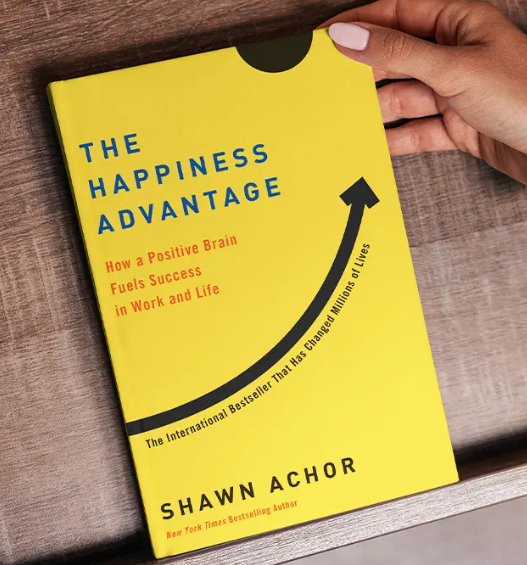
📖 Introduction: Why This Book Matters
We’ve been sold a lie: work hard, achieve success, then you’ll be happy. But what if that formula is backwards? What if happiness isn’t the reward at the finish line but the secret fuel that propels us toward it?
Shawn Achor’s groundbreaking work flips conventional wisdom on its head, revealing that happiness isn’t just a pleasant feeling—it’s a competitive advantage. In a world obsessed with grinding, hustling, and sacrificing joy for future gains, this book offers a radical alternative: start with happiness, and success will follow. It matters because it challenges the very foundation of how we approach work, relationships, and life itself, backed by rigorous research from one of the world’s leading positive psychology experts.
📘 Synopsis
The Happiness Advantage dismantles the success-then-happiness myth with scientific precision and practical wisdom. Achor presents seven principles that demonstrate how a positive brain creates measurable advantages in productivity, creativity, and achievement. Drawing from his research at Harvard and consulting work with organizations worldwide, he shows that our brains perform significantly better when we’re positive rather than negative, neutral, or stressed.
The book isn’t about toxic positivity or pretending problems don’t exist. Instead, it’s about rewiring our mental patterns to see opportunities where others see obstacles, to bounce back faster from setbacks, and to leverage the neurological reality that happiness precedes success, not the other way around. Each principle comes with actionable strategies that anyone can implement immediately, making this a practical roadmap rather than theoretical philosophy.
🔍 The Author’s Journey
Shawn Achor spent twelve years at Harvard University, where he won numerous teaching awards and served as a counselor to students navigating the pressures of elite academic life. It was there, surrounded by some of the brightest minds who should have been thriving, that he noticed something troubling: many were miserable despite their success. This paradox sparked his fascination with positive psychology and launched him on a research journey to understand why some people thrive while others merely survive.
After leaving Harvard, Achor became one of the world’s leading experts on the connection between happiness and success, lecturing in over fifty countries and working with Fortune 500 companies, schools, and organizations. His TED talk on happiness became one of the most viewed in history, watched by millions seeking a better way forward. His work bridges rigorous academic research with real-world application, making complex neuroscience accessible and immediately useful to anyone looking to transform their life and work.
👥 Who Should Read This / Who This Book Is For
You need this book if you’re:
- Burning out from the belief that you must suffer now to be happy later
- A leader wanting to boost team performance without resorting to fear or pressure
- Someone who achieved their goals but still feels empty or unfulfilled
- A parent or educator shaping how young people view success and wellbeing
- Stuck in the trap of “I’ll be happy when…” (when I get promoted, lose weight, find love)
- Curious about the science behind happiness but want practical applications, not just theory
This book speaks to:
- Corporate professionals drowning in stress culture
- Entrepreneurs building businesses while sacrificing mental health
- Students pressured by achievement-obsessed environments
- Anyone who suspects there’s a better way to live and work but doesn’t know where to start
If you’ve ever wondered why some people seem to glide through challenges while others crumble, or if you’re tired of postponing happiness until some future milestone, this book will fundamentally shift your perspective.
🔑 Key Model/Framework from the Book
The Seven Principles of The Happiness Advantage:
- The Happiness Advantage – Positive emotions improve brain performance, creating competitive advantages in intelligence, creativity, and energy.
- The Fulcrum and the Lever – Changing your mindset changes what’s possible; adjusting your mental fulcrum increases your power to achieve.
- The Tetris Effect – Training your brain to spot patterns of possibility rather than constantly scanning for negatives and stress.
- Falling Up – Using adversity and failure as springboards for growth and opportunity rather than obstacles.
- The Zorro Circle – Regaining control by focusing on small, manageable goals before expanding your circle of influence.
- The 20-Second Rule – Making good habits easier and bad habits harder by reducing activation energy required.
- Social Investment – Investing in relationships as the single greatest predictor of happiness and success.
Each principle builds on neuroscience research showing that our brains are literally hardwired to perform better when positive, and that we can actively retrain these neural pathways through deliberate practice.
📊 By the Numbers
The research behind this book is staggering:
- Positive emotions can lead to 31% higher productivity in workers
- Doctors with positive mindsets are 19% more accurate in diagnoses than those in neutral states
- Optimistic salespeople outsell their pessimistic colleagues by 56%
- Happy employees take 10 times fewer sick days
- Students primed to feel happy before taking math achievement tests far outperform their neutral peers
- Our brains at positive are 31% more effective than at negative, neutral, or stressed
- Social relationships predict more than 90% of happiness levels
- Just five minutes of exercise can kickstart positive brain chemistry
- Writing down three good things daily for 21 days can rewire the brain toward positivity
These aren’t marginal improvements—they’re transformational shifts that compound over time.
💡 Key Takeaways & Counterintuitive Insights
The formula is backwards. We don’t become happy after achieving success; happiness itself creates the conditions for success. Every time we have a success, our brain moves the goalpost, so happiness never arrives. But when we’re happy first, our brain lights up with possibility.
Your brain is significantly limited when stressed or negative. Evolution wired us for survival, which means stress triggers tunnel vision—literally narrowing our peripheral vision and mental capacity. Positivity does the opposite, opening up creative thinking and problem-solving abilities.
Happiness isn’t about pretending everything is perfect. It’s about training your brain to see opportunities alongside obstacles, not instead of them. Achor calls this “realistic optimism”—acknowledging challenges while maintaining belief in your ability to handle them.
Small changes create massive ripple effects. You don’t need to overhaul your entire life. Simple practices like gratitude journaling or brief meditations physically rewire neural pathways, creating lasting change from tiny habits.
Failure is data, not destiny. The most successful people fail more than others—they’ve just learned to view setbacks as feedback mechanisms pointing them toward better strategies. Your interpretation of failure matters more than the failure itself.
Willpower is overrated. Rather than fighting bad habits through sheer force, make good habits inevitable by reducing the effort required. Move your running shoes next to your bed. Delete social media apps from your phone. Engineer your environment, not just your motivation.
Social connection isn’t optional for success—it’s the foundation. Relationships aren’t what you do after work; they’re what makes work (and life) meaningful and productive. Investing in people isn’t soft—it’s the hardest ROI you’ll ever generate.
🧠 Myth-Busting Moments
MYTH: “I’ll be happy when I achieve X.” REALITY: Your brain will immediately move the goalpost. That promotion, relationship, or achievement will bring temporary pleasure, but lasting happiness comes from the journey itself. The goal keeps shifting, which is why chasing happiness through achievement is like chasing the horizon.
MYTH: “Success is about individual achievement and outworking everyone.” REALITY: Social investment—building genuine relationships—is the single greatest predictor of both happiness and professional success. Lone wolves don’t actually win; connected humans do.
MYTH: “Stress and pressure create peak performance.” REALITY: Stress narrows cognitive function and creativity. Moderate challenges with positive emotions create optimal performance. The belief that we need to be stressed to perform is costing us dearly in both wellbeing and actual results.
MYTH: “Positive thinking means ignoring problems and pretending everything is fine.” REALITY: True optimism acknowledges reality while maintaining confidence in your ability to navigate it. It’s not denial—it’s strategic thinking that sees solutions alongside challenges.
MYTH: “Happiness is determined by genetics and circumstances beyond our control.” REALITY: While genetics and circumstances play a role, approximately 40% of happiness is determined by intentional activities and mindset. That’s a massive lever we can actually pull.
MYTH: “Taking time for joy and relationships reduces productivity.” REALITY: Investment in wellbeing and social bonds directly increases productivity, creativity, and resilience. You’re not sacrificing success for happiness; you’re building the foundation for it.
💬 Best Quotes from the Book
Here are some of the most powerful ideas from the book, expressed in essence:
- Happiness serves as a competitive advantage by enhancing brain performance across nearly every metric.
- We’re trained to believe that if we work harder and achieve more, we’ll eventually be happy, but that formula is fundamentally broken.
- When our brains are positive, we become more creative, resilient, and capable problem-solvers.
- The mental construction of our daily activities matters more than the activities themselves.
- Small moments of connection with others create ripple effects that extend far beyond the initial interaction.
- Our potential isn’t fixed by our circumstances but shaped by how we interpret and respond to them.
- Investing in social relationships during good times builds the reserve needed to weather difficult ones.
🚀 Actionable Steps: How to Apply It Today
Start a Daily Gratitude Practice: Every morning or evening, write down three specific things you’re grateful for. Not just “family” or “health,” but “the way my daughter laughed at breakfast” or “the colleague who helped me solve that problem.” Specificity rewires the brain to scan for positive moments.
Create a 20-Second Ritual: Identify one habit you want to build and reduce the activation energy required. Want to exercise? Sleep in your workout clothes. Want to read more? Put the book on your pillow. Want to meditate? Set up a dedicated corner with a cushion ready to go.
Practice the Two-Minute Rule for Social Investment: When you think of someone, immediately send a two-minute positive email or text. Not networking—genuine appreciation or encouragement. Do this daily and watch your relationships (and opportunities) multiply.
Implement the Zorro Circle: Feeling overwhelmed? Draw a circle around the smallest thing you can control today. Complete that. Tomorrow, slightly expand your circle. Build momentum through small wins rather than attempting everything at once.
Reframe Your Setbacks: After any disappointment or failure, immediately ask: “What’s one thing I learned?” and “What’s one opportunity this creates?” Train your brain to automatically scan for the upside.
Schedule Joy, Don’t Hope for It: Block out time for activities that genuinely make you happy—not productive, not networking, just purely enjoyable. Treat these appointments as seriously as work meetings.
Move Your Body: Exercise is one of the most potent happiness interventions. Even brief movement—seven minutes—can shift your neurochemistry. Find what you enjoy and do it regularly.
⚡ First 24 Hours Action Plan
Hour 1: Right now, write down three specific things that went well today and why they happened. Be detailed. This begins rewiring your pattern recognition.
Hour 2-3: Identify your biggest source of stress or overwhelm. Draw your Zorro Circle—what’s the smallest action you could take today that would move you forward? Do only that thing. Nothing more.
Hour 4: Send three, two-minute messages to people expressing genuine appreciation or encouragement. No asks, no agenda—just connection.
Hour 6: Review your environment. What’s one small change you can make tonight to reduce friction for a positive habit tomorrow? Move something, delete something, prepare something.
Hour 12: Before bed, reflect on one “failure” or challenge from today. Write down one lesson and one possible opportunity it created. Literally end your day by falling up.
Hour 24: Check in with yourself. Notice what felt different about approaching your day through the lens of these principles. Don’t judge, just observe. Small shifts create momentum.
The key: Don’t try to do everything. Pick one or two practices and do them consistently for 21 days before adding more. Your brain needs repetition to rewire, not variety.
🎯 3-Minute Challenge
Stop reading. Grab a pen or open your phone’s notes app.
Set a timer for exactly three minutes and answer this:
What’s one thing that went well this week—however small—and why did it happen?
Be specific. Not “good meeting” but “the client smiled when I presented the creative concept because I took time to understand their vision beforehand.”
Now: Text or email one person who contributed to that positive moment. Tell them specifically what they did and how it helped you.
That’s it. Three minutes. But you’ve just practiced gratitude AND social investment—two of the most powerful principles in the book.
Do this every day for the next seven days. Watch what shifts.
🧑💼 How Real People Used It
The Burned-Out Executive: Sarah, a VP at a tech company, was on track for a C-suite role but found herself crying in her car before work. She implemented the gratitude practice and Zorro Circle approach, starting with just controlling her morning routine and one positive email daily. Within months, her team’s engagement scores rose 40%, and she reported feeling more energized than she had in years. The promotion came—but more importantly, she actually wanted it now.
The Struggling Student: Marcus, a college sophomore overwhelmed by pre-med requirements, was ready to quit. He started applying the Tetris Effect, training himself to spot learning opportunities instead of just obstacles. He also created 20-second rules—removing video game apps from his phone and putting his textbook on his pillow each night. His GPA jumped a full point, but what really changed was his relationship with challenge itself.
The Isolated Entrepreneur: Jennifer built a successful online business but felt increasingly lonely and unmotivated. She committed to the two-minute social investment practice daily, reaching out to old friends and new contacts with no agenda. Within six months, she’d formed a mastermind group, found a business partner for a new venture, and reported feeling more supported than ever. Her revenue increased 60% that year—directly tied to relationships she’d invested in.
🤔 Skeptic’s Corner
“This sounds like toxic positivity wrapped in science.” Fair concern. Achor isn’t suggesting you ignore problems or pretend everything is wonderful. He’s arguing that addressing challenges from a positive mental state is more effective than from a negative one. The research supports this, but it requires nuance—acknowledging reality while maintaining agency.
“The studies are from controlled environments. Real life is messier.” Absolutely true. Lab conditions don’t replicate the chaos of daily life. However, the principles have been tested across Fortune 500 companies, schools, and diverse populations with consistent results. That said, individual results will vary based on circumstances, mental health conditions, and systemic barriers that positive thinking alone can’t overcome.
“Some situations genuinely suck. No amount of reframing changes that.” You’re right. Loss, trauma, injustice, and suffering are real and deserve to be validated, not minimized. Achor’s framework works best for everyday stressors and challenges, not acute trauma or clinical depression. It’s a tool, not a cure-all.
“This feels like blaming individuals for structural problems.” Valid criticism. Focusing on individual mindset can obscure systemic issues—toxic work cultures, inequality, discrimination—that no amount of personal positivity can fix. Use these principles to build resilience, but don’t let organizations off the hook for creating harmful environments.
“The ‘happiness leads to success’ claim seems too convenient for corporations.” There’s legitimate concern that this research could be weaponized to extract more from workers without addressing real problems. The book’s value is personal empowerment, not corporate exploitation. Demand both individual practices AND organizational responsibility.
🔄 Before & After Reading
BEFORE:
- You believe success requires sacrifice, stress, and delayed gratification
- Happiness feels like a luxury or reward for after you “make it”
- You push through negative emotions, believing they’re necessary for achievement
- Your goals feel heavy and burdensome rather than energizing
- You neglect relationships in service of productivity
- Failures feel like character flaws rather than feedback
- You’re always waiting for the next milestone to feel fulfilled
AFTER:
- You recognize that positive emotions are strategic advantages, not soft indulgences
- Happiness becomes something you practice daily, not chase eventually
- You approach challenges with curiosity and possibility rather than dread
- Small wins create momentum that makes bigger goals feel achievable
- Relationships become central to your success strategy, not separate from it
- Setbacks transform into data points that refine your approach
- Fulfillment comes from who you’re becoming, not what you’re achieving
- You notice yourself naturally scanning for opportunities where you once saw only obstacles
- Your energy and creativity expand rather than deplete over time
The Shift: From “I’ll be happy when…” to “I’m building happiness now, which makes everything else possible.”
⭐ Rating & Analysis
| Aspect | Rating | Why? |
|---|---|---|
| Usefulness | ★★★★★ | Immediately applicable principles with clear, specific practices anyone can implement today. The frameworks translate across personal and professional contexts seamlessly. |
| Readability | ★★★★★ | Engaging storytelling blended with research. Achor writes with humor and humanity, making complex neuroscience accessible without dumbing it down. Flows beautifully. |
| Originality | ★★★★☆ | Flipping the success-happiness formula is groundbreaking, though positive psychology itself isn’t new. The synthesis and application of research into actionable principles feels fresh. |
| Impact | ★★★★★ | Life-altering potential if you actually apply it. The principles challenge deeply ingrained cultural beliefs about work, success, and happiness with evidence strong enough to change behavior. |
| Practicality | ★★★★★ | This is where the book truly shines. Every principle comes with concrete, tested strategies requiring minimal time or resources. No special equipment, just consistent practice. |
| Timelessness | ★★★★☆ | The core principles about brain function and happiness will remain relevant. Some business examples may date, but the fundamental research on human psychology is enduring. |
Overall: 4.8/5 — A transformative guide that delivers on its promise with scientific rigor and practical wisdom.
🎬 If This Book Were a Movie
Title: “The Advantage”
Protagonist: Alex, a brilliant but burned-out consultant who’s achieved every traditional marker of success yet feels hollow inside. They’re the embodiment of the “I’ll be happy when…” mentality, always chasing the next milestone.
Plot Arc: After a wake-up call (maybe a health scare or relationship breakdown), Alex stumbles upon research suggesting they’ve had the formula backwards. Skeptical but desperate, they begin experimenting with the seven principles, initially treating them like another productivity hack. But as neural pathways begin rewiring, Alex discovers something shocking: happiness isn’t the reward at the end—it’s the key that unlocks everything else. The climax comes when Alex must choose between a dream promotion that perpetuates the old pattern or a different path aligned with their newly discovered values.
Supporting Characters:
- Sam – The wise mentor figure who embodies the principles naturally, initially dismissed by Alex as “not ambitious enough”
- Jordan – Alex’s colleague who represents the old way, skeptical of “soft” approaches, serving as both foil and eventual convert
- Maya – Alex’s friend or partner who’s been hurt by the constant postponement of presence and joy
- The Research Team – Quirky scientists providing comic relief while delivering profound insights
Tone: Inspirational drama with comedic elements, think “Yes Man” meets “The Pursuit of Happyness” with a dash of “Inside Out” visualization of brain chemistry.
Ending: Not a fairy tale where everything becomes perfect, but a fundamental shift in how Alex navigates life’s inevitable challenges—with resilience, connection, and genuine joy as the foundation rather than the distant prize.
📚 Books That Pair Well With This
Complementary Reads:
- “Atomic Habits” by James Clear – Perfect companion for implementing the 20-second rule and building positive habits systematically
- “Mindset” by Carol Dweck – Deepens the “Fulcrum and Lever” principle with growth mindset research
- “Flow” by Mihaly Csikszentmihalyi – Explores the optimal state where happiness and performance intersect
- “Daring Greatly” by Brené Brown – Complements the social investment principle with vulnerability research
- “Thinking, Fast and Slow” by Daniel Kahneman – Provides the cognitive science foundation underlying many of Achor’s principles
Contrasting Perspectives:
- “The Obstacle Is the Way” by Ryan Holiday – Stoic philosophy offers a different lens on adversity, less focused on positivity, more on acceptance
- “Deep Work” by Cal Newport – Emphasizes focused intensity over happiness, though not incompatible
- “Grit” by Angela Duckworth – Champions persistence through difficulty; different emphasis than happiness-first approach
Next Level:
- “Big Potential” by Shawn Achor – The sequel, focusing on collective success
- “Flourish” by Martin Seligman – Deeper dive into positive psychology from one of its founders
📚 Resources
From the Book:
- Good Think Inc. – Achor’s consulting company offering workshops and training
- TED Talk: “The Happy Secret to Better Work” – Condensed version of key concepts, over 20 million views
Related Resources:
- Positive Psychology Center at University of Pennsylvania – Academic research behind the principles
- Greater Good Science Center at UC Berkeley – Free practices and research on wellbeing
- Happify app – Gamified activities based on positive psychology research
- VIA Character Strengths Survey – Free assessment to identify your signature strengths
- Headspace or Calm apps – Meditation practices supporting several principles
For Leaders:
- Achor’s corporate training programs for implementing these principles organization-wide
- “Before Happiness” by Shawn Achor – Prequel focusing on creating positive mindset foundations in teams
Academic Foundation:
- Journal of Positive Psychology – peer-reviewed research in the field
- Martin Seligman’s work on PERMA model (Positive emotion, Engagement, Relationships, Meaning, Achievement)
✍️ Final Reflection: Was It Worth Reading?
Absolutely, unequivocally yes—with one important caveat.
This book fundamentally challenged my deeply ingrained belief that suffering now somehow earns happiness later. Like many people, I’d internalized the cultural narrative that success requires sacrifice and stress, that joy is frivolous, and that relationships are what you attend to after you’ve “made it.” Achor doesn’t just challenge this narrative; he demolishes it with research so compelling it’s uncomfortable to ignore.
What makes this book exceptional isn’t just the science—it’s the practical bridge between research and real life. Too many books dump studies on you without showing how to apply them. The Happiness Advantage gives you specific, actionable practices you can start immediately, and they actually work if you commit to them.
The caveat? This book can’t fix systemic problems. If you’re in a genuinely toxic environment, facing discrimination, dealing with clinical depression, or navigating serious trauma, positive thinking alone won’t solve those issues. The principles can build resilience and help you cope, but don’t let the focus on individual mindset obscure the need for structural change, professional help, or necessary exits from harmful situations.
That said, for most people navigating everyday stress, striving for goals, and wondering why achievement doesn’t bring the satisfaction promised—this book is transformative. It’s not about becoming relentlessly cheerful or ignoring problems. It’s about recognizing that your brain literally performs better when you’re positive, and that happiness is a skill you can practice, not a personality trait you’re born with or without.
The real test? I’ve returned to these principles repeatedly over years, and they continue to deliver results. The gratitude practice still shifts my days. The Zorro Circle still helps when I’m overwhelmed. The social investment principle has created opportunities I never imagined. These aren’t temporary hacks—they’re fundamental shifts in how you operate.
Read this book. But more importantly, do this book. The gap between reading and practicing is where most people lose the advantage.
💬 Your Turn
Now I want to hear from you:
What’s the one belief about success and happiness you’re willing to challenge? Is it that you have to suffer to earn joy? That taking time for relationships is unproductive? That stress is necessary for peak performance?
Have you already experimented with any of these principles? What worked? What felt forced or inauthentic? I’m genuinely curious about your experience.
What’s your biggest barrier to applying these ideas? Time? Skepticism? Environmental factors? Let’s talk about the real obstacles, not just the theory.
Drop a comment below sharing:
- Your biggest takeaway from this summary
- One principle you’re committing to try for the next 21 days
- Any questions or pushback you have about the concepts
And if this summary helped shift your thinking even slightly, share it with someone who’s stuck in the “I’ll be happy when…” trap. Sometimes the most generous thing you can do is offer someone a different lens for viewing their life.
Let’s build our happiness advantage together. Your move. 👇