
The Alchemist by Paulo Coelho
 wkadmin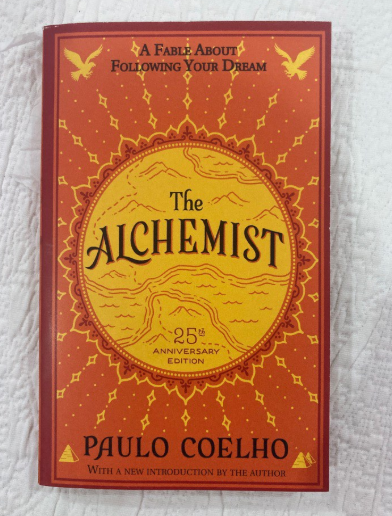
📖 Introduction: Why This Book Matters
In a world obsessed with external success metrics, “The Alchemist” dares to ask a different question: What if the treasure you’re seeking is found not at the destination, but in the courage to pursue your dream? This deceptively simple fable has sold over 80 million copies worldwide because it touches something universal—the ache of unfulfilled potential and the whisper of a life unlocked. It matters because it gives language to that quiet voice inside you that knows you’re meant for something more, and it provides a philosophical roadmap for those brave enough to listen.
📘 Synopsis
“The Alchemist” follows Santiago, a young Andalusian shepherd who dreams of finding treasure near the Egyptian pyramids. Abandoning the familiar comfort of his flock, he embarks on a physical and spiritual odyssey across deserts and markets, encountering a king, an Englishman, an alchemist, and the woman he loves. Each character and obstacle teaches him about the Soul of the World, the Language of the Universe, and what Coelho calls one’s “Personal Legend”—the unique purpose each person is born to fulfill. The narrative weaves together spirituality, philosophy, and adventure into a parable about listening to your heart and recognizing the omens that guide you toward your destiny.
🔍 The Author’s Journey
Paulo Coelho’s path to becoming one of the world’s most translated authors was itself an alchemical transformation. Born in Rio de Janeiro in 1947, he initially pursued a conventional path before experiencing a spiritual awakening during a pilgrimage on the Road to Santiago de Compostela in 1986. This journey fundamentally altered his understanding of life’s purpose and directly inspired his writing.
Before literary success found him, Coelho worked as a playwright, theater director, and lyricist for Brazilian rock musicians. He faced rejection, doubt, and even institutionalization by his parents who couldn’t understand his unconventional dreams. When “The Alchemist” was first published in 1988, it sold fewer than 1,000 copies and his publisher dropped him. Yet Coelho persisted, and the book eventually became a global phenomenon—a testament to his own belief in following one’s Personal Legend despite setbacks.
👥 Who Should Read This / Who This Book Is For
You need this book if:
- You’re standing at a crossroads, paralyzed by the fear of leaving security behind
- You’ve achieved conventional success but feel spiritually hollow
- You’re young and searching for direction, or older and questioning whether it’s too late
- You’re an entrepreneur or creative who needs philosophical fuel for the uncertain journey
- You’ve buried your dreams under layers of practicality and “should”
This resonates with:
- Seekers and spiritual explorers who appreciate wisdom traditions
- Travelers and wanderers who understand that journeys transform us
- Romantics who believe the universe conspires to help dreamers
- Anyone who’s ever felt that quiet, persistent pull toward something they can’t quite name
🔑 Key Model/Framework from the Book
The Personal Legend Framework is Coelho’s central concept—a four-stage journey that mirrors the hero’s journey but focuses on individual destiny:
- The Call: Recognizing your dream (what you’ve always wanted to do)
- The Beginner’s Luck: Initial signs that the universe supports you
- The Tests: Obstacles, fears, and the temptation to settle
- The Realization: Understanding that the treasure was always within, though the journey was necessary to claim it
Supporting principles include:
- Maktub (it is written): Trusting in fate while taking action
- The Soul of the World: The interconnectedness of all things
- The Language of Omens: Learning to read the signs the universe sends
- The Principle of Favorability: When you want something, all the universe conspires to help you achieve it
📊 By the Numbers
- 80+ million copies sold across 80+ languages (one of the best-selling books in history)
- Published in 1988, but didn’t gain traction until 1993 (5 years of persistence)
- The shepherd Santiago makes a journey of approximately 1,500 miles from Spain to Egypt
- Coelho references principles from multiple wisdom traditions spanning thousands of years
- The book has spent over 300 weeks on the New York Times bestseller list
- Written in just two weeks, channeling what Coelho described as spiritual inspiration
💡 Key Takeaways & Counterintuitive Insights
The Journey IS the Treasure: The most counterintuitive twist comes at the book’s end—Santiago discovers that material treasure was buried where he started. Yet without the journey, he wouldn’t have gained the wisdom to recognize or claim it. The point isn’t the destination; it’s becoming the person who deserves the destination.
Fear and Dreams Live at the Same Address: Coelho suggests that the closer you get to your dream, the more intense your fear becomes. This isn’t a sign you’re on the wrong path—it’s confirmation you’re on the right one.
The Universe Speaks in Repetition: Omens aren’t dramatic Hollywood moments. They’re gentle, persistent patterns that recur until you pay attention. Santiago’s recurring dream about treasure is what initiates his journey.
Love Accelerates Rather Than Anchors: Fatima, Santiago’s love interest, doesn’t ask him to stay. Real love, Coelho argues, wants the beloved to fulfill their Personal Legend. If love demands you abandon your dream, it’s possession, not love.
Beginnings Are Deceptive: Early success (beginner’s luck) isn’t proof the journey will be easy—it’s the universe’s encouragement before inevitable challenges test your commitment.
Your Heart Knows More Than Your Mind: The recurring theme is listening to your heart, which speaks the Language of the World, rather than the fearful chatter of your rational mind.
🧠 Myth-Busting Moments
MYTH: “Following your dreams is irresponsible and impractical”
REALITY: The book argues that NOT following your Personal Legend creates a deeper form of suffering—a slow death of the soul. The real irresponsibility is living a life that isn’t yours.
MYTH: “You need to know the exact path before starting”
REALITY: Santiago has only a dream and a destination. The path reveals itself through action. Clarity comes from movement, not contemplation.
MYTH: “Obstacles mean you’re on the wrong path”
REALITY: The alchemist teaches that difficulties are how the universe tests your commitment and transforms you into someone capable of receiving your dream.
MYTH: “Spiritual pursuits and material success are opposites”
REALITY: The book’s ending reveals that spiritual enlightenment and material treasure can coexist. Santiago finds both.
MYTH: “You should listen to everyone’s advice”
REALITY: The crystal merchant and others who abandoned their dreams become cautionary tales. Not everyone’s wisdom applies to your journey.
💬 Best Quotes from the Book
These lines capture the book’s essence:
“When you want something, all the universe conspires in helping you to achieve it.”
“The secret of life is to fall seven times and to get up eight times.”
“People are capable, at any time in their lives, of doing what they dream of.”
“There is only one thing that makes a dream impossible to achieve: the fear of failure.”
“Everyone seems to have a clear idea of how other people should lead their lives, but none about his or her own.”
🚀 Actionable Steps: How to Apply It Today
Step 1: Identify Your Personal Legend
Write down what you dreamed of as a child before the world told you what was practical. What activity makes time disappear? That’s your starting compass.
Step 2: Take One Concrete Action
Don’t wait for perfect conditions. Santiago sold his sheep. What’s your equivalent of “selling your sheep”—the first tangible step that signals commitment?
Step 3: Establish an Omen Journal
For 30 days, record coincidences, recurring patterns, and unexpected opportunities. Train yourself to notice the Language of the World.
Step 4: Create Your Beginner’s Luck
Share your dream with three people who will support, not discourage you. Often, early momentum comes from community.
Step 5: Build Your Desert Crossing
Identify the biggest obstacle between you and your dream. What’s one skill or resource you need? Commit to acquiring it within 90 days.
Step 6: Practice Listening to Your Heart
Daily 10-minute practice: Sit quietly and ask your heart, “What do you want me to know today?” Write what emerges without judgment.
⚡ First 24 Hours Action Plan
Hour 1-2: The Dream Audit
List every dream you’ve deferred. Circle the one that feels most alive right now—the one that scares and excites you simultaneously.
Hour 3-6: Research Your First Step
Identify one person who’s living a version of your dream. Study their path. What was their first move?
Hour 7-12: The Commitment Letter
Write a letter to yourself explaining why you’re choosing this path now. Seal it and open it when doubt arrives (it will).
Hour 13-18: Clear the Path
Eliminate one obligation or habit that doesn’t serve your Personal Legend. Create space before adding the new.
Hour 19-24: Make It Real
Take one visible action: Register the domain, book the class, schedule the conversation, buy the ticket. Transform intention into matter.
🎯 3-Minute Challenge
Right now, before you continue scrolling:
Close your eyes. Take three deep breaths. Ask yourself: “If I knew I couldn’t fail, what would I attempt?” Write down the first thing that emerges—not the practical thing, not the impressive thing, but the TRUE thing. Now text that dream to someone you trust with this exact message: “This is my Personal Legend. Hold me accountable.”
That’s it. Three minutes. Your journey starts with acknowledgment.
🧑💼 How Real People Used It
The Career Pivot: Maria, a 42-year-old accountant, read “The Alchemist” during a particularly soul-crushing tax season. The book’s message about the crystal merchant—who gave up his dream of visiting Mecca—struck her deeply. She’d always wanted to be a photographer but deemed it impractical. Within six months, she enrolled in a photography course. Two years later, she runs a successful portrait business. She keeps a quote from the book on her desk about the universe conspiring.
The Geographic Cure: James spent a decade in corporate consulting, financially successful but spiritually depleted. The book’s emphasis on listening to your heart led him to recognize that his recurring fantasy about teaching English abroad wasn’t escapism—it was guidance. He now teaches in Vietnam, earning less but feeling wealthier in every meaningful way.
The Relationship Revelation: After reading about Fatima’s unconditional love, Priya realized she’d been asking her partner to abandon his entrepreneurial dreams for security. The shift in her perspective transformed their relationship—she became his greatest advocate, and ironically, the business succeeded once supported rather than resisted.
🤔 Skeptic’s Corner
Valid Criticisms:
Oversimplification: The universe doesn’t always conspire in your favor. Privilege, systemic barriers, and tragedy exist. Santiago faces obstacles but never institutional discrimination or catastrophic loss. The book’s optimism can feel naive to those facing genuine hardship.
Gender Dynamics: Fatima is a problematic character—she exists primarily to support Santiago’s journey and wait for him. Her own dreams remain unexplored. The book reflects a masculine hero’s journey with limited female agency.
Survivorship Bias: We’re reading Coelho’s book because he succeeded. Millions pursue dreams and fail through no fault of their own. The book risks suggesting that failure means insufficient belief rather than acknowledging structural realities.
Spiritual Vagueness: The Soul of the World and the Language of Omens can feel frustratingly abstract. Readers seeking concrete spiritual practice may find the philosophy beautiful but ultimately unhelpful.
Cultural Appropriation Concerns: Coelho, a Brazilian Catholic, borrows from Islamic mysticism, alchemy, and Egyptian symbolism. Some critics argue he commodifies these traditions without sufficient depth or respect.
The Privilege to Wander: Santiago can leave his sheep and journey because he has mobility, relative safety, and options. This privilege goes unexamined, making the book’s lessons less accessible to those without such freedom.
🔄 Before & After Reading
BEFORE:
You view practical choices and dream pursuit as binary opposites. Security feels like the responsible choice. That persistent longing for something more seems like dangerous self-indulgence. You’re waiting for the “right time” or a sign dramatic enough to justify change.
AFTER:
You recognize that the signs were always present—subtle, consistent, and easy to dismiss. You understand that security and purpose aren’t opposites; abandoning your Personal Legend creates the deepest insecurity. You see obstacles differently—not as stop signs but as transformative challenges. You’ve given yourself permission to interpret your life as meaningful rather than random.
The shift isn’t that you suddenly have courage—it’s that you recognize the greater risk of inaction.
⭐ Rating & Analysis
| Aspect | Rating | Why? |
|---|---|---|
| Usefulness | ★★★★☆ | Philosophically rich and inspiring, but lacks concrete methodology for complex situations |
| Readability | ★★★★★ | Beautifully simple prose; reads like a fable. Accessible to teenagers and adults alike |
| Originality | ★★★☆☆ | Synthesizes existing wisdom traditions cleverly but doesn’t introduce fundamentally new concepts |
| Impact | ★★★★★ | Genuinely life-changing for millions; creates emotional and philosophical shifts that endure |
| Practicality | ★★★☆☆ | High on inspiration, moderate on actionability. You’ll feel moved but may struggle with application |
| Timelessness | ★★★★★ | Archetypal themes transcend culture and era; equally relevant in 1988 and 2026 |
Overall: 4.3/5 Stars
A transformative fable that excels at inspiration and philosophical reframing but requires supplementation for practical implementation.
🎬 If This Book Were a Movie
Genre: Mystical Adventure Drama meets Spiritual Coming-of-Age
Protagonist: Santiago would be played by someone embodying youthful openness and growing wisdom—think a young Oscar Isaac’s energy. His character arc moves from naive dreamer to integrated seeker.
Plot Arc: Act I establishes the comfort of the known (pastoral life); Act II follows the trials in Tangier and the desert crossing; Act III reveals the treasure’s location and Santiago’s transformation. The twist ending would require careful cinematography to avoid feeling like a cheap trick.
Supporting Characters:
- Melchizedek (The King): The magical mentor, perhaps someone like Ben Kingsley—mysterious, appearing and disappearing, speaking in riddles
- The Alchemist: The ultimate guide, Gary Oldman’s gravitas meeting desert mysticism
- Fatima: Reimagined with more agency, her own yearnings visible beneath her supportive exterior
- The Crystal Merchant: Philip Seymour Hoffman type—tragic, cautionary, embodying regret
Visual Style: Think “Life of Pi” meets “Lawrence of Arabia”—vast desert landscapes that feel simultaneously real and dreamlike, with magical realism elements woven naturally into the physical world.
Soundtrack: Gustavo Santaolalla’s spiritual, meditative compositions paired with traditional North African instrumentation.
📚 Books That Pair Well With This
For Deeper Spiritual Practice:
- “The Power of Now” by Eckhart Tolle: Complements Coelho’s philosophy with present-moment awareness techniques
- “Siddhartha” by Hermann Hesse: Another allegorical journey toward enlightenment, more Buddhist-focused
For Practical Application:
- “The War of Art” by Steven Pressfield: Addresses the resistance that prevents us from pursuing our Personal Legend
- “Designing Your Life” by Bill Burnett & Dave Evans: Provides the practical framework Coelho’s philosophy lacks
For Contrasting Perspectives:
- “Man’s Search for Meaning” by Viktor Frankl: Purpose found through suffering, not mystical journey
- “The Myth of Sisyphus” by Albert Camus: Existentialist counterpoint—creating meaning in an indifferent universe
For Historical Context:
- “The Hero with a Thousand Faces” by Joseph Campbell: The monomyth structure underlying Santiago’s journey
📚 Resources
Related to the Book:
- Paulo Coelho’s official website (paulocoelhoblog.com) features his ongoing reflections
- “The Pilgrimage” (Coelho’s first book) describes the journey that inspired The Alchemist
- The Road to Santiago de Compostela pilgrimage route (actual physical journey)
For Personal Legend Work:
- Journaling prompts for identifying your Personal Legend (search “Personal Legend exercises”)
- “The Desire Map” by Danielle LaPorte for connecting to core desired feelings
- Personality assessments (Enneagram, StrengthsFinder) for self-understanding
Communities:
- Paulo Coelho’s social media followings discuss interpreting omens and sharing Personal Legend journeys
- Camino de Santiago pilgrimage forums for those inspired to take literal journeys
- Meetup groups worldwide dedicated to Coelho’s philosophy
✍️ Final Reflection: Was It Worth Reading?
Absolutely—with caveats.
“The Alchemist” deserves its status as a modern classic not because it’s perfect, but because it’s necessary. In a world that measures worth by productivity and success by accumulation, Coelho offers an alternative metric: Are you becoming who you were meant to be?
The book’s greatest strength is emotional permission. It gives language to the ache of unfulfilled potential and validates the small, persistent voice that knows you’re meant for something more. For many readers, that permission alone is transformative—it’s the spark that ignites action after years of dormancy.
However, the book works best as a philosophical catalyst rather than a practical manual. You’ll close it feeling inspired, possibly even tearful, but you’ll need supplementary resources for the messy work of translating inspiration into sustainable change. The universe may conspire in your favor, but it expects you to show up with a plan, not just faith.
The book’s limitations—its gender dynamics, privileged assumptions, and spiritual vagueness—are real and worth acknowledging. It’s a product of its time and author’s perspective. Yet the core truth remains potent: Most people abandon their dreams not because they’re impossible, but because they’re difficult, and society rewards conformity over courage.
Read this book when you’re at a crossroads, when you’ve achieved what you thought you wanted but feel inexplicably empty, or when you need philosophical ammunition against the voices (internal and external) insisting you be “realistic.” Read it, then read something practical. Let Coelho light the fire; let other resources teach you how to tend it.
The question isn’t whether the universe will conspire in your favor. The question is: Will you give it something to conspire with?
💬 Your Turn
I’d love to hear from you:
- What’s your Personal Legend—the dream you’ve been deferring?
- Have you experienced “beginner’s luck” when starting something new?
- What’s the biggest obstacle between you and your version of the pyramids?
- How has this book (or this summary) shifted your perspective?
- What’s your Santiago moment—when did you realize you needed to leave your sheep behind?
Drop your reflections below. Sometimes sharing our dreams aloud is the first act of alchemy—transforming the invisible into the visible, the possible into the inevitable.
And if this summary resonated, share it with someone standing at their own crossroads. The universe might be using you to send them an omen.
Remember: The treasure is always buried where you started. But you had to journey to become the person who could recognize it.