
Atomic Habits by James Clear
 wkadmin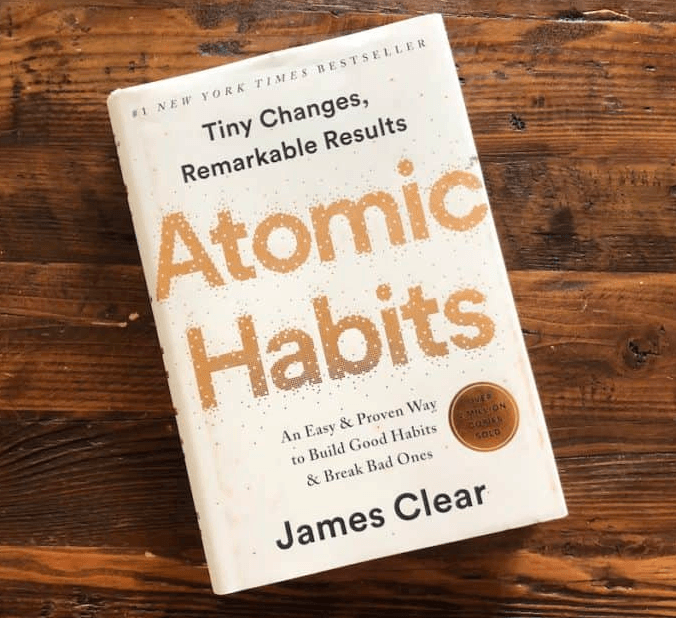
📖 Introduction, Why This Book Matters?
We’ve all been there – standing in front of the mirror on January 1st, making grand promises to ourselves about the year ahead. Six weeks later, those promises feel like distant memories. “Atomic Habits” isn’t just another self-help book promising overnight transformation. It’s a practical roadmap that reveals why we fail at change and, more importantly, how to succeed. James Clear strips away the motivational fluff and gets to the core truth: massive success comes from tiny, consistent actions compounded over time. This book matters because it transforms the impossible dream of change into a manageable, scientific process that anyone can follow.
🔍 The Author’s Journey
James Clear didn’t start as a habits guru. He was a college baseball player whose dreams were shattered when a baseball bat struck his face, causing multiple fractures and a traumatic brain injury. During his slow recovery, he discovered that small, consistent improvements – just 1% better each day – could lead to remarkable transformations. This personal experience of rebuilding himself from the ground up became the foundation of his life’s work.
Clear transformed his setback into a comeback, eventually becoming an All-American athlete and later building one of the world’s most popular newsletters on habits and decision-making. His journey from broken to breakthrough proves that the principles in his book aren’t just theory – they’re battle-tested strategies forged in the crucible of real struggle.
🔑 Key Model/Framework from the Book
The Four Laws of Behavior Change:
- Make it Obvious (Cue) – Design your environment to make good habits unavoidable
- Make it Attractive (Craving) – Bundle habits with things you enjoy
- Make it Easy (Response) – Start so small that you can’t say no
- Make it Satisfying (Reward) – Celebrate small wins immediately
The Habit Loop: Cue → Craving → Response → Reward
This framework operates on the principle that habits are not destinations but systems. Clear argues that you don’t rise to the level of your goals; you fall to the level of your systems. The magic happens when you focus on becoming the type of person who naturally does the things you want to do.
💡 Key Takeaways & Counterintuitive Insights
Systems Trump Goals: While everyone focuses on what they want to achieve, winners focus on what they want to become. Goals are about the results you want; systems are about the processes that lead to those results.
The Plateau of Latent Potential: Most people give up during the “valley of disappointment” – that frustrating period when you’re working hard but not seeing results. Breakthroughs happen when you push through this invisible barrier.
Identity-Based Habits: Instead of focusing on what you want to achieve, focus on who you want to become. Every action is a vote for the type of person you wish to be.
Environment Design: Your environment is the invisible hand that shapes human behavior. Make good habits obvious and bad habits invisible.
The Two-Minute Rule: When you start a new habit, it should take less than two minutes to complete. The goal is to make it as easy as possible to start.
💬 Best Quotes from the Book
“You do not rise to the level of your goals. You fall to the level of your systems.”
“Every action you take is a vote for the type of person you wish to become.”
“The most effective way to change your habits is to focus not on what you want to achieve, but on who you wish to become.”
“Habits are the compound interest of self-improvement.”
🚀 Actionable Steps & How to Apply It Today
Start Ridiculously Small: Pick one habit and make it so tiny you can’t fail. Want to read more? Start with one page. Want to exercise? Start with one push-up.
Stack Your Habits: Link new habits to existing ones. “After I pour my morning coffee, I will write down three things I’m grateful for.”
Design Your Environment: Put your gym clothes next to your bed. Hide your phone in another room. Make good choices automatic.
Track Your Progress: Use a simple habit tracker. Mark an X for each day you complete your habit. Don’t break the chain.
Join the Right Tribe: Surround yourself with people who have the habits you want. Their behaviors will become your normal.
🤔 Final Thoughts
This book is absolutely worth reading if you’re tired of relying on motivation and willpower to create change. Clear’s approach is refreshingly practical and scientifically sound. He doesn’t promise magic – he provides a reliable system that works if you work it. The beauty lies in its simplicity: small changes, consistently applied, create remarkable results over time.
⭐ Rating: 4.5/5
| Aspect | Rating | Why? |
|---|---|---|
| Usefulness | ⭐⭐⭐⭐⭐ | Immediately applicable strategies that work for anyone |
| Readability | ⭐⭐⭐⭐⭐ | Clear, engaging writing with compelling stories |
| Originality | ⭐⭐⭐⭐ | Fresh take on habit formation backed by science |
| Impact | ⭐⭐⭐⭐⭐ | Life-changing potential when principles are applied |
| Practicality | ⭐⭐⭐⭐⭐ | Concrete steps anyone can implement immediately |
🎬 If This Book Were a Movie
Protagonist: James Clear himself – a young athlete whose world crashes down after a devastating injury, only to discover that the smallest improvements can lead to the greatest comebacks.
Plot Arc: A classic hero’s journey from rock bottom to revelation. The story follows ordinary people discovering that extraordinary results come from ordinary actions repeated consistently.
Supporting Characters: The British cycling team that dominated the Olympics through marginal gains, the Japanese manufacturers who perfected continuous improvement, and countless individuals who transformed their lives one tiny habit at a time.
Climax: The moment when viewers realize that they already have everything they need to change – they just need to start impossibly small and stay remarkably consistent.
🔄 Before & After Reading
Before: “I need to completely overhaul my life. I’ll start Monday with a perfect morning routine, hit the gym for two hours, meal prep for the week, and read for an hour every night.”
After: “I’ll put my workout clothes next to my bed tonight. Tomorrow, I’ll do one push-up right after I brush my teeth. That’s it. I’m not trying to be perfect; I’m trying to be consistent.”
Before: Seeing successful people as naturally disciplined and gifted.
After: Understanding that success is a system, not a personality trait – and that system is available to anyone willing to start small and stay consistent.
🧠 Myth-Busting Moments
Myth: “Big changes require big actions.” Reality: The most powerful changes come from tiny improvements compounded over time.
Myth: “It takes 21 days to form a habit.” Reality: Habit formation varies wildly – it can take anywhere from 18 to 254 days depending on the complexity and the person.
Myth: “You need motivation to maintain habits.” Reality: Motivation gets you started, but environment and systems keep you going.
Myth: “Successful people have incredible willpower.” Reality: They’ve simply designed their environment to make good habits automatic and bad habits difficult.
📚 Books That Pair Well With This
“The Power of Habit” by Charles Duhigg – Provides the scientific background that complements Clear’s practical approach.
“Mindset” by Carol Dweck – Explores the psychological foundation for identity-based habits.
“The Compound Effect” by Darren Hardy – Reinforces the power of small, consistent actions.
“Tiny Habits” by BJ Fogg – Offers another perspective on starting small and building momentum.
🤔 Skeptic’s Corner
Some readers might find the 1% improvement concept oversimplified for complex life changes. The book occasionally feels repetitive, hammering home the same points. Critics argue that Clear underestimates the role of external circumstances and privilege in habit formation. However, these concerns don’t diminish the book’s core value – it provides a practical framework that works regardless of your starting point. The key is adapting the principles to your unique situation rather than expecting a one-size-fits-all solution.
🧑💼 How Real People Used It
Sarah, Marketing Manager: Used habit stacking to build a morning routine. “After I start my coffee, I write in my journal for 5 minutes.” Six months later, she’s filled three journals and feels more centered than ever.
Mike, Software Developer: Applied the two-minute rule to learning Spanish. Started with one Duolingo lesson daily. Now speaks conversational Spanish after 18 months of consistency.
Rachel, New Mom: Used environment design to eat healthier. Pre-cut vegetables and hid junk food. Lost 30 pounds without counting calories by making healthy choices automatic.
🎯 3-Minute Challenge
Right now, before you do anything else, grab a pen and paper. Write down ONE habit you want to build – just one. Now make it ridiculously small. Want to exercise? Write “1 push-up.” Want to read more? Write “1 page.” Want to meditate? Write “3 deep breaths.”
Next, identify when you’ll do this tiny habit by linking it to something you already do. Write: “After I [existing habit], I will [new tiny habit].”
Finally, decide where you’ll track this habit. Put an X on your calendar, use your phone’s notes app, or stick a piece of paper on your bathroom mirror.
Your three minutes are up. You now have a system. The question isn’t whether it will work – it’s whether you’ll work it.
💬 Your Turn
The most dangerous moment is when you close this summary and return to your normal routine. Your brain will try to convince you that you need to plan more, research more, or wait for the “perfect” moment to start. That’s resistance talking. Your atomic habit is waiting for you right now. What will you choose?