
How to Win Friends and Influence People by Dale Carnegie
 wkadmin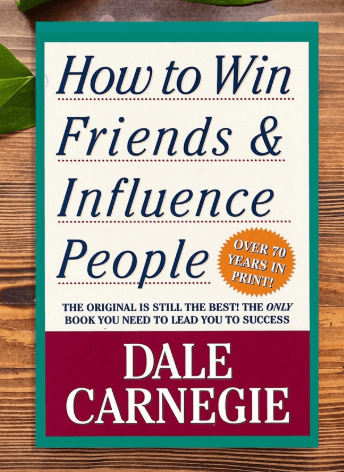
📖 Introduction: The Surprising Truth About Success
In an age of AI and digital communication, why does an 85-year-old book about human relationships remain the go-to guide for leaders, salespeople, and anyone who works with people? Because while technology changes, human nature doesn’t.
Dale Carnegie’s masterpiece isn’t about manipulation—it’s about understanding what people truly want (hint: it’s not your product pitch). Through real stories of business legends like Charles Schwab and Abraham Lincoln, this book reveals universal principles for:
- Turning strangers into friends
- Transforming conflict into cooperation
- Leading people without demanding obedience
Whether you’re a CEO, teacher, or recent grad, these principles work when you work them.
🤝 Core Framework: The Three Pillars of Influence
1. Seeing Through Others’ Eyes
- People make emotional decisions first, logical justifications second
- The most persuasive word in any language is the person’s own name
2. The Appreciation Principle
- Genuine recognition satisfies a deeper hunger than money
- Criticism puts people on the defensive; appreciation opens doors
3. The Persuasion Paradox
- The less you push your agenda, the more influence you gain
- Asking questions gets better results than giving orders
💡 Expanded Key Takeaways with Modern Applications
1. The Magic of Remembering Names
- Why it works: Hearing our name activates our brain’s reward centers
- Modern twist: Use LinkedIn photos to memorize names before meetings
- Counterintuitive: Remembering a barista’s name creates more goodwill than a fancy job title
2. How to Disagree Without Making Enemies
- Old way: “You’re wrong about…”
- Carnegie way: “I see why you’d think that. I had a different take…”
- Science backs it: Starting with agreement reduces cortisol (stress hormone) levels
3. The Secret Behind Great Storytellers
- People forget facts but remember stories
- Pro tip: Replace résumé bullet points with “Here’s what I learned…” narratives
4. Why Help Requests Build Relationships
- Psychological hack: People like you more after doing you a small favor (Ben Franklin Effect)
- Try this: “You’re so knowledgeable about X—could I get your quick take on…?”
5. Handling Mistakes Like a Leader
- Fixed mindset: “The team messed up.”
- Growth approach: “I take responsibility. Here’s how we’ll improve.”
🗣️ Timeless Wisdom
- “People will forget what you said, but remember how you made them feel.”
- “The sweetest sound to any person is their own name.”
- “When dealing with people, remember you’re not dealing with logic, but with emotion.”
🛠️ Practical Toolkit for Today’s World
Digital Age Adaptations
- Email That Gets Replies
- Subject: “Quick question about your [specific work/article]”
- First line: “I really appreciated your point about…”
- Zoom Call Magic
- Note attendees’ names/backgrounds in a virtual “notepad”
- Use the “Yes, and…” technique in discussions
- Social Media Engagement
- Comment on posts with “This reminds me of your earlier point about…”
- Share others’ content with genuine praise
In-Person Mastery
- The 60-Second Relationship Boost
- At events, ask: “What’s exciting you in your work lately?”
- Listen more than you speak
- Conflict Resolution
- Say: “Help me understand your perspective better…”
- Find one point to genuinely agree on first
- Daily Habit
- Send one unexpected appreciation message daily (text/email/handwritten)
🤔 Does This 1936 Book Still Work?
The Verdict: Shockingly well—with context
Strengths
- Universal principles: Human nature hasn’t changed
- Concise rules: Easy to remember (30 core principles total)
- Real-world tested: Used by millions across generations
Limitations
- Dated examples: Needs modern application (hence our updates)
- Cultural nuances: Some directness-preferred cultures may need adaptation
Best for:
- Networkers who want authentic connections
- Managers who dislike “bossy” leadership
- Anyone who dreads small talk
⭐ Rating
| Aspect | Score | Why? |
|---|---|---|
| Relevance | ⭐⭐⭐⭐⭐ | More needed in our digital age |
| Practicality | ⭐⭐⭐⭐ | Simple but requires practice |
| Depth | ⭐⭐⭐ | More anecdotes than psychology |
| Originality | ⭐⭐⭐⭐ | First systematized these ideas |
| Impact | ⭐⭐⭐⭐⭐ | Can transform relationships |
Final: 4.6/5 – The Bible of people skills
💬 Your Turn
Which principle feels hardest to implement?
(For me: Remembering names under pressure!)
🗂️ The Carnegie Principles Cheat Sheet (Bonus)
(Organized by Book Sections)
🔹 Part 1: Foundational Mindsets
- Avoid criticism → Focus on understanding first.
- Give honest appreciation → Specific praise > flattery.
- Spark internal motivation → Help others want to change.
🔹 Part 2: The Likability Playbook
- Become genuinely interested → Curiosity builds connection.
- Smile (even digitally) → Warmth transcends screens.
- Remember names → Use memory hooks (e.g., “Emma the Engineer”).
- Listen actively → Ask follow-up questions.
- Talk in others’ interests → “What excites you about…?”
- Make people feel important → Spotlight their contributions.
🔹 Part 3: Persuasion Without Pressure
- Dodge arguments → “I see your perspective. Here’s mine…”
- Never say “you’re wrong” → Try “I’ve had a different experience…”
- Admit faults quickly → Defuses tension.
- Start with kindness → Harshness closes minds.
- Get “yes” momentum → Begin with small agreements.
- Let others talk more → 70/30 listening ratio.
- Make ideas theirs → “What if we tried…?” vs. “Do this.”
- Appeal to nobler motives → “Your expertise could really help…”
- Dramatize ideas → Stories > spreadsheets.
- Throw down challenges → “I bet you can’t…” (playfully).
🔹 Part 4: Leadership That Inspires
- Begin with praise → “Your report was thorough. One tweak…”
- Feedback indirectly → “Some teams handle this by…”
- Own your mistakes → “I misjudged that—here’s how I’ll fix it.”
- Ask vs. command → “Could we try…?”
- Preserve dignity → Correct privately, praise publicly.
- Celebrate tiny wins → “Your progress on X is impressive!”
- Set reputation stakes → “You’re the type who…”
- Encourage growth → “Your potential is obvious.”
- Make tasks aspirational → Frame as an opportunity.
🔹 Part 5: Conflict Resolution
- Acknowledge first → “I’d feel the same in your position.”
- End on positive terms → “However this resolves, I value our relationship.”